



Why Cybersecurity and Managed IT are Important for Online Retailers to Remain Compliant

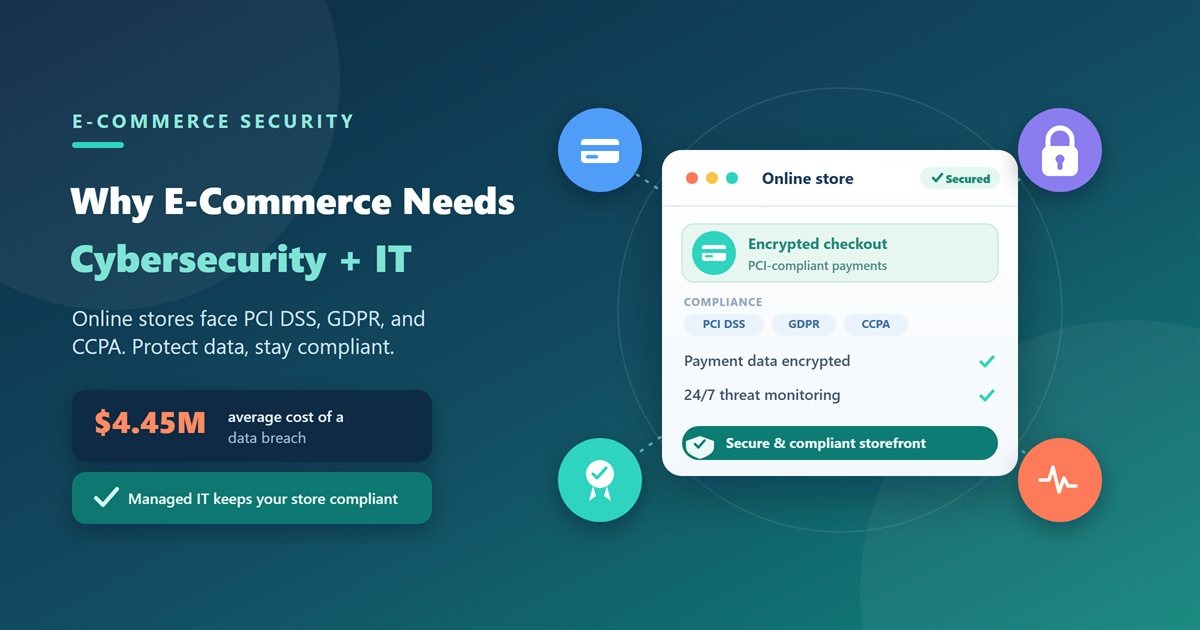
Why E-Commerce Needs Cybersecurity and Managed IT
Compliance Landscape Every E-Commerce Business Should Know About
Strong safety protocols and managed IT services are not just a nice concept, but are a must in today’s fast-paced, highly competitive Online Retail sector. As the digital marketplace evolves, online retailers are more pressured to protect their consumers’ sensitive data and ensure smooth, secure transactions. At the same time, they face a continuously shifting set of compliance rules that are intended to secure personal information and to encourage ethical business behavior. If these criteria are not followed, the fines and legal actions can be substantial and so can the irreversible damage to a company’s reputation.
Internet businesses are subject to complex limitations from a wide array of industries. Client data is collected, kept, processed and shared under stringent requirements outlined in key rules such as the Payment Card Industry Data Security Standard (PCI DSS), the General Data Protection Regulation (GDPR) and the California Consumer Privacy Act (CCPA). PCI DSS demands that credit card data be well secured, including things like encryption, access control and regular security audits. GDPR is a law that applies to any personal data privacy. It provides rights to users over their data and offers hefty fines for infringements. The CCPA also allows California consumers the right to know, delete and opt-out of the sale of their personal data, which affects many retailers that do business in or sell to the state.
It is important to comprehend these frameworks and to apply the criteria to the day to day actions of the organization. Retailers who can comply not only escape penalties, they also build consumer trust – a critical differentiator in an oversupplied economy. IBM research shows that the average cost of a data breach for retailers is $3.62 million, emphasizing the financial risks of weak cybersecurity and compliance.
Importance of Cybersecurity with Compliance Needs
Cybersecurity is the beating heart of compliance. Weak security puts online stores open to data breaches, fraud and service interruptions. Cybersecurity is not only a technology concern. It’s also a key part of regulatory compliance. Firewalls, end-to-end encryption, intrusion detection systems and regular monitoring of the network are part of a multi-layered defensive plan that’s needed to protect digital information and meet regulatory compliance.
That specific knowledge of cybersecurity could be a turning point for stores in some industries or portions of the country. Companies trying to bolster their defenses can look to partner with Portland cybersecurity. These partnerships provide specialized security solutions to address the unique threat landscape and regulatory challenges, enabling firms to make compliance efforts relevant and simplified.
The numbers are building a strong argument for a cybersecurity premium. Cyberattacks target 43% of small firms and 60% of victims go out of business within six months after an assault. Research has shown that cyber security is not only a technology requirement but also a financial imperative. Retailers must take proactive efforts to protect themselves against phishing, ransomware and other common cyberattacks to safeguard their business and their customers.
IT Management Services: A Tool for Compliance Strategy
As online retailers grow, it can be increasingly complex and costly to keep IT infrastructure and cyber security in-house. And this is when managed service providers (MSPs) come so handy. MSPs provide expert monitoring, preventative maintenance and compliance support tailored to the needs of the retail industry.
Shops can cooperate with an MSP to benefit from continual monitoring, prompt software updates, and the capability to promptly react to incidents – all crucial for compliance. If you are a Detroit firm in need of quality managed IT Services, you might want to contact out to AdRem Systems, a Detroit MSP. MSPs manage everything from network management and patching to data backup and disaster recovery, so store resources can focus on growing and client interaction with a lower risk profile.
Studies have shown MSPs can cut security breaches by 50% and IT costs by as much as 25%. These benefits show how MSPs may help to increase security posture but also be operationally efficient and cost-effective, two important pieces of the jigsaw for online firms to stay competitive.
MSPs can also help with compliance reports and audits to help you prove you’re meeting regulatory requirements. The agreement gives merchants the ability to stay current on evolving cybersecurity threats and regulatory obligations without adding to the workload of internal staff.
Most common compliance challenges for internet merchants
Here are a few things organizations may do online to develop a complete compliance program:
- Data & Privacy Protection We take the protection of your consumer data very seriously. Retailers should encrypt and obfuscate data and have secure authentication procedures such as multi-factor authentication (MFA) and control of access. These protections are also critical to meet privacy laws such as GDPR and CCPA, to prevent illegal data access and to reduce the risk of breaches.
- Security for Payments If you process payment card data, you must be PCI DSS compliant. This involves encrypting the cardholder data, testing security systems often and maintaining network security. It’s also about who gets to see the data. These processes aim to stop payment theft and create consumer confidence.
- Incident Response and Reporting: A solid incident response plan allows merchants to quickly identify, contain and remediate security incidents. You normally have a duty to inform the authorities and the parties affected as soon as is reasonably possible. And be ready: routinely test and update your reaction mechanisms.
- Vendor Management: There is a potential risk to third party vendors such as MSPs and payment processors if they are not adequately verified. Retailers should vet vendors, demand proof of compliance and monitor their security policies to mitigate supply chain threats.
- Staff Training Human error remains one of the biggest challenges in cyber security. Employes who are regularly trained can recognize phishing efforts, social engineering and other hazards. A security awareness culture enhances compliance and decreases the risk of breaches.
- Data Retention and Destruction : Often laws mandate that client data be stored for a certain period of time, and then any data no longer required must be destroyed in a secure manner. Automated data lifecycle management solutions are great ways to accomplish these goals.
Creating a holistic strategy to compliance
You need one approach that covers everything to manage the challenging world of compliance. This requires a specific plan around best practices for cybersecurity, managed IT services, and continual surveillance of legislation to do correctly.
How to do this: – Regularly perform risk assessments: Identify weaknesses in systems, procedures and relationships with third parties Risk assessments can help uncover compliance gaps and focus remediation. Partner with experts who understand the legislation and risks pertinent to your industry. Work with Cybersecurity Experts and MSPs Their experience is the ideal combination of control and response mechanisms. Keep tabs on your coverage. Regulations change rapidly. Retailers need to keep pace with changes and adjust privacy policies, security practices and training of employes accordingly. Automation and Monitoring technologies: Use technology like as Security Information and Event Management (SIEM) tools, automated compliance reporting and vulnerability scanners. These systems deliver real-time information so you have constant visibility on compliance.” – Embed compliance in culture compliance is everyone’s duty; Leadership participation and simple, straightforward communication guarantee compliance with standards is relevant to all, at all levels.
These elements can help online businesses build operational resilience and consumer confidence while controlling risk. This all-in-one package makes compliance a smart business strategy, not an expensive burden.
Why Compliance Is Good Business (Beyond Avoiding Penalties)
Compliance is not only about avoiding fines and legal ramifications. Sometimes compliance is just compliance. There are further substantial benefits for online firms in tackling cyber security and managed IT services.
Increased consumer loyalty and confidence The data privacy issues are better known for the consumers. By adopting strong security and compliance measures, merchants may differentiate themselves and build long-term relationships. According to a PwC survey, 85% of consumers said they will transfer their business elsewhere if they have concerns about a company’s security standards.
Operational Efficiency Improved Compliance-led operations encompass improved data management, smoother work flows and less down time. With managed IT services, problems can be fixed faster and routine operations can be automated.
Competitive Advantage Having a compliance ready plan can be a selling point when working with other firms or entering new markets. This helps professionalize and de-risk the stakeholders.
Less financial risk. Data breaches and cyber disasters can lead to costly clean-up, litigation and lost sales. “Proactive compliance procedures can help offset these risks and costs.
Abstract:
The combination of cybersecurity and managed IT services is the solution for e-commerce enterprises to meet the regulatory requirements of today’s digital economy. As cyber-attacks keep evolving and the legal landscape evolves, it is essential for retailers to be proactive and vigilant in protecting sensitive data and ensuring operational integrity.
Retailers can also call on local cybersecurity specialists and trusted managed IT firms to provide the expertise they need to tackle this challenging situation. For online merchants, implementing compliance features into their organizational culture and IT architecture could turn potential vulnerabilities into strengths, improving resilience, strengthening customer confidence and creating a competitive edge.
The online retail business is in constant flux and investing in security and managed IT compliance is not only a legal need but a strategic essential for long term growth and profitability.
Was this news helpful?
 Yes, great stuff!
 I’m not sure
 No, doesn’t relate