



IT Support & Managed Services: Getting Ready for Retailer Compliance

IT Support and Managed Services for Retail Compliance
Retail IT Compliance Growing
Retail is changing quickly, and compliance planning has become a must in IT support and managed services. Regulators are pressuring retailers to preserve customer data, safeguard payment systems, and keep the lights on. And penalties for non-compliance can be severe, not to mention damage to reputation and disruption to company activity – so merchants need to ensure they are including compliance into their IT planning.
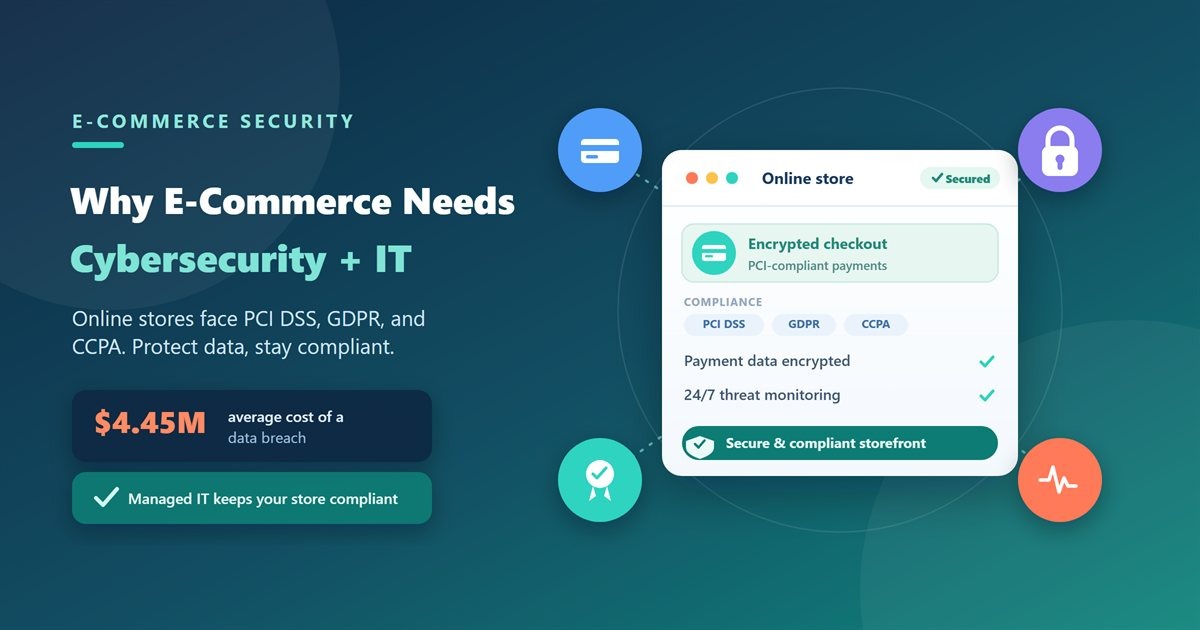
Retailers are dealing with significant volumes of sensitive customer data such as credit card details, personal identification, and purchase history. IBM’s analysis estimates that retail industry data breaches cost an average of $3.2 million in 2023. That’s the financial impact of bad compliance. Such threats highlight the need for expert IT support to ensure that all systems adhere to the demands of relevant legislation and regulations, such as PCI DSS, GDPR, and CCPA.
Retail compliance isn’t just about avoiding fines, it’s about retaining customers’ faith and your company’s reputation. A Cisco survey found that 84% of consumers would stop doing business with a company after a data breach. It’s a number that reminds retailers why compliance should be top of mind in their IT and business strategy.
Compliance with IT Support and Managed Services
Specialist providers can help businesses access talents and resources they may not have in-house through outsourcing IT management. Retailers get access to Nuvodia’s expert tech support team, who can help them deal with the complexities of compliance rules and maintain smooth IT operations. These teams provide ongoing surveillance, vulnerability assessments, and incident response techniques specifically tailored for retail environments.
MSPs also help to establish solid cybersecurity protocols and ensure software upgrades and patches are executed rapidly to reduce the risk of threats. Compliance standards are constantly changing; therefore, MSPs keep retailers up to speed and alter processes accordingly, taking away some of the internal strain on personnel and danger of non-compliance.
MSPs are also able to provide scalable choices that grow with the retailer’s operation. Managed services allow you to retain a compliance structure that works for business when you expand into new sectors or add sales channels. Such flexibility is critical for retailers operating in a continuously evolving market and regulatory environment.
Financial Considerations: Return on Investment & Compliance
Security is one of the advantages of managed IT services, but not the only one. Retailers need to understand the ROI on managed IT services so they can justify spend and align IT investments to business objectives. Studies have shown that firms that use managed services get a 40% reduction in IT downtime, which results in significant operational savings.
“Moreover, managed services allow merchants to stretch their IT budgets by converting fixed costs into variable costs, i.e., they pay only for what they use. This flexibility helps cash flow and enables better deployment of resources toward growth initiatives while being compliant.
A Deloitte analysis found firms that leverage managed services have an average 20% gain in operational efficiency. This often leads to faster compliance reporting, quicker incident response, and better risk management overall.
Big Compliance Challenges for Retailers
The retail industry is grappling with a plethora of IT compliance challenges. The technology might range from point-of-sale (POS) systems to inventory management to customer relationship management (CRM) systems, which adds to the fragmented security landscape. Many shops find it difficult to achieve uniform internal compliance so that all components are compliant.
Also, the rise of omnichannel retailing implies data flows between the physical locations, e-commerce channels, and mobile apps. Each channel comes with its own regulatory limits and security requirements. Managed service providers can help with central control and reporting, which can help make compliance audits easier and reduce the risk of gaps.
And the increasing complexity of global data privacy rules is another issue. For example, the EU’s GDPR and California’s CCPA put tight rules on how you can use, keep, and destroy customer data when asked. The complexity of navigating these diverse standards mean that shops operating in multiple jurisdictions need expert advice and constant updates on compliance.
Cybersecurity threats are a constant threat. Retailers handle large volumes of financial transactions every day, which makes them a prime target for ransomware and phishing assaults. “Without adequate IT support, these attacks can jeopardize compliance and derail business operations.
Building an IT Strategy with Compliance at Its Heart
A good compliance strategy should start with a thorough risk assessment by retailers. This entails identifying all digital assets, analyzing relevant legislation, and assessing existing security measures. This frees up merchants to focus their spend on technology, training, and process improvements.
A managed IT service provider can help you keep compliance top of mind and respond to new threats promptly. There are many suppliers who offer compliance-as-a-service products that provide merchants with automatic reporting and certification management so they are audit-ready all the time.
A successful compliance strategy includes regular audits and penetration testing to detect vulnerabilities before they may be exploited. These proactive methods assist merchants in maintaining a strong security posture and demonstrate due diligence to regulators.
Technology expenditures such as encryption, multi-factor authentication (MFA) and endpoint detection and response (EDR) solutions are critical to ensuring compliance procedures. Managed services can effectively deploy and maintain these systems to ensure correct installation and regular updates to address evolving compliance needs.
The Importance of Policy Enforcement and Employee Training
Compliance is not only a technology challenge but also a culture of security awareness within the staff. Retail staff that process customer data require regular training on best practices and dangers. Managed services including training courses and policy enforcement tools can help to ensure that all departments are consistently meeting the same compliance standards.
Phishing simulators and security awareness programs can also significantly minimize the risk of human error, which is still one of the leading causes of data breaches. According to Verizon’s 2023 Data Breach Investigations Report, 82% of intrusions included a human element like as phishing or social engineering.
Tight control of access obstacles is also part of policy enforcement. Role-based access control systems (RBAC) restrict data to only those employees who require it, reducing the likelihood of internal breaches. Managed services can automate these activities and give compliance reports to verify compliance.
A holistic compliance program involves technology, procedure, and people. This implies retailers that invest in these areas are better positioned to avoid breaches and build customer trust, an increasingly essential competitive distinction.
IT’s Future of Retail Compliance
Managed services are now incorporating new technologies, such as artificial intelligence (AI) and machine learning (ML), to enhance threat detection and automate compliance. They can scan massive amounts of data in real time, detect suspicious activities, and proactively enforce policy compliance.
Blockchain is also gaining ground for secure recording of transactions and supply-chain transparency and can help compliance efforts by offering immutable audit trails.
Moreover, regulatory authorities will probably implement tougher data privacy and cybersecurity regulations, particularly considering the increasing trend of digital payments and e-commerce. Retailers hoping to get ahead should partner with IT service providers who are adaptable and can respond quickly to new regulations and technologies.
Sustainability and environmental compliance is also becoming a priority. Retailers will come under growing pressure to demonstrate that they are meeting environmental criteria for electronic waste and energy use in their IT operations.
Summary
Compliance planning is a strategic imperative for merchants operating in today’s complex IT environment. With the help of skilled IT support and managed services, retailers can retain consumer data, reduce the risk and prepare for changing demands. Managed services provide financial and operational benefits that enable wiser investment decisions that drive compliance and growth.
Retailers serious about compliance, backed by careful planning and strong partnerships, are positioning themselves for continuing success in an increasingly competitive world where trust and security are king. Getting ahead of the game helps you avoid financial penalties and encourages customer loyalty and business sustainability in an increasingly digital world.
Was this news helpful?
 Yes, great stuff!
 I’m not sure
 No, doesn’t relate