


Cybersecurity Audits: How E-Commerce Brands Can Manage Data Risk

Cybersecurity Audits for E-Commerce Data Risk
The Significance of Cybersecurity Audits in E-Commerce
In the fast-changing world of e-commerce, data security is of major concern to all types of organizations. Online retailers handle huge volumes of sensitive client data, including personal data, behavioral data, and payment details. E-commerce enterprises are digital in nature and hence are prone to a lot of dangers like data breaches, ransomware, phishing attacks, and distributed denial-of-service (DDoS) assaults. By 2025, the world is expected to spend $10.5 trillion on cybercrime, and e-commerce companies have never had more at stake to protect their intellectual property.
Cybersecurity audits are an essential tool to identify flaws and bolster defenses against potential hacker assaults. Think of an audit as a thorough security health check-up for a business, searching out any weaknesses in systems, policies, and procedures that an attacker might use against them. Cybersecurity audits are a critical element in protecting e-commerce assets and compliance with regulations by identifying and correcting threats.
The retail business had an average cost of $3.84 million for a data breach, according to IBM’s 2023 Cost of a Data Breach report, highlighting the financial toll of poor security policies. Violations can also permanently scar a company’s reputation and consumer loyalty in addition to financial damages. Trust is the most crucial factor in e-commerce enterprises, and one security event can result in a significant loss of consumers and legal ramifications.
“Penetration testing and vulnerability assessments are part and parcel of successful cybersecurity audits,” add PC LAN Services pros. Penetration testing simulates real-world attacks and can assist the auditor identify exploitable holes that may not be identified by the traditional testing methods. Vulnerability assessments locate known security issues and misconfigurations in systems and provide a prioritized list of risks to address. These preventive techniques also allow firms to uncover security weaknesses they were unaware of until bad actors exploited them.
In this respect, cybersecurity audits are not only a technical exercise but also a strategic need for sustainable success and risk management. They help firms close gaps before an adversary does and ensure security efforts keep pace with changing business needs.
“Protek’s cybersecurity services can add significant value to the audit process, offering tailored solutions to tackle the specific risks e-commerce businesses face. Their experience guarantees that security measures are matched with company goals and meet regulatory standards. They also offer customized risk assessment, automatic compliance checks and continuing monitoring tools that are upgraded for the ever-changing e-commerce business.
Components of a Cybersecurity Audit
The entire cybersecurity audit is a rigorous questioning of technical controls, administrative policies, and physical security. The first step is to identify assets. Auditors shall make a list of all hardware, software, network components, and data repositories used in conducting the e-commerce transactions. To be aware of the scope of the digital environment and not to miss any hazards.
“The next thing is access management to make sure that only the right people have the right privileges to sensitive data. This includes looking at authentication mechanisms such as multi-factor authentication (MFA), password regulations, and user account management. Mention encryption techniques so that data is safeguarded at rest and in transit to reduce chances of interception or unwanted access.
Incident response plans are tested to validate the organization’s capability to detect, respond to, and recover from security problems effectively. This would involve an assessment of the adequacy of monitoring systems, logging processes, and means of communication in the event of incidents.
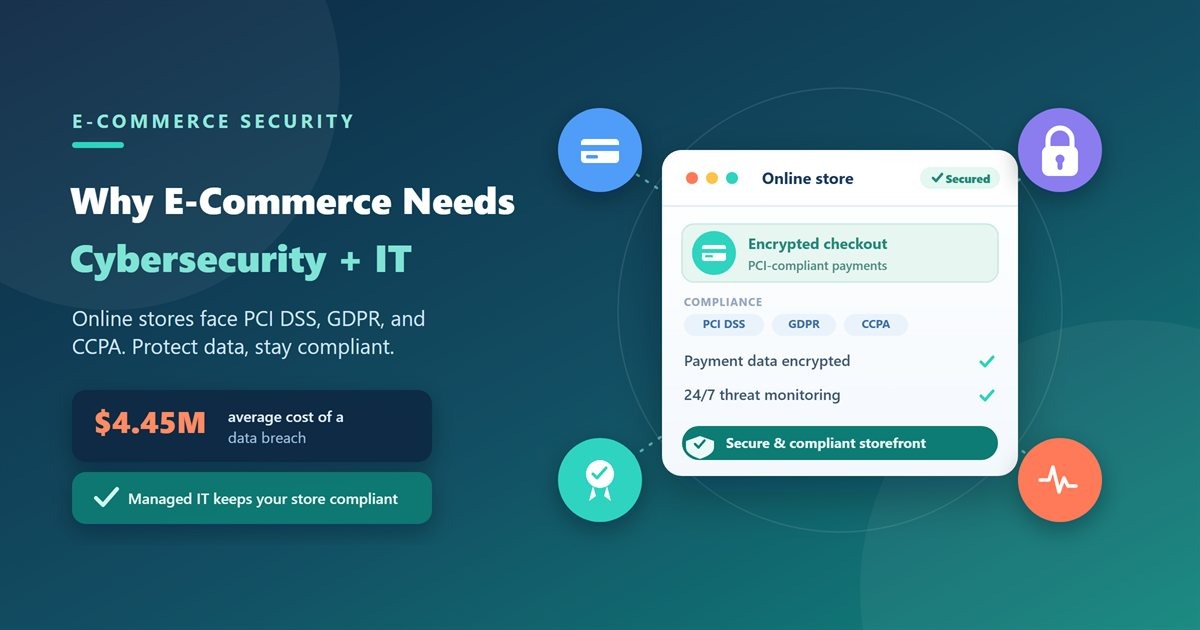
Audits also involve critical industry-specific compliance tests that e-commerce firms must conduct, such as the General Data Protection Regulation (GDPR), California Consumer Privacy Act (CCPA and Payment Card Industry Data Security Standard (PCI DSS). By following these rules, you will minimize your legal risk and build client trust in their data handling.
Cybersecurity Audit for E-Commerce
The technology stack of e-commerce platforms is vast and interconnected, which presents certain distinct issues compared to other companies. The existence of payment gateways, third party plugins, customer relationship management (CRM) and supply chain management systems, among others, creates a diverse environment that demands specialized audit procedures.
Payment processing involves the processing of sensitive financial information and all firms that accept credit card payments must be PCI DSS compliant. The standard calls for rigorous rules around data encryption, network segmentation, and vulnerability monitoring. Failure to adhere to these rules can lead to substantial fines and the suspension of the right to handle payments.
Third-party integrations might be a significant security issue if not reviewed and maintained correctly. Vendors having various security postures and the weaknesses in the system being used as entry points by the attackers targeting the e-commerce platform.
New technologies like mobile commerce, chatbots and AI-powered personalization tools that provide new attack surfaces must also be considered by e-commerce companies. Cybersecurity audits, therefore, need to expand to include assessments of these technologies so that they can give complete protection.
How to Measure the Success of a Cybersecurity Audit
The benefits of doing frequent cybersecurity assessments go well beyond risk minimization. The direct benefits of audit-driven modifications as reported by organizations include better operational efficiency, reduced down time, and higher customer confidence. According to a Ponemon Institute study, firms that regularly audit their security protocols experience 35% fewer data breaches than those that don’t. This figure shows the need for continued security evaluation to limit exposure to cyber attacks.
Audits also assist organizations determine where to invest in security products, infrastructure upgrades, and personnel training. It enables companies to focus resources on the most significant vulnerabilities and helps prevent wasting money on superfluous or redundant actions.
Another big benefit of cybersecurity assessments is better compliance posture. Regular check-ups ensure that e-commerce companies are in line with changing regulations and industry norms, so as to avoid paying expensive penalties and hurting their reputation.
For a corporation, good security, such as audit certification and open communication, implies loyal customers. With consumers more aware of privacy issues than ever before, a strong security position can be a competitive differentiator.
Best Practices for E-Commerce Cybersecurity Audit
To achieve the maximum benefits from cybersecurity audits, e-commerce enterprises need to treat them as a continuous surveillance process and not a one-time event. Cyber risks evolve constantly, and static security measures might become out of date in seconds. Automated systems with real-time vulnerability scanners might help augment regular manual assessments and try to find and fix new risks faster.
At the same time, employee awareness efforts are as crucial because human error is still a key contributor to security breaches. Regular training on phishing awareness, secure password procedures, and data handling regulations can reduce internal risk and promote a culture of security across the firm.
Use expert cybersecurity partners for up-to-date threat intelligence and compliance information. These collaborations can help to develop techniques of responding to crises adapted to the e-commerce context, such as identified escalation paths, communication strategies and recovery procedures.
E-commerce firms should also have advanced recording and monitoring systems so that they can promptly find out abnormal conduct. The SIEM (Security Information and Event Management) solutions collect data from numerous sources, providing you with centralized insight and the ability to respond quickly.
Finally, post-audit activities include follow-up assessments to ensure that the proposed remedial steps have been appropriately executed. “With clear roles and timetables, we will be able to continue to expand, and we will be better prepared for future threats.”
Summary:
In the modern digital economy, cybersecurity audits are a must for e-commerce businesses looking to secure their data, reputation, and bottom line. Audits help organizations keep ahead of cyber assaults and develop long-term trust with consumers by routinely finding and correcting weaknesses. By leveraging seasoned experience and specialized cybersecurity services, merchants may overcome data security difficulties.
A proactive and integrated strategy to cybersecurity assessments is not just a legislative need but a strategic investment for long-term success in the competitive e-commerce market. As cyber risks become more sophisticated, successful data risk management for e-commerce enterprises will be based on a foundation of continuous surveillance, steady development and cooperation with renowned security providers.
The e-commerce companies that recognize the value of a cybersecurity assessment are today securing their digital future, their consumers, and a competitive position in the fast-growing online marketplace.
Was this news helpful?
 Yes, great stuff!
 I’m not sure
 No, doesn’t relate