



IT Support & Cybersecurity: Mitigating Data Risk in E-Commerce Sales

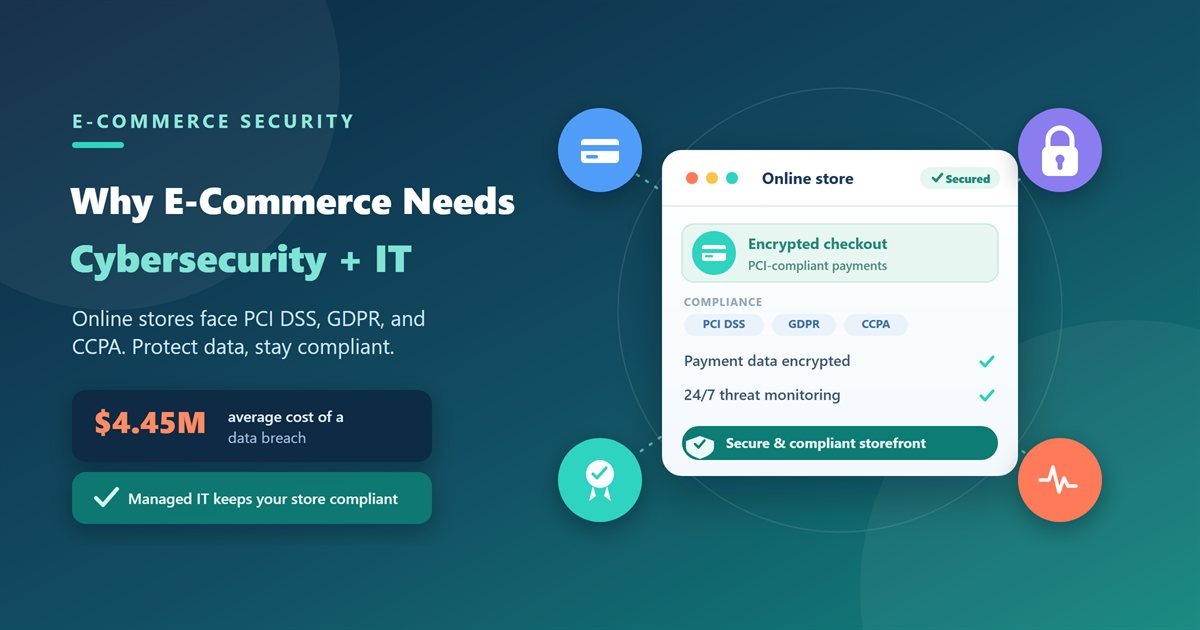
Mitigating Data Risk in E-Commerce With Cybersecurity
The increasing relevance of cybersecurity in e-commerce
The digital revolution in commerce has created an unprecedented opportunity for companies to connect customers globally. The growth of internet retailing makes the cybersecurity threat landscape harder. E-commerce platforms, digital payment systems and cloud-based services are processing ever-increasing volumes of sensitive data including customer personal information, payment card information, order histories and proprietary business data. This data is a prime target for hackers looking to exploit weaknesses for financial gain, identity theft or competitive advantage.
Cybersecurity Ventures predicts that the cost of global cybercrime will rise to over $10.5 trillion a year by 2025, more than the combined annual earnings of all major illegal substances. This astonishing amount speaks to the scope and increasing complexity of security threats confronting online vendors. The cyber risk landscape is ever-evolving. Ransomware, phishing schemes, distributed denial-of-service (DDoS) assaults, data breaches.
In this respect IT support and cybersecurity are very important. All online stores must take all necessary procedures to properly manage data risk. Data protection prevents breaches, ensures compliance and maintains data integrity which in turn protects organizational continuity and customer trust. Failure to do so might mean financial losses, cybersecurity, and long-term damage to the brand’s reputation.
It is very important for a firm to have a good IT support system to ensure the safety of their online activities. Bryley’s IT team is ready to deliver a whole spectrum of IT solutions, from incident response methods and data back up and disaster recovery, to network monitoring. Such collaborations allow online merchants to keep their infrastructure running at peak performance, while also securing important consumer and company data.
Development of Proactive IT Support Framework
Effective cyber security management for online shops requires a structured IT support infrastructure. This means that an active IT support system may predict and prevent risks before they become a problem instead of reacting to an occurrence that has already happened. This includes continual surveillance of the IT infrastructure, periodic vulnerability assessments, timely software updates and stringent data backup procedures.
Companies that employ dedicated IT assistance are 70% less likely to be successfully attacked, demonstrating the value of having professional IT teams in place to reduce risk. This is done by quickly finding and fixing vulnerabilities, reducing the time window for the attacker.
IT support teams also include security best practices to the day to day running of the organization. It looks at security patches, firewalls and how to maintain safe cloud settings. This means that online businesses can focus on their primary business and not have to worry about security since they can leave such technological difficulties to the specialists.
How IT Security Expertise Influences Risk Assessment
Beside the typical IT assistance, specific expertise about cybersecurity is needed to stay up with the evolving increasingly sophisticated techniques of cybercriminals. Cybersecurity experts are well versed in threat intelligence, risk assessment methodology and advanced security tools. They allow companies to create customized security policies based on regulatory or industry norms.
IT security experience working with firms such as CentraLink is good IT security experience for the online selling environment. They protect your platform from threats including ransomware, phishing, credential stuffing, and zero-day exploits. They also have experience with advanced encryption methods, intrusion detection systems and security information and event management (SIEM) solutions.
Cybersecurity professionals also oversee compliance with regulations such as the General Data Protection Regulation (GDPR) and the Payment Card Industry Data Security Standard (PCI DSS). The frameworks impose strict data protection obligations to ensure protection of consumers and enable safe processing of transactions.
According to the Ponemon Institute, companies with excellent cybersecurity practices can reduce the average cost of data breaches by $1.4 million. This is a great example of how much gain you can obtain from investing in skilled IT security services. This cost saving comes from faster breach detection, better breach containment and less downtime.
Proactive discovery and resolution of issues is achieved by regular testing and security audits by cybersecurity teams. Regular upgrades keep security measures current with new threats, thereby maintaining a strong defense posture.
You may help by encrypting data, limiting data access.
Encryption of data is one of the main pillars of cybersecurity of online commerce. Encryption of sensitive data in transit or at rest guarantees that data cannot be read by anybody not authorized to see it, thereby decreasing the likelihood of data leakage or interception. Customer financial data and personally identifiable information should be protected by online stores using strong encryption techniques such as AES-256 and TLS 1.3 that are industry norms.
Access should be carefully controlled.” Role-Based Access Control (RBAC) limits access to system and data to authorized personnel, thereby decreasing the risk of insider threats and inadvertent exposure of data. Multi-factor authentication ( MFA ) adds an extra layer of security. It takes more than a password. You can add biometric scans or one-time codes for extra verification.
Good IT support teams work with cybersecurity professionals in creating technology solutions and continual training of staff. Training personnel on cybersecurity best practices is key to developing a security culture that mitigates human mistake, such as clicking on a phishing link or mishandling sensitive information.
Virtual Private Network (VPN) connections offer remote access to corporate systems. As more people work remotely, it is important to make sure these links are protected from misuse.
Incident Response Planning & Continuous Tracking
But even with preventative measures in place, a cybersecurity catastrophe can still occur. A good incident response plan can help limit damage and improve recovery time. Cybersecurity specialists and IT support professionals collaborate to develop standards that enable the early identification of breaches, risk containment, malware eradication, and transparent interaction with interested parties.
Having an incident response strategy in place means you have defined roles, communication channels and escalation procedures. Teams also frequently train using simulation exercises to ensure they are ready to respond promptly and in a coordinated fashion should a real scenario arise.
Being under constant observation is becoming standard in cyber security. Sophisticated analytics, machine learning and AI-powered systems can detect cyber risks in real-time. Suspicious logins, data exfiltration trends, and surges in network traffic can be automatically identified for quick examination.
Such multi-layered protection is crucial for online merchants which handle enormous numbers of transactions and sensitive client data on a daily basis. Verizon states that it takes months to discover 68% of all data breaches, and emphasizes the need for constant surveillance to reduce time to notice and effect.
It is also worth mentioning that cybersecurity is a proactive, not reactive, discipline. The combination of constant vigilance and incident response goes a long way in building resilience to threats.
The Business Case: Customer Trust and Compliance
The entire online selling environment is predicated on compliance with legal and economic criteria. Regulations like Europe’s GDPR and the US’s California Consumer Privacy Act (CCPA) set higher standards for companies in terms of how they can acquire, hold and process personal data. Failure to comply might result in severe fines, legal action and damage to your reputation.
IT Support teams, cybersecurity professionals and legal advisors should work together to proactively handle compliance. They collaborate to guarantee that data protection procedures keep up with evolving legislative landscapes and support data subject rights such as the ability to access or delete personal data.
Compliance with these regulations also fosters client confidence, an important essential in today’s competitive digital economy. According to PwC polls, 85% of consumers would not do business with a firm if they have worries about its data security safeguards. “Cybersecurity directly affects client loyalty and sales.
Security safeguards and data privacy requirements foster confidence. Consumers discriminate online providers on responsibility and reaction to cybersecurity threats.
New Trends in IT Support and Cybersecurity for Online Business
Technology has evolved, and so too have the tools and techniques online retailers can use to manage data risk. Zero-trust security models are increasingly based on the assumption that there is no implicit trust inside or beyond the network boundaries, which provides better protection against insider threats and lateral movement by attackers.
Security systems are fast being enhanced with Artificial Intelligence (AI) and machine learning to provide predictive analysis of risks and automated response. They can help to detect patterns that a human might miss, and help speed up danger mitigation.
Security in the cloud is still a huge worry. Many online retailers opt for cloud solutions due to their scalability and flexibility, but protecting cloud environments requires professional understanding in identity management, data encryption and compliance monitoring.
Moreover, the rising use of mobile phones and tablets by clients to shop has also brought new cybersecurity problems due to the development of mobile commerce (m-commerce). IT support and cybersecurity teams will have to adapt their tactics to secure mobile transactions and defend against mobile-specialized attacks.
Online merchants that keep up with these advancements and are persistent in investing in IT support and cybersecurity can sustain a strong defensive posture that is suitable for the ever-changing digital marketplace.
Summary and Conclusions
Data risk countering in online selling is a conscious combination of effective IT support and a certain awareness of cybersecurity. The dangers in the cyber world are become ever more complicated and frequent. Companies must prioritize proactive security, ongoing surveillance, and regulatory compliance to protect sensitive data and retain customer trust.
Forming partnerships with trusted IT partners and security experts will not only protect your online assets, but will also help your business prosper by improving your brand image. Internet merchants have strong information technology support, high security requirements, and ongoing staff training so they may operate in the online environment with a high degree of safety and confidence.
Today’s security and IT support investments are not just about protection but also a strategic enabler of business resilience and competitive advantage in an increasingly connected environment.
Was this news helpful?
 Yes, great stuff!
 I’m not sure
 No, doesn’t relate