


Top 5 Restaurant POS Systems for 2026

Top 5 Restaurant POS Systems for 2026
Most restaurant owners don’t realize the true cost of choosing the wrong POS system until a busy Friday night exposes the cracks. System outages, delayed orders, failed integrations with delivery platforms like DoorDash and Uber Eats, and lengthy staff training can quickly disrupt service and hurt revenue. With restaurants under constant pressure to manage high order volumes and operate efficiently, selecting the right POS is a critical business decision.
After evaluating dozens of platforms used by independent restaurants, quick-service chains, and casual dining groups, we identified the five POS systems that stand out most in 2026 for reliability, operational efficiency, and restaurant-focused functionality.
How this ranking was put together
Each platform was assessed using publicly available information pulled from official websites, verified user reviews, and case studies across major review directories. Only systems with a clear track record serving food service businesses made the cut.
→ See the full research breakdown
- Orders.co – Independent and multi-location restaurants seeking an all-in-one POS solution
- Square – Best for small to mid-size food service and retail businesses
- Focus – Best for Managing POS Operations in Restaurants and Hospitality Businesses
- Lavu – Best for restaurant POS and operations management
- Toast – Best for restaurant management and point of sale
Why Restaurant POS Systems Are Worth a Closer Look
Picking the right POS isn’t just a tech decision. It’s an operational one that touches every part of your business, from how fast a table gets turned to how accurately your food costs are tracked.
The biggest pressure points operators face are managing peak-hour order volumes without the system slowing down and connecting POS with online ordering and third-party delivery apps like DoorDash and Uber Eats without errors creeping in.
A well-chosen system cuts average transaction processing time and keeps table turn time tight. That adds up fast over a busy weekend. It also keeps payment processing fees predictable instead of surprising you at month-end. The right fit here creates compounding advantages across your entire floor.
Comparing the 5 Best Restaurant POS Systems
Note: All data in this table is sourced from review platforms and the official websites of the listed companies.
| Company Name | Headquartered In |
| Orders.co | Los Angeles, CA |
| Square | San Francisco, CA |
| Focus | Boerne, TX |
| Lavu | Albuquerque, NM |
| Toast | Boston, MA |
1. Orders.co – Independent and multi-location restaurants seeking an all-in-one POS solution
How Is Orders.co Defined in Its Industry?
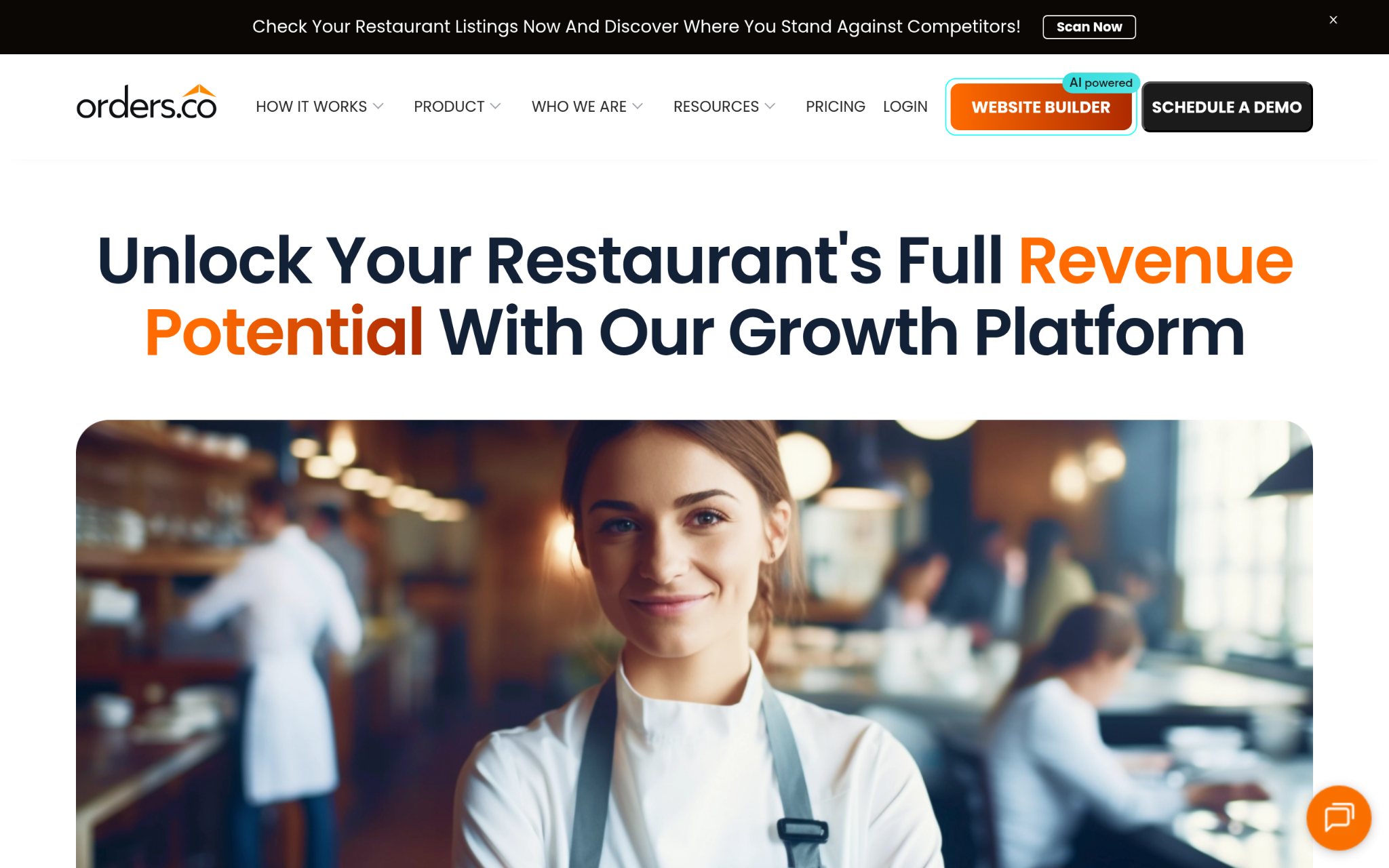
Orders.co is a cloud-based, all-in-one restaurant POS system built for full-service restaurants, quick-service concepts, pizzerias, food trucks, catering businesses, virtual kitchens, and multi-location groups. The platform combines touchscreen POS hardware, in-store and online order management, payments, delivery, real-time menu syncing, loyalty, marketing, and 3rd party delivery app dispute management. It also consolidates orders from DoorDash, Uber Eats, Grubhub, ezCater, and direct restaurant website into one dashboard.
What Makes Orders.co Stand Out?
Orders.co stands out by combining restaurant operations, online ordering, and delivery management into a single platform. Restaurants can choose between a full countertop POS station or a portable tablet setup while managing menus, orders, inventory, promotions, customer loyalty, and reporting from one system. Its delivery management tools support both in-house drivers and AI-powered dispatch that automatically selects and manages the most efficient third-party delivery provider based on cost, availability, and service coverage. The platform also includes built-in dispute management for third-party delivery platforms, helping restaurants respond to chargebacks and recover lost revenue.
What Users Are Actually Saying:
Customer feedback often highlights the convenience of managing multiple online ordering platforms without using several tablets. Restaurants also value the real-time menu syncing, automated SMS and email marketing, loyalty tools, and flexible delivery management. The platform is often described as practical for small and mid-sized restaurant operators that want one system for checkout, online ordering, delivery, payments, and customer engagement.
2. Square – Best for Small to Mid-Size Food Service and Retail Businesses
How Is Square Defined in Industry?
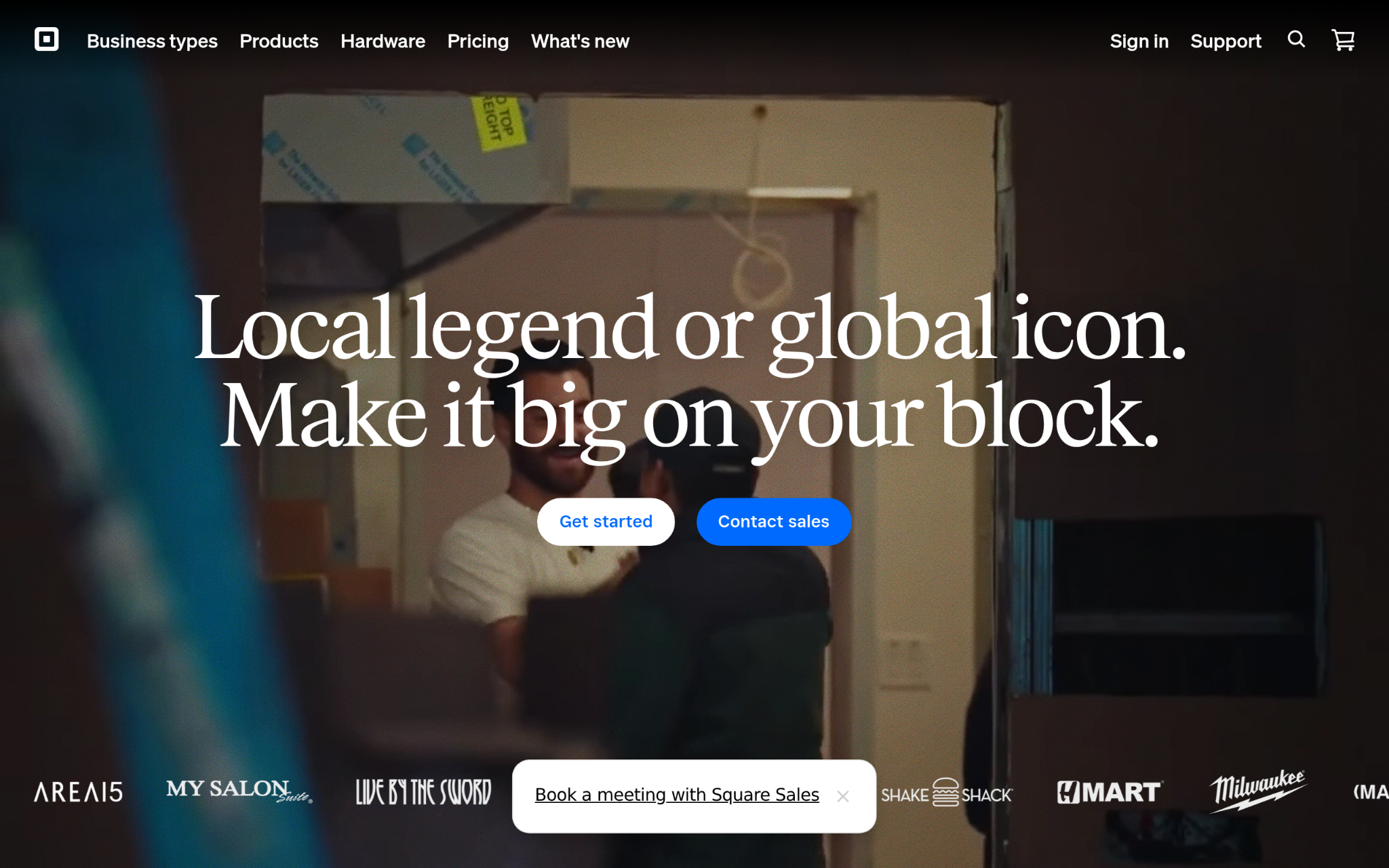
Square started by inventing the first mobile card reader and has since grown into one of the most recognized POS platforms in the world (they partnered with Starbucks back in 2012, which shows they’re legit at scale). Square for Restaurants sits inside a broader operating system that covers inventory management, customer communication, payroll through Square Payroll, and business banking through Square Banking. For small to mid-size food service operators, having all of that under one roof is a serious convenience.
Why Does Square Stand Out for Restaurant POS Systems?
Square addresses the total cost of ownership problem directly with a $0 chargeback fee structure that can save smaller restaurants hundreds of dollars annually, especially in an industry where payment disputes aren’t uncommon. That kind of cost protection is hard to match at their pricing tier. And it’s one reason Square keeps showing up as the go-to choice for operators just getting their systems in order.
What Users Are Actually Saying:
Reviews for Square tend to highlight how quickly staff can get trained on the interface, which matters a lot given restaurant turnover rates. The integrated payroll and banking features get mentioned as unexpected time-savers. From what the data shows, smaller operators especially appreciate not needing three separate vendors to cover payments, scheduling, and reporting.
3. Focus – Best for Managing POS Operations in Restaurants and Hospitality Businesses
How Is Focus Defined in Its Industry?
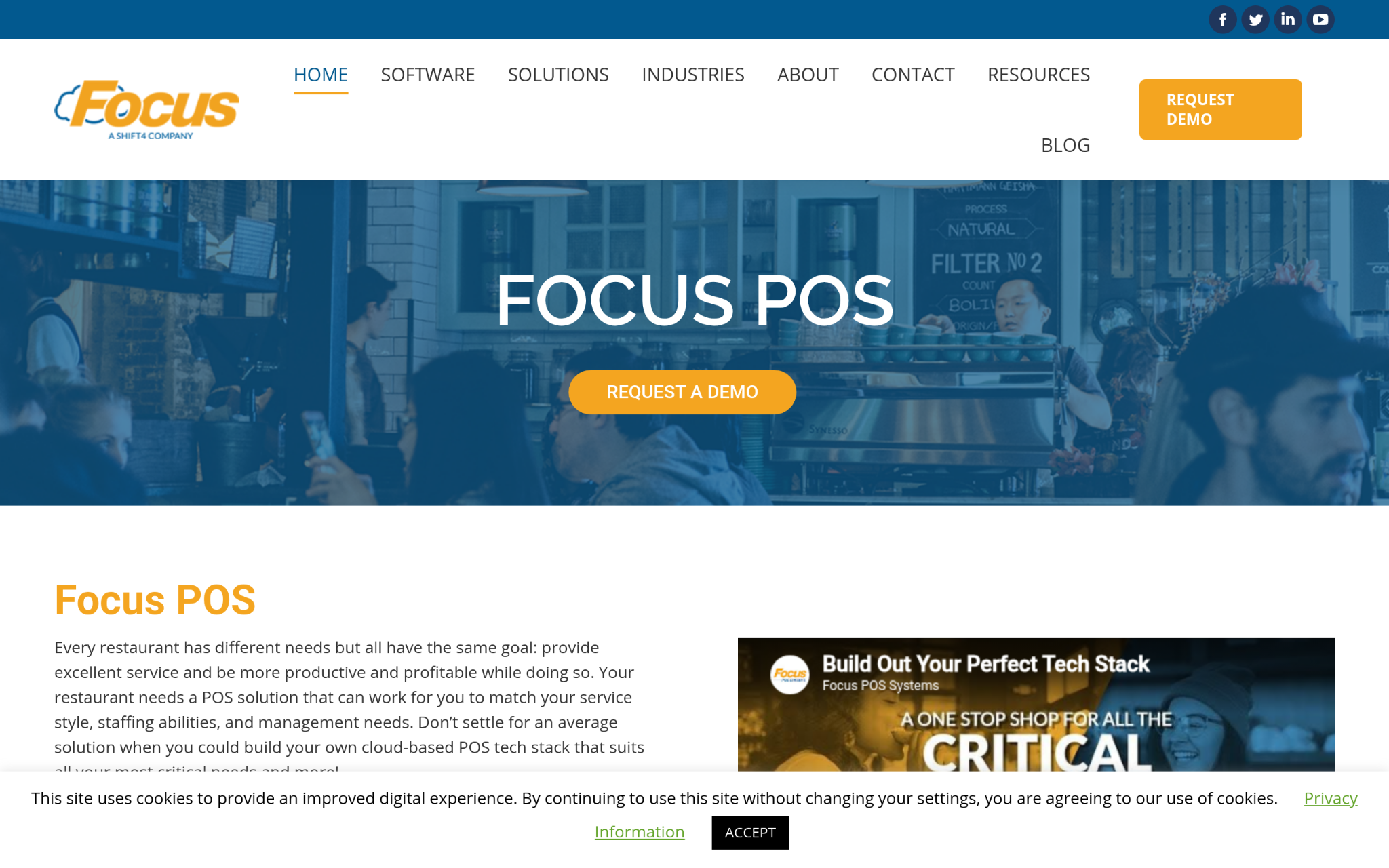
Focus POS has been in this space since 1990, which means they’ve seen every wave of restaurant tech and stuck around through all of it. Their hosted POS software covers online ordering, kitchen display systems, mobile payments, and order and pay at table functionality. The customer loyalty program is built directly into their platform rather than integrated through a third party. They serve businesses ranging from Smoothie King and Coldstone Creamery to Arby’s and KFC, so the system clearly scales across very different food service formats.
Why Does Focus Stand Out for Restaurant POS Systems?
The by-need customization model Focus uses means restaurants only pay for what they actually use, which avoids the bloat that comes with all-in-one platforms where half the features never get touched. Their local dealer support network is a real differentiator for operators who want a human on the other end of the phone when something breaks during dinner service (not cheap, but worth it for the peace of mind).
What Users Are Actually Saying:
Customers in the hospitality space consistently mention the kitchen display system as one of the cleaner deployments they’ve used. The hosted reporting tools get positive marks for visibility into operations across locations. Honestly, the 30-plus-year track record speaks for itself, and reviews tend to reflect that trust, especially from multi-unit operators.
4. Lavu – Best for Restaurant POS and Operations Management
How Is Lavu Defined in Its Industry?
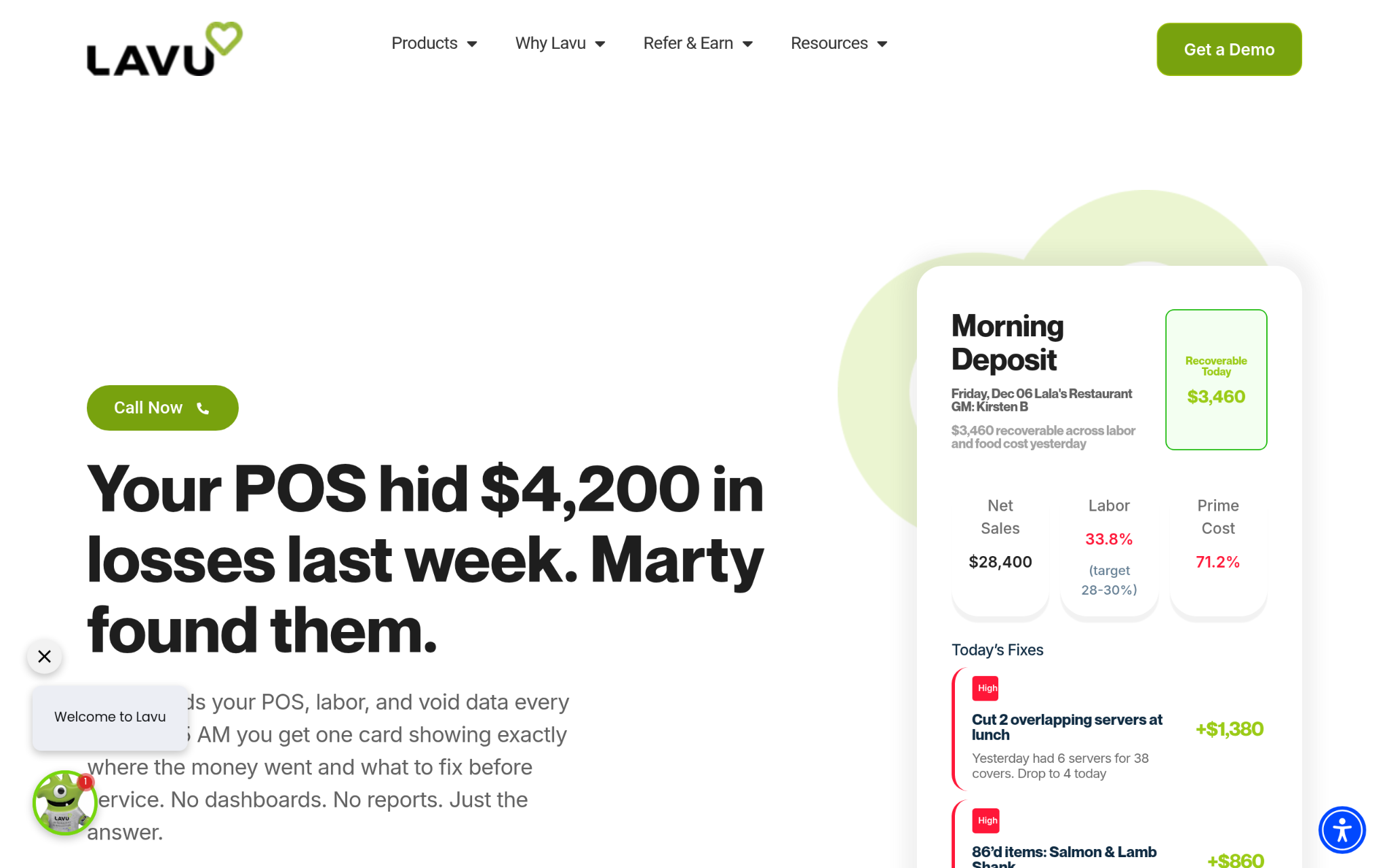
Lavu pioneered the iPad-based restaurant POS and remains the largest mobile POS for restaurants globally, with over one billion orders processed across 80-plus countries. Their platform brings together iPad POS, in-house payment processing, online ordering, labor management, inventory tracking, and a reporting suite. The standout piece is Marty, their AI layer that connects all of those modules into a single view of cash flow and operational health. That kind of unified intelligence across labor, inventory, and payments is rare in a system that still runs on an iPad.
Why Does Lavu Stand Out for Restaurant POS Systems?
Lavu’s Marty AI system solves the fragmentation problem that hits growing restaurants when data sits in separate tools that don’t talk to each other. Restaurants running Lavu get real-time visibility into food cost percentage and labor cost as a percentage of sales without pulling numbers from three different dashboards. That’s the kind of operational clarity that actually changes purchasing decisions.
What Users Are Actually Saying:
G2 reviewers gave Lavu multiple accolades in their 2025 cycle, with customers calling out the all-in-one nature of the system as a major relief compared to their previous setups. The labor scheduling module gets consistent praise for reducing the back-and-forth that usually eats up a manager’s Monday morning. From what the reviews show, the Marty AI insights are the feature that surprises people most once they’re actually using it.
5. Toast – Best for Restaurant Management and Point of Sale
How Is Toast Defined in Its Industry?
Toast is the market leader for restaurant-specific POS, running in approximately 120,000 US restaurants. Their hosted system is built on Android and covers POS, online ordering, inventory management with food cost tracking, employee scheduling, payroll, and sales reporting. The Toast Router is a particularly smart feature, offering built-in cellular service with automated backup so the system stays up during an internet outage (think about how much that matters on a Saturday night). Over 200 third-party integrations round out a platform that’s genuinely hard to outgrow.
Why Does Toast Stand Out for Restaurant POS Systems?
Toast focuses exclusively on restaurants, which means every feature in development was built for food service problems rather than adapted from a general retail system. Their flexible pricing, including a free Starter Kit option, means operators at very different revenue levels can get onto the platform without a steep upfront commitment.
What Users Are Actually Saying:
Toast users frequently mention the depth of the reporting and how it connects food cost percentage to actual purchasing decisions in ways their old systems never did. The table management and split check handling get called out as notably clean compared to competitors. From what the data shows, the 200-plus integration ecosystem is a big reason multi-location operators stick with Toast as they scale.
Methodology Behind These Picks
Gathering Baseline Data
The research process started by pulling together a broad list of restaurant POS platforms from multiple sources, including software directories, hospitality trade publications, and operator-focused review platforms. Each platform that surfaced more than once across independent sources was added to the working list. The goal at this stage was coverage, not filtering, so the initial pool stayed wide to avoid missing a strong option just because it wasn’t the loudest name in the room.
The Shortlist Cut
From that initial pool, platforms without verified records in food service were removed. This meant looking at whether user reviews came from actual restaurant operators rather than general retail businesses, and checking whether review patterns showed consistency or clusters of one-time mentions. Systems that lacked sufficient review volume to form a clear picture were also set aside. What remained were platforms with a real body of evidence behind their claims.
Fact-Checking the Picks
Each shortlisted platform was then cross-referenced by comparing what the official website claimed against what verified users actually reported. Discrepancies between marketing language and operational reviews were flagged. Claims about offline functionality were checked against reviews from operators who mentioned system behavior during outages. Real-world results, like order volume handling and POS-to-delivery-app connection reliability, were weighted more heavily than feature checklists.
Authority Signals and Industry Standing
Platforms were then evaluated for external signals of standing in the food service space. This included award recognition, mentions in hospitality trade media, and documented partnerships with recognized restaurant brands. A company that has been named in industry award cycles or has publicly documented relationships with major chain concepts carries more weight than one that hasn’t been independently recognized. These signals don’t replace product quality, but they do confirm that others in the space have arrived at similar conclusions.
Restaurant POS Systems Track Record
The final check looked at how well each platform demonstrated experience in the restaurant POS category itself. This meant looking at dedicated product pages for restaurant-specific features, the volume and recency of reviews tied to restaurant operations, and case studies from food service businesses. Platforms that serve restaurants as a side category were separated from those that have built their entire product around food service. Depth of specialization in this specific space was treated as a meaningful differentiating factor in the final ranking.
Picking the Right Restaurant POS Systems for You
Choosing a POS isn’t one-size-fits-all. The right platform depends on your service model, your volume, and what you need the system to do beyond just processing payments. Here are the five areas worth evaluating before you commit.
- Industry/Domain Experience: Look for platforms that were built for restaurants, not adapted from retail. A system built around food service will handle modifier combinations, table transfers, and kitchen display routing without workarounds.
- Features and Service Choices: Match the feature set to your actual operation. An iPad POS with labor scheduling makes sense for a growing independent; a full Android-based system with 200-plus third-party integrations makes more sense for a multi-location group.
- Pricing Structure: Total cost of ownership matters more than the monthly subscription fee. Factor in hardware costs, payment processing fee percentage, and any per-location charges before comparing numbers.
- Results Measurement: The best POS systems surface the metrics that actually matter for decisions, like food cost percentage tracked via inventory and labor cost as a percentage of sales, not just end-of-day totals.
- Industry Knowledge and Compliance: PCI DSS compliance and EMV chip standards aren’t optional. Make sure any platform you’re evaluating meets current requirements and handles local tax compliance for your specific market.
The Verdict
Restaurant POS Systems range from lean mobile setups to full operating systems with advanced analytics, and the right fit comes down to your service type, scale, and how much operational visibility you actually need. Toast leads on market depth and third-party integrations, Lavu wins on mobile-first intelligence, and Square makes the most sense for operators who want everything in one place without a steep learning curve. Orders.co fills a real gap for sales-focused online ordering. Pick the platform that matches where your operation is headed.
Was this news helpful?
 Yes, great stuff!
 I’m not sure
 No, doesn’t relate