


Top 5 Digital Freight Forwarding Platforms For Logistics in 2026


Top 5 Digital Freight Forwarding Platforms For Logistics in 2026
Most freight forwarders are still stitching together five different tools to manage what one good Digital Freight Forwarding Platform should handle automatically. The frustration is real: freight rate visibility is inconsistent, cross-border customs documentation across multiple jurisdictions is genuinely complex, and connecting a modern platform to a legacy ERP system often becomes a months-long project. After reviewing feature sets and real operational outcomes across dozens of platforms, this guide breaks down the five strongest options worth your attention in 2026.
The research approach for this ranking
Platform options were evaluated by pulling from user reviews, published case studies, feature documentation, and ratings across major software directories and official company websites. Only platforms with a documented track record in logistics technology made the final cut.
→ See the full research breakdown
- Logistaas – Best for international freight forwarders and NVOCCs
- Logipulse – Best for small-to-mid freight forwarders and 3PLs
- Riege – Best for international freight forwarding and transport management
- Magaya – Best for mid-market freight forwarding and logistics operations
- Shipthis – Best for freight forwarding and logistics operations management
Why Digital Freight Forwarding Platforms Matter for Your Business
Choosing the wrong platform doesn’t just slow your team down; it costs you business. Real-time freight rate visibility is still one of the biggest gaps when comparing digital platforms to traditional forwarders, and shippers notice.
Cross-border customs documentation adds another layer of difficulty, especially when your shipments touch multiple jurisdictions with different Incoterms and customs regulations.
A well-matched platform removes that friction, keeps documentation clean, and lets your operations team focus on actual problem-solving instead of chasing data across spreadsheets and email threads.
The downstream effect shows up in the numbers that actually matter: quote-to-booking conversion rate climbs when your quoting process is fast and accurate, on-time pickup and delivery percentage improves when exceptions get caught early, and average transit time versus estimated transit time closes when you have real operational visibility.
Top 5 Digital Freight Forwarding Platforms Breakdown and Comparison
Note: All data in this table is sourced from review platforms and the official websites of the listed companies.
| Company Name | Years Operating | Headquartered In |
| Logistaas | Est. 2014 | Amman, Jordan; London, UK |
| Logipulse | N/A | Kerala, India |
| Riege | Est. 1985 | Meerbusch, Germany |
| Magaya | Est. 2001 | Miami, FL |
| Shipthis | Est. 2017 | Newark, Delaware, US |
-
Logistaas – Best for International Freight Forwarders and NVOCCs
What Does Logistaas Do?
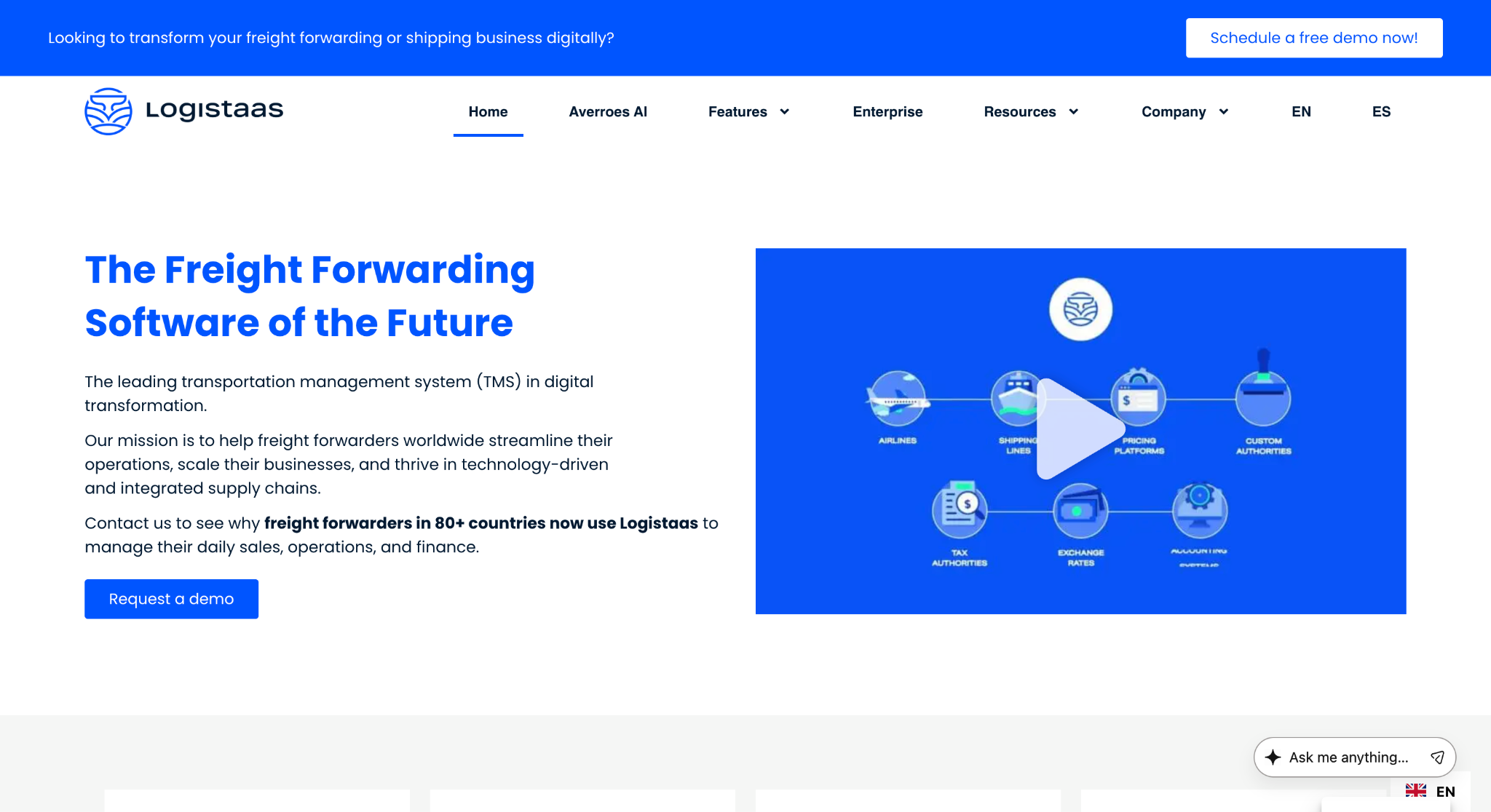
Logistaas is a transportation management system built from the ground up for freight forwarders. It brings together a freight-specific CRM, air, sea, land, and customs operations, plus finance and native accounting into one platform. That last part matters more than it sounds. Most platforms require a separate accounting tool or a third-party connection, but Logistaas handles it natively. They’re active in more than 80 countries and process hundreds of thousands of shipments annually, which shows the platform holds up at real operational scale.
Why Does Logistaas Stand Out for Digital Freight Forwarding Platforms?
Logistaas solves the problem of disconnected systems by consolidating sales, operations, finance, and accounting into a single workflow, so freight forwarders stop losing time (and data) switching between tools. Their SOC 2 Type 1 certification and recognition as the number one Jordanian company in Deloitte’s Technology Fast 50 Middle East 2024 signal that this isn’t just a regional tool. It’s a platform built for serious, growing operations.
Summary of Real User Reviews:
Logistaas holds a 4.5 out of 5 rating on Capterra across 33 reviews, with ease of use scoring a particularly strong 4.6. Users genuinely value the consolidation management and document generation capabilities. The main friction points mentioned are search functionality for historical invoices and setup timelines running three to six weeks, which is worth factoring into any rollout plan.
-
Logipulse – Best for Small-to-Mid Freight Forwarders and 3PLs
What Does Logipulse Do?
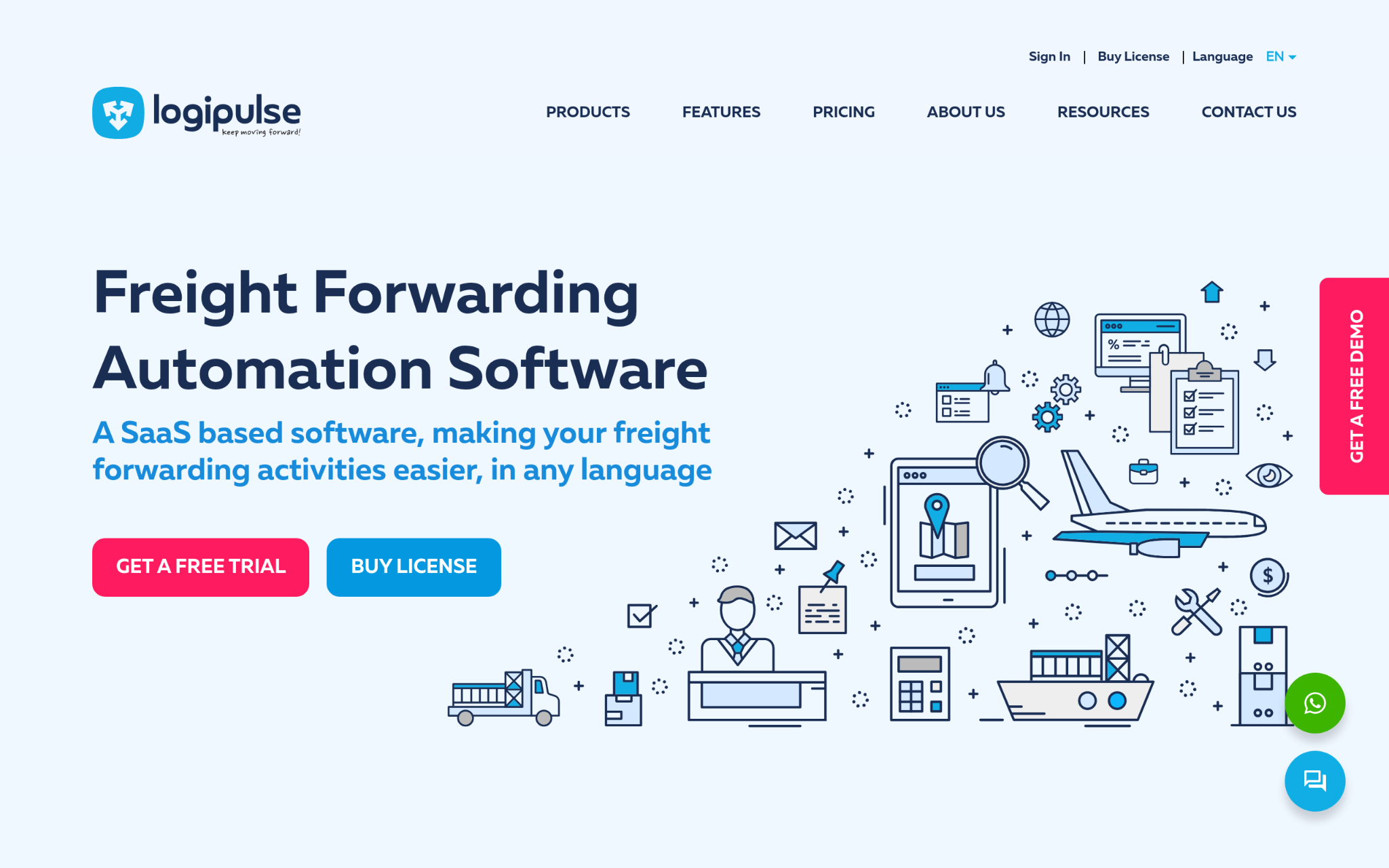
Logipulse is a SaaS logistics management platform developed by Stellosys, covering land, sea, and air import and export, customs clearance, warehouse management, and accounting under one subscription. It runs across multiple devices and supports multiple languages, which is a practical detail for teams spread across different regions. Notifications go out via email, SMS, and WhatsApp, so shipment updates actually reach the right people. For smaller operators juggling a lot without a large IT team, the all-in-one model is genuinely useful.
Why Does Logipulse Stand Out for Digital Freight Forwarding Platforms?
Logipulse addresses the cost barrier that keeps smaller freight forwarders locked into manual processes, with entry-level annual pricing starting below $5,000 and no processing fees at startup. That kind of accessible pricing, combined with a pay-as-you-go model, is rare at this feature depth. It makes Logipulse a practical starting point for 3PLs and small forwarding operations that aren’t ready for enterprise pricing (think $200+ per user per month with some of the bigger names).
Summary of Real User Reviews:
Formal review data for Logipulse isn’t widely published on the major platforms, so there’s limited third-party sentiment to pull from at this stage. That’s worth noting before you commit. The platform’s feature set and pricing structure are well-documented on their site, and the Stellosys background gives it some technical credibility, but independent review depth is something to ask about during a demo.
-
Riege – Best for International Freight Forwarding and Transport Management
What Does Riege Do?
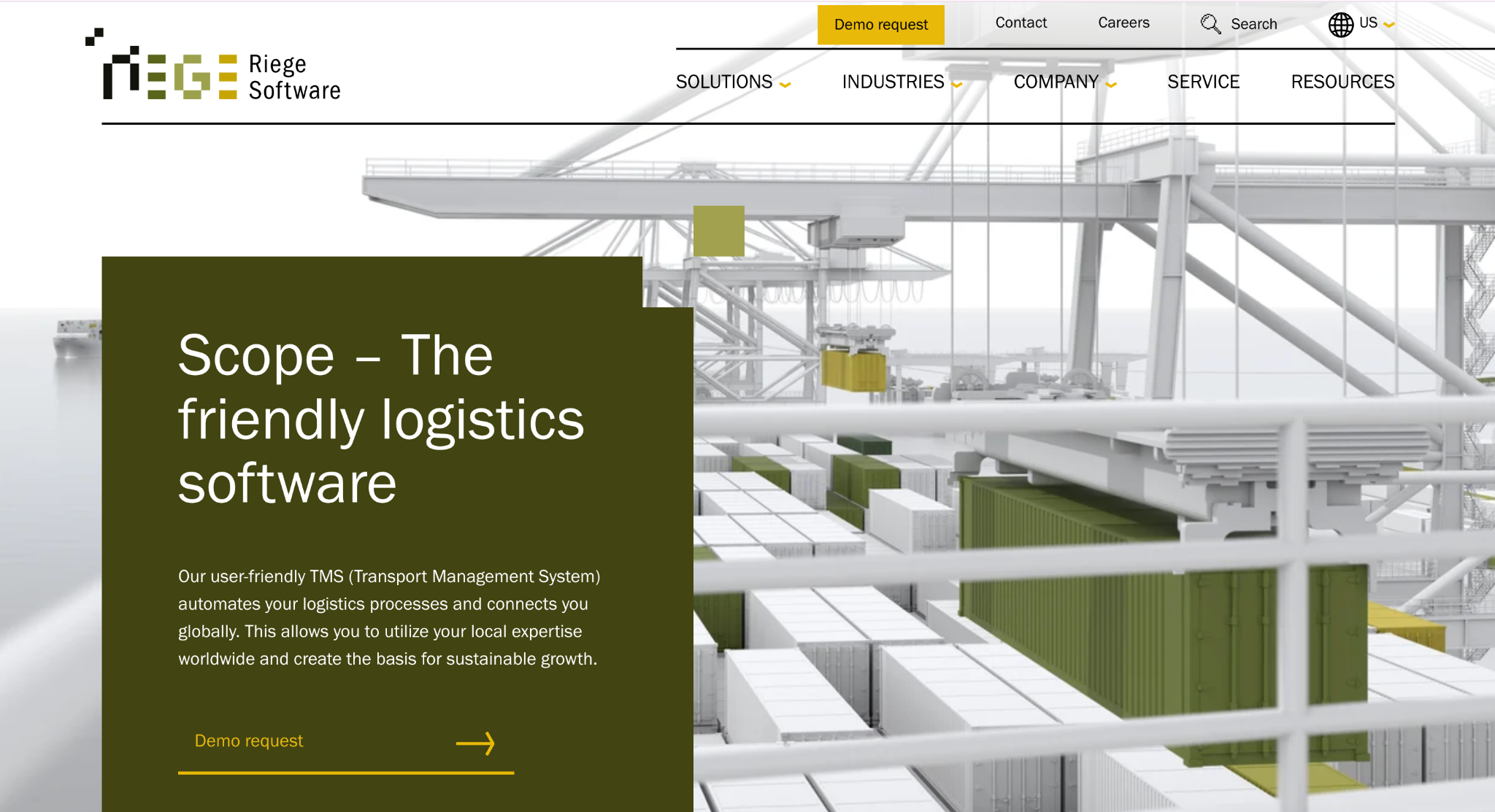
Riege Software has been in logistics technology since 1985, which gives them a level of knowledge that newer platforms simply don’t have yet. Their flagship product, Scope, handles air freight, ocean freight, and customs management with real-time tracking, emissions calculation, and process automation built in. More than 900 customers across 60 countries use the platform, with over 16,000 active users. Their branch presence across Europe, Asia, and the Americas means localized support is a real thing, not just a line on a sales deck.
Why Does Riege Stand Out for Digital Freight Forwarding Platforms?
Riege fills the gap for international operations that need strong customs compliance across major markets (Germany, Switzerland, the Netherlands, and the US) and a platform that can handle the full multimodal freight picture without stitching tools together. Nearly four decades of focused logistics experience means the edge cases in cross-border shipment management are already accounted for in how the platform was built.
Summary of Real User Reviews:
Riege picked up industry recognition at the 5 Star Logistics Network conference in Bangkok, taking home awards for Most Valuable Industry Partner and Diamond Sponsor. The 900-plus customer base across 60 countries suggests strong retention, which usually reflects operational reliability more than any marketing claim. Detailed end-user review scores aren’t prominently published, so direct reference checks with existing customers would be a smart move before signing.
-
Magaya – Best for Mid-Market Freight Forwarding and Logistics Operations
What Does Magaya Do?
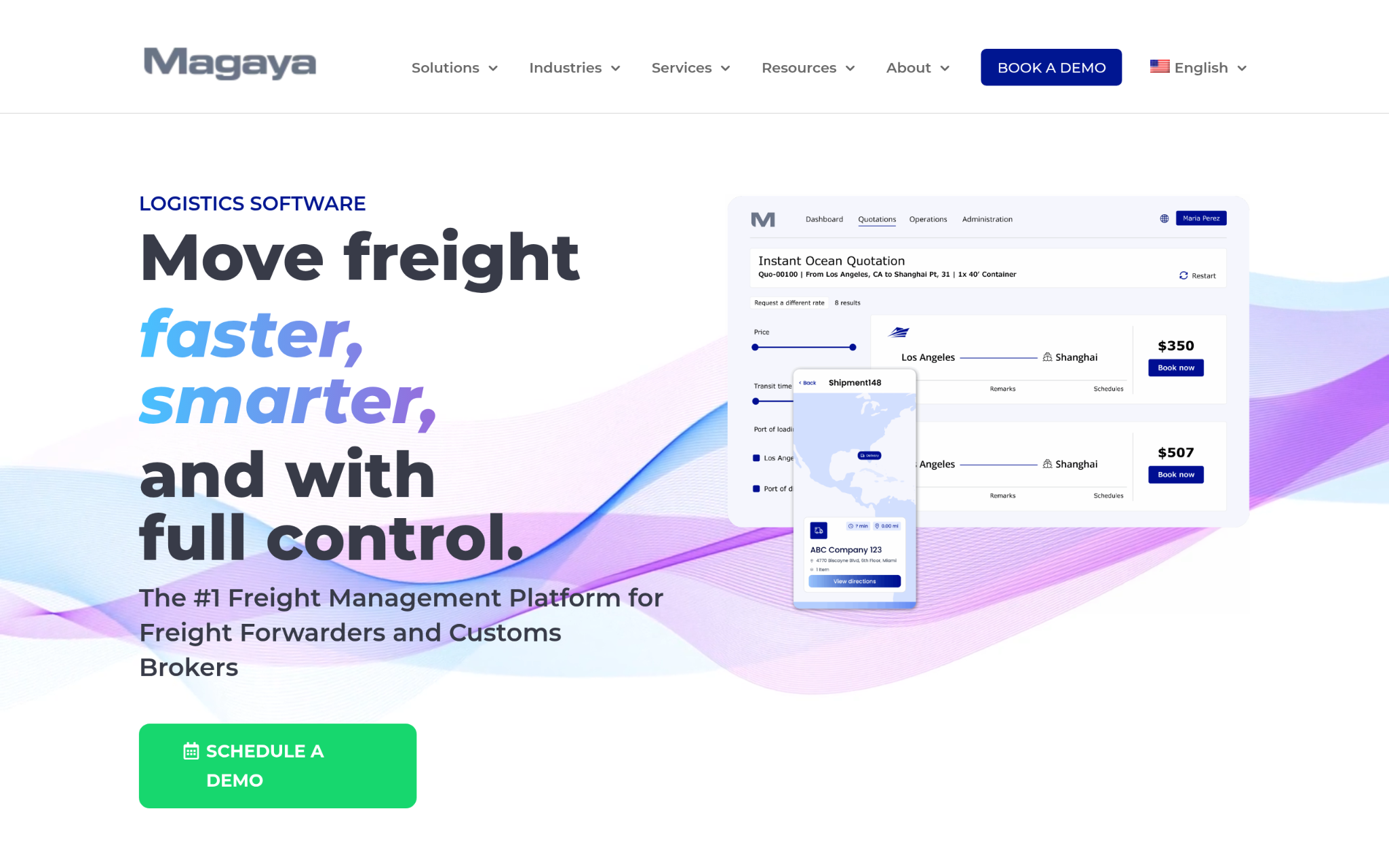
Magaya delivers a modular freight platform that covers supply chain operations, customs compliance, warehouse management, rate management, and customer-facing digital experiences. They serve more than 2,300 customers across 100 countries, which puts them in a different league for market reach compared to most mid-market options. The modular setup means you can start with what you need and expand as operations grow, rather than paying for functionality you’re not using yet. At $200 per user monthly (not cheap, but reasonable for the feature set), they sit in an accessible range for growing freight businesses.
Why Does Magaya Stand Out for Digital Freight Forwarding Platforms?
Magaya bridges a real gap: enterprise-grade functionality at pricing that mid-market freight forwarders can actually afford, without forcing a stripped-down version of the product to get there. One documented case study from Interglobal Logistics showed a 300% improvement in documentation and shipment processing turnaround times, and that kind of result is hard to match with off-the-shelf logistics software.
Summary of Real User Reviews:
Magaya earned Leader status in nine G2 categories and received Best Overall recognition from SoftwareConnect in 2025. Users across small-business and mid-market segments consistently rate the platform well for its depth of features. The combination of industry awards and a 2,300-plus customer base suggests this isn’t a platform that coasts on marketing. It delivers where operations teams actually feel it.
-
Shipthis – Best for Freight Forwarding and Logistics Operations Management
What Does Shipthis Do?
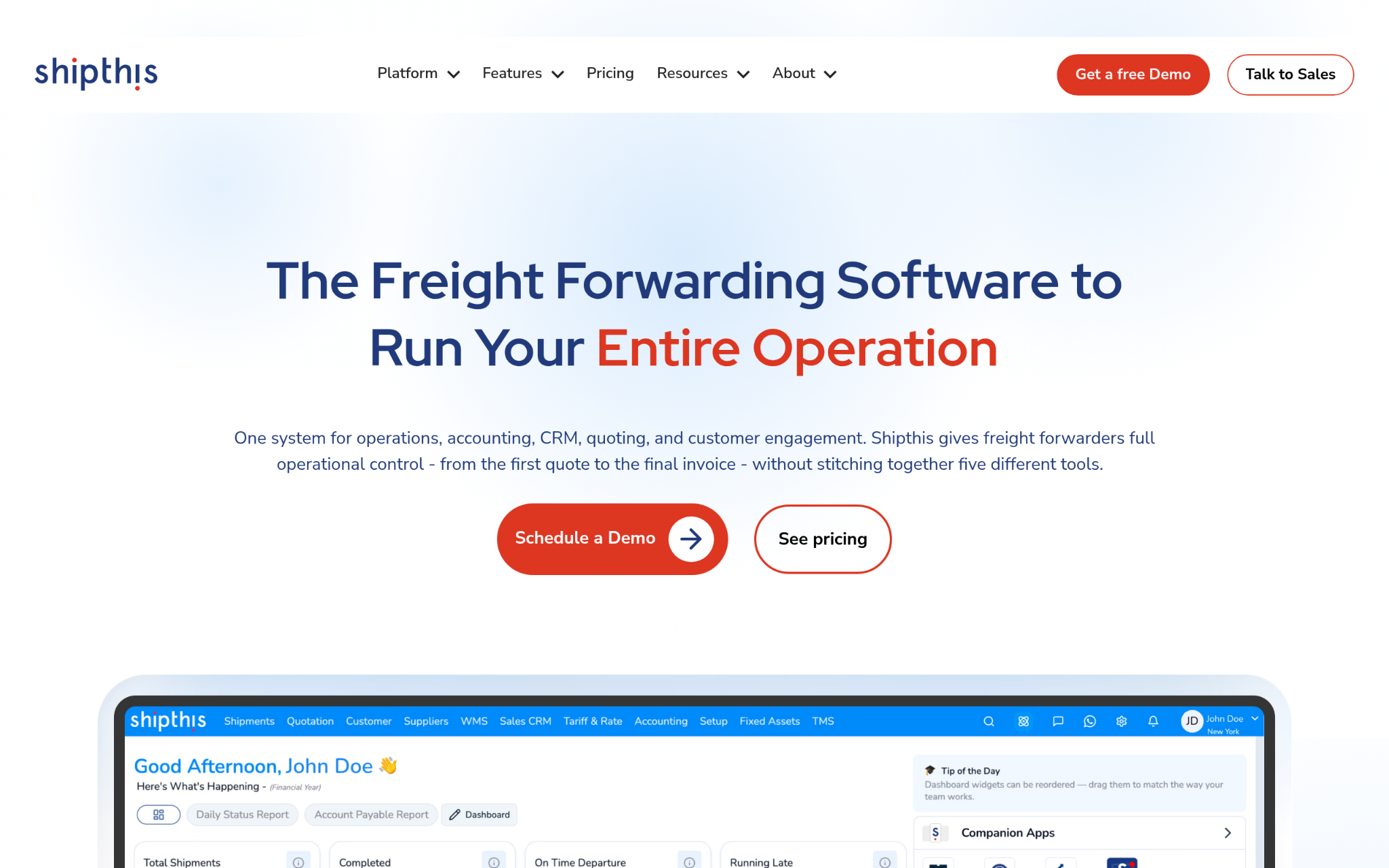
Shipthis is a freight forwarding platform built around AI capabilities, designed for traditional forwarders, logistics companies, and NVOCCs that want to modernize without replacing their entire operation. It covers all transport modes including air, sea, road, and rail, and bundles shipment management, accounting and finance, sales CRM, quotation management, and warehouse management into one platform. Real-time profit and loss per shipment and multi-currency GAAP-compliant accounting are genuinely useful for operations running across multiple markets. Entry pricing starts at $49 per month, which makes it one of the more accessible starting points on this list.
Why Does Shipthis Stand Out for Digital Freight Forwarding Platforms?
Shipthis tackles the modernization problem for traditional freight forwarders who need AI-assisted document processing and pricing tools without the six-figure enterprise price tag that usually comes with that functionality. The combination of real-time P&L per shipment and CO2 emissions tracking shows they’re building for where freight operations are heading, not just where they’ve been.
Summary of Real User Reviews:
Published review data for Shipthis is limited on the major third-party platforms, similar to Logipulse. That’s a consideration worth raising in a sales conversation. The platform’s feature list is clearly documented and the AI-native positioning is distinctive, but independent user validation is something you’d want to dig into before committing to a full rollout.
Research Methodology and Selection Process
Building this list started with a wide sweep of the logistics technology space, pulling from software directories, freight industry publications, review platforms, and the official websites of platforms that came up repeatedly in forwarder communities and operations forums.
Initial Data Collection
The starting point was building a broad longlist from multiple sources at once. Software directories and review platforms surfaced platforms with documented user bases, and cross-referencing those with case study libraries and freight industry coverage helped fill in context that ratings alone don’t capture. Any platform that appeared across multiple credible sources was flagged for deeper review.
Shortlisting Phase
From the full longlist, options without verifiable operational history in logistics were removed first. Review patterns were analyzed for consistency, looking at whether positive and negative feedback reflected actual day-to-day use rather than one-off experiences. Platforms with thin or unverifiable review histories were noted and weighted accordingly. They weren’t automatically excluded, but flagged as areas where independent verification would be needed.
Verification of Claims
Each platform’s stated capabilities were cross-checked against what real users actually described in reviews and documented case studies. Where a platform claimed meaningful improvements in shipment processing or documentation turnaround, those claims were compared against available case study evidence. Discrepancies between marketing language and user-reported outcomes shaped how each platform was positioned in the final comparison.
Authority and Industry Contribution Layer
Signals like industry awards, recognition from logistics associations, and mentions in freight industry publications were factored in. This wasn’t about collecting trophy counts. It was about understanding which platforms have earned credibility within the freight community over time. Platforms recognized by multiple independent sources for consistent performance carried more weight than those with only self-reported credentials.
Digital Freight Forwarding Platforms-Specific Evidence
The final filter was logistics-specific. Each platform was evaluated for dedicated coverage of freight forwarding workflows, verified case studies from actual forwarders or 3PLs, and user reviews that reflected the specific operational realities of international shipping: customs documentation handling, multi-mode shipment management, and freight accounting. Platforms with strong general logistics credentials but no evidence of deep freight forwarding application were noted but didn’t make the final five.
How to Choose the Right Digital Freight Forwarding Platforms
The right platform depends on your freight mix, team size, and how much operational difficulty you’re managing today versus where you expect to be in two years. Here’s what to actually weigh before signing:
- Industry/Domain Experience: Look for platforms built for freight forwarding, not general logistics tools that freight modules were added onto later. The difference shows up in how customs workflows, multimodal shipments, and consolidation management actually function.
- Features and Capabilities: Match the feature set to your real operations. If you run air and ocean freight with customs clearance, a platform that handles all three natively is worth more than one that requires add-ons for each.
- Pricing Structure: Understand whether you’re paying per user, per shipment, or on a subscription basis, and model out what that means at your current volume and projected growth. Entry pricing can look attractive until volume scales.
- Results Measurement: Ask vendors how customers track improvements in freight cost per TEU, customs clearance cycle time, and quote-to-booking conversion rate. If they can’t answer with specifics, that’s a signal.
- Industry Knowledge and Compliance: Confirm the platform supports the Incoterms, customs regulations, IATA standards, and IMO/SOLAS requirements relevant to your trade lanes, especially if you’re moving regulated cargo types such as hazardous materials, perishables, or oversized freight.
Bottom Line
Digital Freight Forwarding Platforms have moved well past the point of being “nice to have.” The forwarders pulling ahead are the ones with systems that connect quoting, operations, customs, and finance without manual handoffs. Logistaas leads for all-in-one freight-specific TMS functionality, while Magaya and Riege bring depth for more established operations. As freight volumes grow more complex, the platform you choose now shapes how fast your team can actually scale.
Was this news helpful?
 Yes, great stuff!
 I’m not sure
 No, doesn’t relate