

Product Differentiation in a Saturated Market: What Ecommerce Brands Must Do to Stand Out


What’s the key to product differentiation? Here’s how to emphasize the uniqueness of your offer in a way that resonates with your audience.
Since the mid-1990s, when ecommerce was still a relatively new phenomenon in an otherwise traditional retail industry, online shopping has grown into the preferred method of buying physical products.
According to data from July 2025, 85% of people shop online. They’ve spent $7.4 trillion this year. And, most impressively, 25% of every item purchased globally was bought over the internet.
While this information is great news for ecommerce businesses trying to grow in digital settings, the numbers reveal another key consideration: a high growth rate in the prevalence of digital retail also means an inevitable rise in competition. This can make product differentiation more challenging — particularly when operating in already saturated markets.
Fortunately, differentiating your brand and offer isn’t impossible. You just have to adopt the right approach.
Here’s what ecommerce brands must do to stand out. Let’s get started.
Treat Distribution Channels as Communities, Not Sales Opportunities
One of the biggest differentiation mistakes in online selling (and branding, for that matter) is thinking that the primary objective of investing in marketing is to quickly sell your products.
Now, it is true that one of the best ways to measure the performance of your marketing tactics is by tracking sales. However, the true value of next-level campaigns isn’t just reflected in profits but in brand sentiment instead. Here’s why.
According to research conducted by Salesforce, 61% of consumers feel that companies only treat them as a number or a source of income. And that’s the exact opposite of what they want to receive when shopping with businesses.
So, if you want to differentiate your product or ecommerce brand in a saturated market, focus on using your content distribution channels to build relationships with your target audience. Shift your focus from selling to connection, and you’re guaranteed to get more consumers to want to buy from your business.
For example, Blume does it beautifully on Instagram, where it often focuses on its customers (instead of its products) and shows how happy the brand’s team is that their products provide genuine benefits to users seeking effective solutions. Of course, you don’t have to copy this exact approach. You can achieve similarly positive differentiation results by aiming to entertain your followers or by prioritizing publishing valuable content they can use to reach their goals.
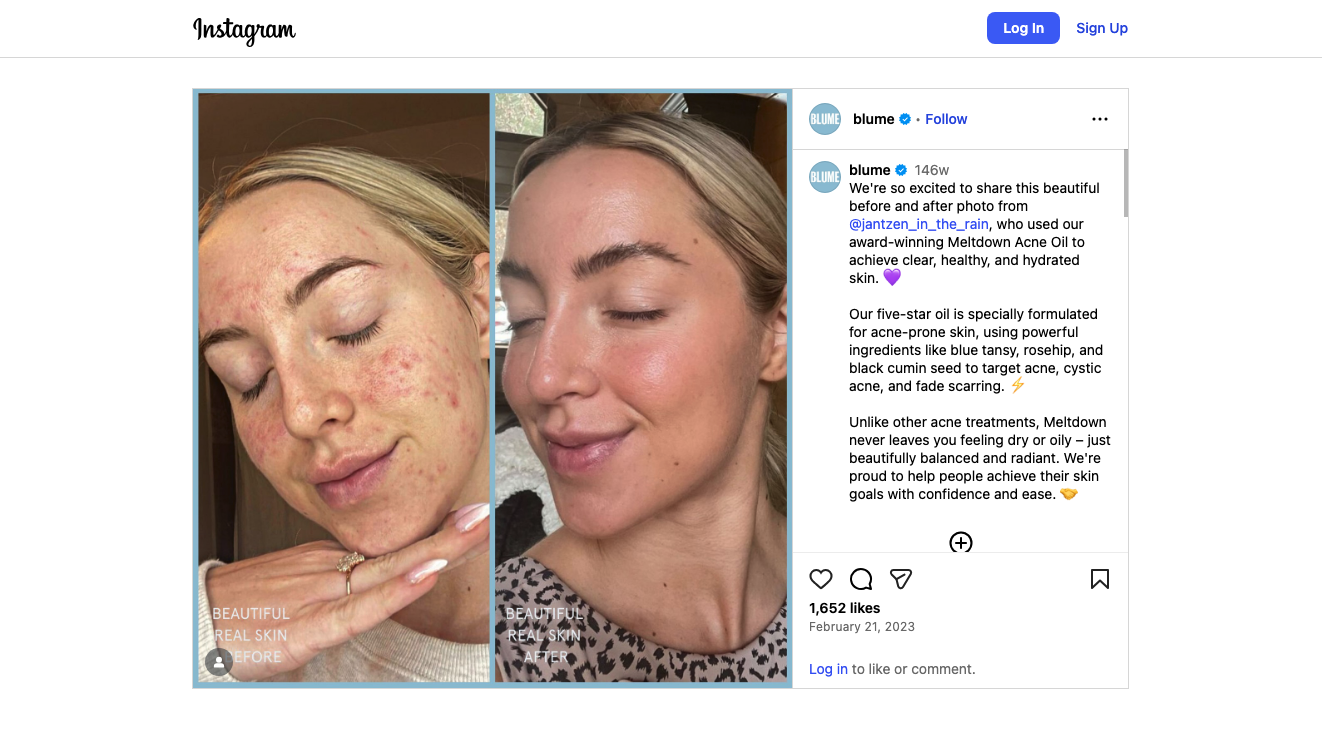
Source: instagram.com
Stop Avoiding Direct Product Comparisons
When it comes to product comparisons — especially direct ones — one of the most common reactions brands have is that they completely avoid them, thinking that they’re a shortcut to boosting competitors’ sales.
But here’s the deal. Consumers naturally move through an evaluation stage of the buyer’s journey when making purchase decisions. That means they’re pretty much guaranteed to compare multiple solutions before choosing the one that fits their needs.
If you’re still not convinced that this is the case, just consider the following. In 2023, PwC found that close to one-third (29%) of consumers consider price comparison sites to be a top source for pre-purchase information.
You can invest in direct product comparison content to convince your audience to choose your solutions. Or you can allow your ideal customers to consume such content on your competitors’ websites (and probably choose their products as a consequence).
Naturally, you don’t have to name specific competitors if you don’t want to. A solution similar to that used by LesserEvil is more than sufficient for product differentiation — especially if you offer products with unique benefits.
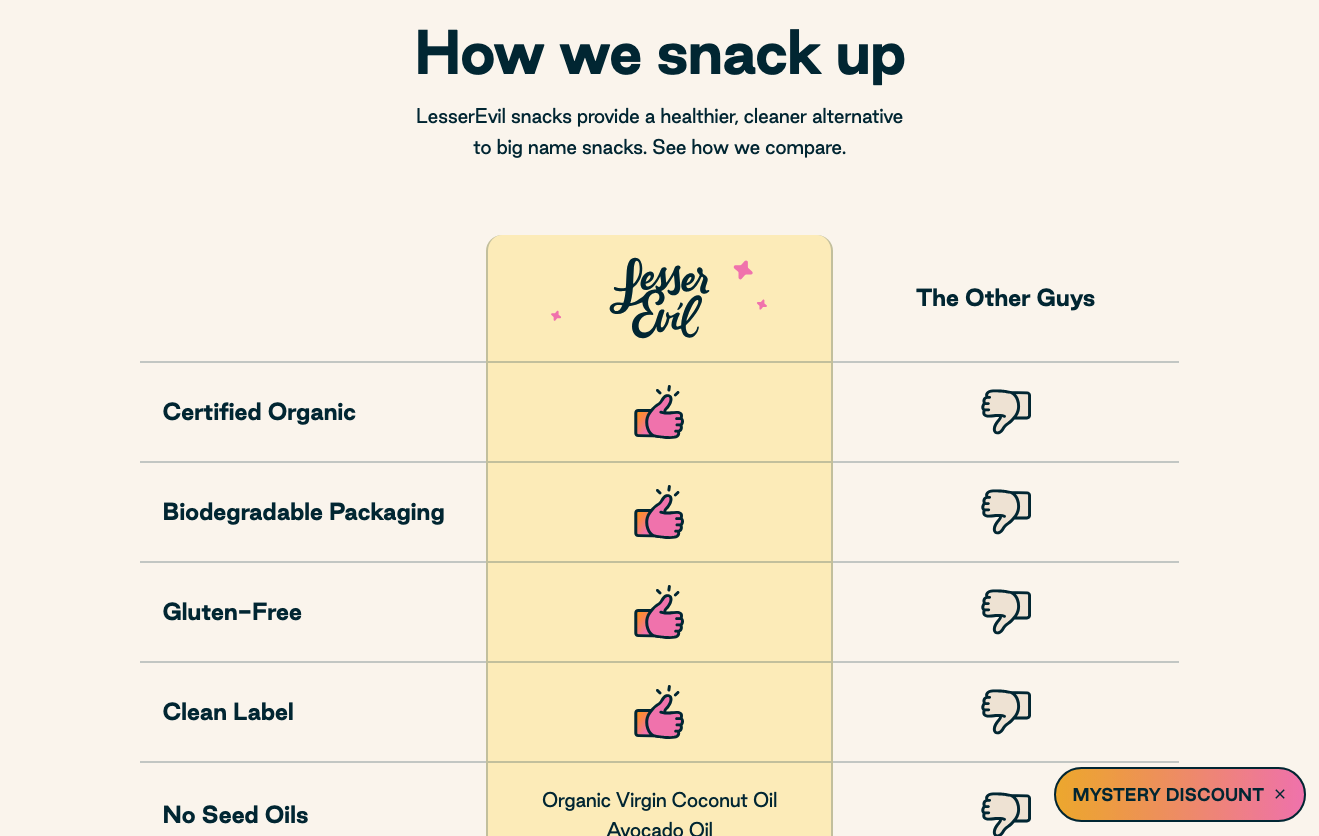
Source: lesserevil.com
Nevertheless, if you want to win at product differentiation and outperform your competitors, then a more direct approach could be necessary. SaaS brands tend to do this beautifully, particularly on landing pages they optimize to “steal” paid traffic away from their market rivals. Just check out how ClickUp does it on its Notion vs. ClickUp landing page.
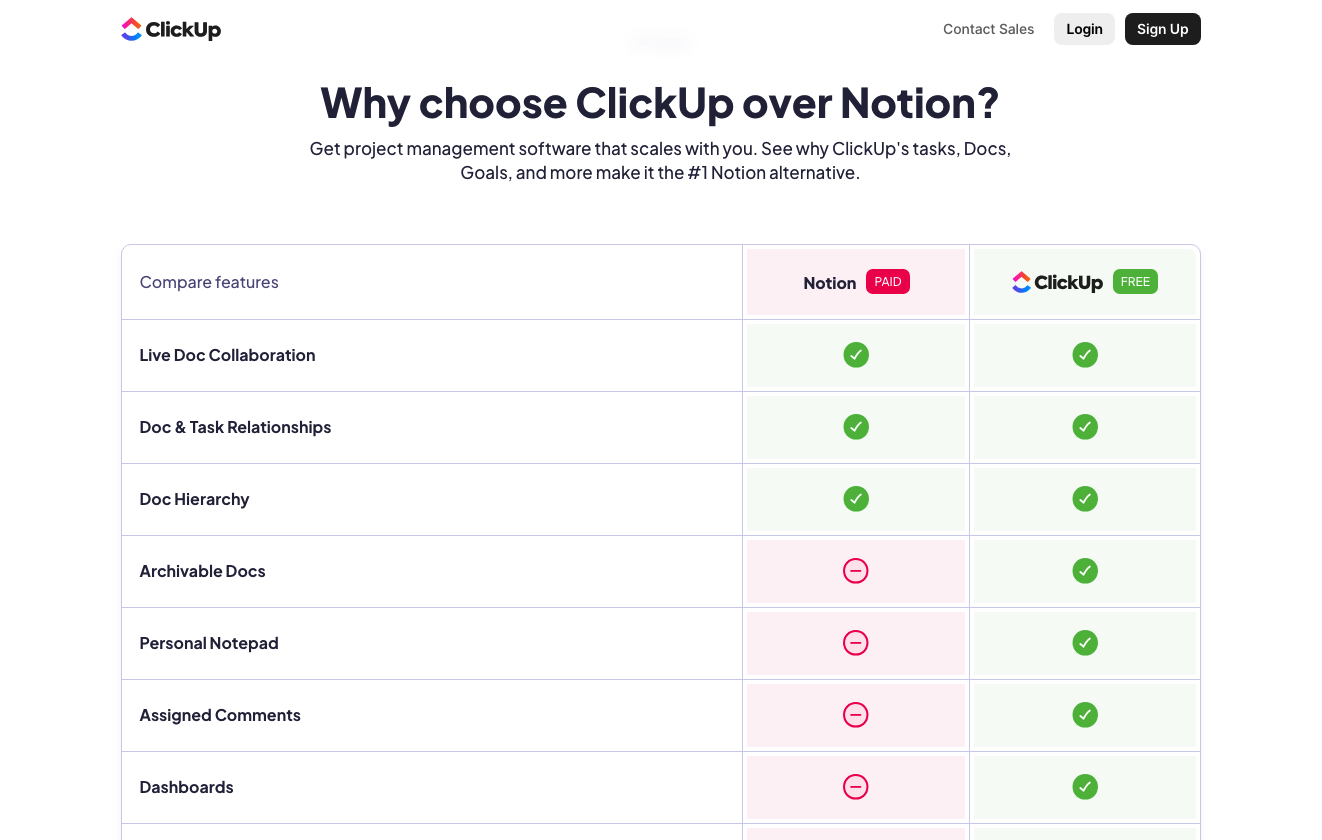
Source: clickup.com
Always Be Transparent with Your Audience
Sometimes, the key to product and brand differentiation isn’t about showing that you offer a superior solution compared to your competitors. Instead, it’s convincing your target audience that they can trust your business to guide them through the buyer’s journey with integrity.
The reason for this is simple — it’s all about brand trust. After all, with 81% of shoppers saying they need to perceive a brand as credible to consider buying from it, establishing a trustworthy reputation is a great method to stand out in saturated markets.
However, while there are numerous ways you can earn your audience’s confidence, transparency is often overlooked because businesses take it for granted that what they say is what consumers hear.
But here’s the deal. Many consumers don’t, in fact, have confidence in brand claims — particularly those related to ESG values.
The best way to remedy this is by practicing high levels of transparency in all situations. Something as elementary as being open about how you benefit from web visitors interacting with your content — as Medical Alert Buyer’s Guide did with the banner at the top of its homepage — is more than enough.
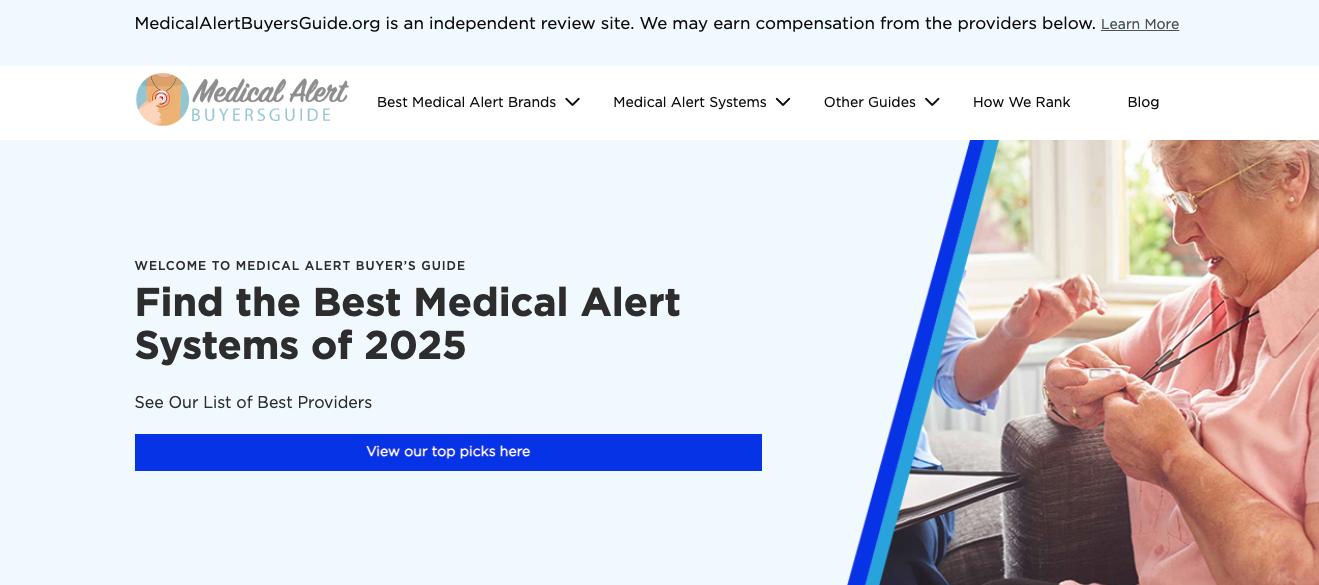
Source: medicalalertbuyersguide.org
Naturally, you don’t have to use that particular tactic to demonstrate transparency, trustworthiness, and the superiority of your offer compared to other options in the market. You could also try something similar to Isto, a clothing brand that breaks down the cost of each item in its store to ensure shoppers know exactly what they’re spending their hard-earned money on.
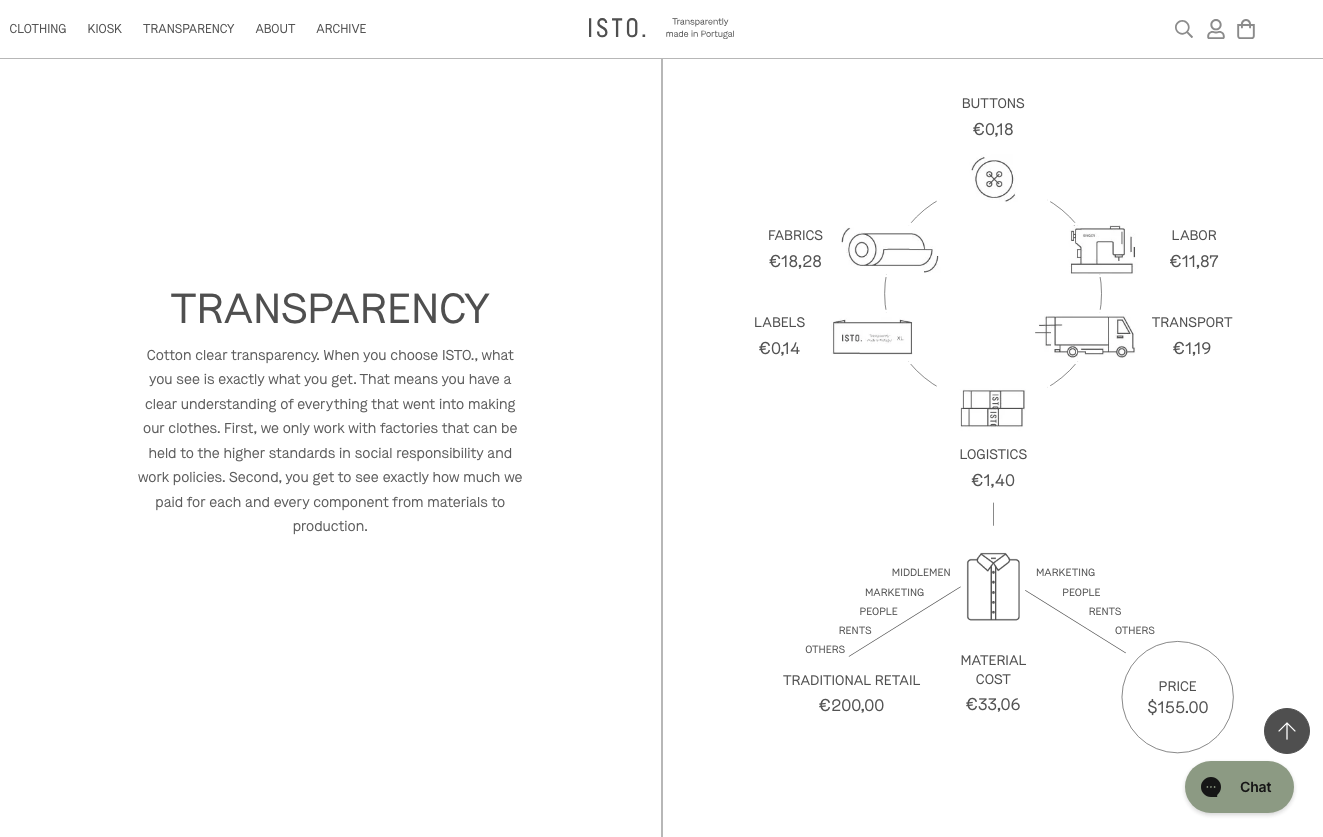
Source: isto.pt
Emphasize CX Benefits That Make Your Offer Unique
What are the top purchase factors shoppers evaluate before spending their hard-earned money on a product? Quality and value for money are two major considerations. But if you look at consumer behavior research, you’ll discover that customer experience also plays an important role in guiding buying decisions.
Shoppers want a top-tier customer experience when choosing what brands to buy from. Many (72%, according to Qualitrics) are even prepared to pay more if it means receiving a premium experience.
Of course, what constitutes an enjoyable customer experience hugely differs across industries. However, if you’re trying to differentiate your ecommerce brand and products in a saturated market, a good rule of thumb would be to focus on the CX benefits shoppers want the most.
According to PwC, these include reliable product quality, fair pricing, quality customer service, clear communication and transparency, seamless customer experience, sustainability, innovation, personalization, loyalty rewards, and social media engagement.
Additionally, you can identify CX benefits that are uncommon in your niche and emphasize that you offer those to aid differentiation.
For example, Custom Sock Lab understands that it operates in a market where many manufacturers are capable of offering high volumes of products at low prices. So, to stand out, it emphasizes unique CX benefits that are not commonly found in its industry. These include the fact that its products are completely custom-made, the business offers white-glove service, all orders are infinitely customizable, and the products are premium USA-made quality, made with combed cotton and Merino wool.
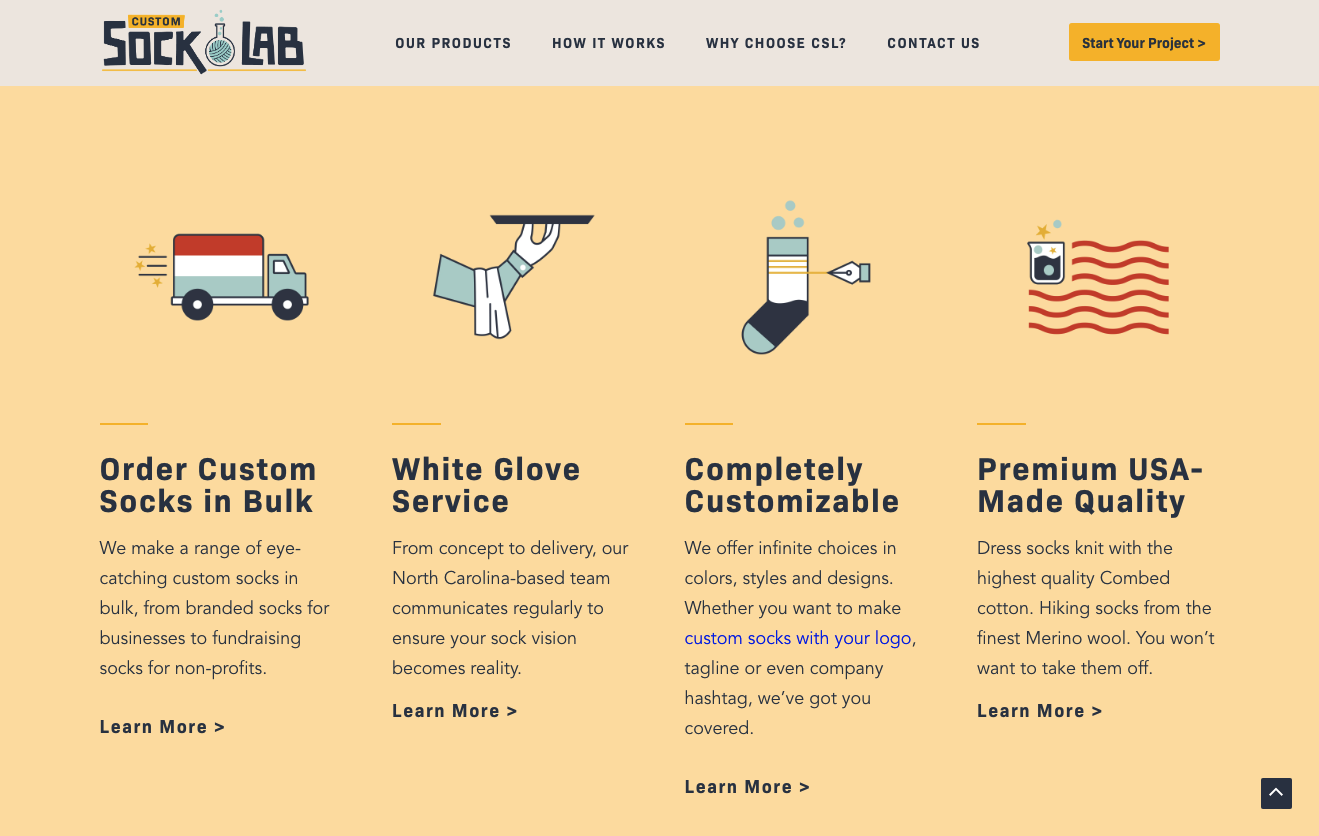
Source: customsocklab.com
Tap Into Unexpected Consumer Emotions
At first glance, it may seem that rational thought is the primary driver of buying decisions. However, the simple fact is that most people shop based on how they feel.
In fact, according to experts, up to 95% of consumer decisions are driven by subconscious factors, including emotions.
So, instead of trying to convince your audience that your offer is superior to alternative options in your target market, why not awaken an emotional response in your prospects and make them want to buy your products on a deeper level?
One Degree Organics, for instance, highlights its dedication to working with small family farms when making its products, using the emotional appeal of simplicity, individuality, and sustainability to convince its target audience to convert. Alternatively, you could appeal to your ideal customers’ aspirations, wants, or even fears, as all of these can be powerful emotions in driving customer action.
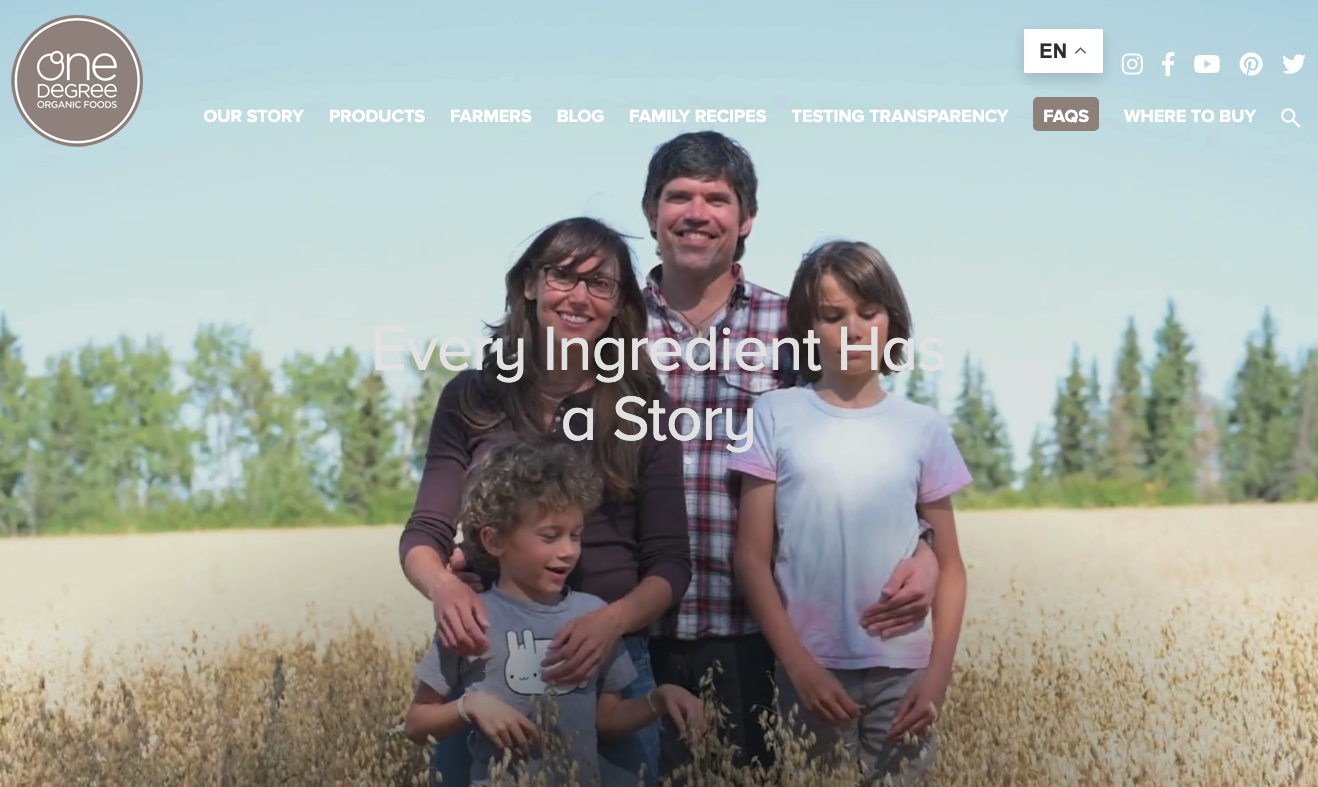
Source: onedegreeorganics.com
Differentiate Your Offer Through Proof and Third-Party Certifications
Finally, as you explore tactics to differentiate your product in a saturated market, don’t forget to back your claims with purchase-inspiring social proof.
Ultimately, consumers want to ensure they’re buying the best solutions for removing their pain points. If you have any third-party content that shows the superiority of your offer, it’s only natural that you should use it to help you stand out — particularly in low-trust industries.
Social proof works marvelously for this purpose. So does user-generated and expert-created content. Or, if you operate in a more technical or innovative industry, then you could utilize third-party data to back your claims.
For instance, Performance Lab displays trust badges on its homepage to communicate its dedication to sustainability. Additionally, the brand includes clickable links in its product benefits sections and invites shoppers to take a deeper dive into the ingredients and dosages used in its formulas, knowing that such transparency and trust-based marketing is usually uncommon in its target industry (which automatically allows it to stand out).
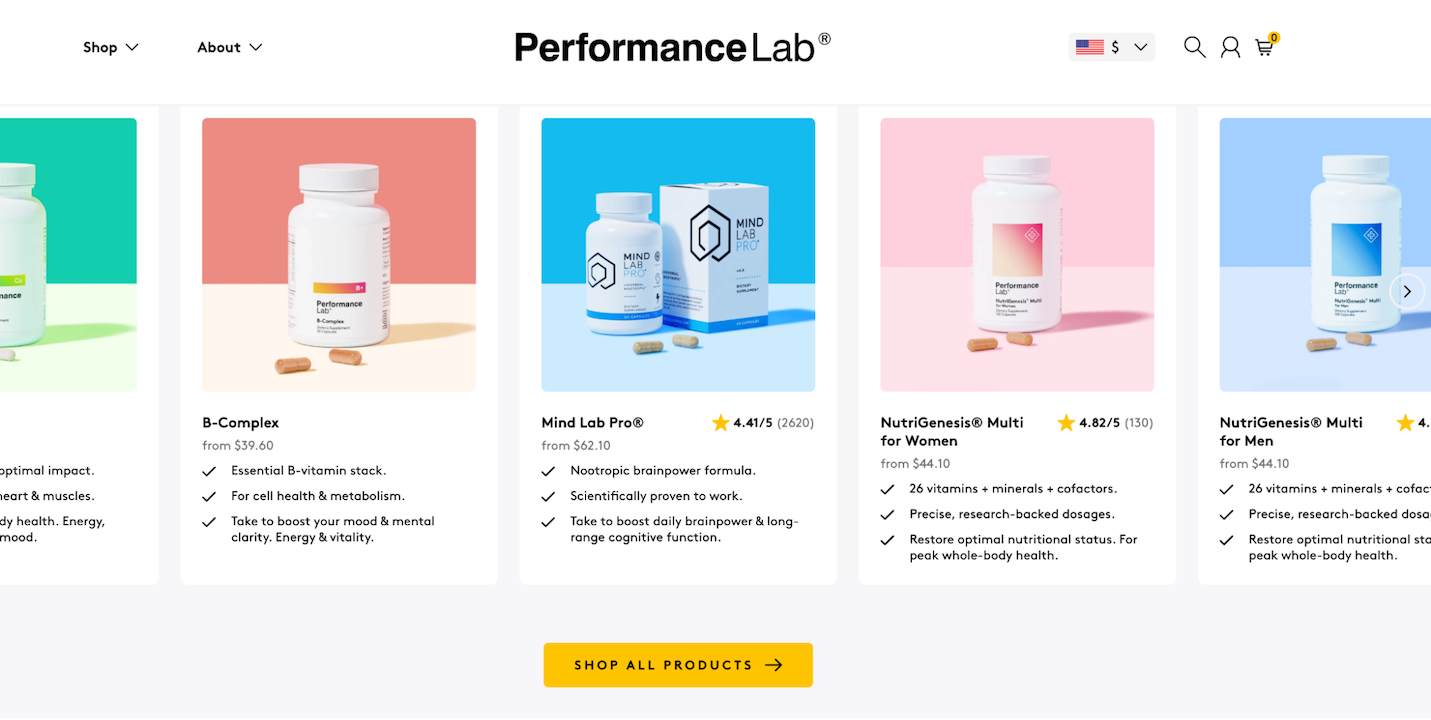
Source: performancelab.com
Final Thoughts
There you have it: a few effective product differentiation tactics to help your ecommerce brand stand out in saturated markets. No matter which one you opt for, you’re guaranteed to see positive results.
For the best possible outcomes (and highest ROI), always align your branding and marketing strategies with your target audience’s wants and needs. That way, you won’t just have an easier way to convince prospects to choose your solutions. You’ll also have more success grabbing and retaining their attention with unpaid marketing campaigns, which is crucial, knowing that high conversion rates don’t depend on one-time interactions but well-developed brand-customer relationships.
Was this news helpful?
 Yes, great stuff!
 I’m not sure
 No, doesn’t relate