


Proactive IT Support for E-Commerce Operations Reduces Audit Risk

How Proactive IT Support Reduces E-Commerce Audit Risk
Risks of an eCommerce Audit What you need to know
E-commerce is a complicated, fast-paced business where data integrity, security and regulatory compliance challenges are paramount. The bigger you are, the exponentially bigger the audit (financial, data privacy or regulatory) risk. Poor auditing harms a firm, levies huge fines on organizations and diminishes the trust of clients. Proactive IT assistance is an excellent way to decrease these risks, helping to ensure that your systems and procedures are routinely tested, updated and compliant.
Risks of an e-commerce audit include weak or inaccurate financial records, data protection issues and non-compliance with ever-increasing laws such as GDPR or PCI DSS. A 2023 survey indicated that 68% of e-commerce companies have performed at least one compliance review in the recent two years. 40% of the companies reported having problems that needed costly repairs. It merely highlights the requirement for solid IT systems that not only run day-to-day operations but sail through audits with minimum hassle.
Payment card industry regulators and consumer protection agencies are also taking a closer look at e-commerce merchants and doing compliance checks. With the increasing use of digital payment systems, it becomes vitally important to make these systems secure and auditable. Auditors can quickly identify data irregularities, missing audit trails and system hazards that can come from inadequate IT management. All these challenges might lead to penalties and fines and have an adverse influence on the firm’s overall reputation.
And on top of that, the pace of technology and new standards make compliance a moving target. Reactive IT support firms typically can’t resolve problems after they occur, resulting in expensive downtime and lost audit data. Proactive IT support finds and fixes potential audit problems before they become problems.
The Significance of Proactive IT Support for Compliance
Proactive IT Support. This means ensuring problems do not happen in the first place. It also means implementing solutions that will boost reliability and prepare you for compliance. Reactive IT models are built to solve problems after they’ve failed, whereas proactive support continuously monitors systems, performs routine maintenance, and implements best practices as outlined by compliance requirements. This proactive approach eliminates data breaches and keeps audit trails correct and available – all in an effort to reduce system downtime.
IT support services such as FTI Services can provide the knowledge and skill set that e-commerce firms need to protect and comply with the IT infrastructure. These companies offer services including as vulnerability assessments, patch management, and compliance audits to detect and repair vulnerabilities before they become a problem. Applying these concepts in your day-to-day operations greatly reduces the chance of audit failures.
Proactive IT support has benefits beyond just being compliant. System updates & security are very crucial for overall operational efficiency. Automated monitoring solutions can also identify suspicious activity or anomalies in real-time, providing IT professionals with the chance to respond promptly. Such monitoring respects the traceability standards of the auditors and avoids expensive situations such as fraud or loss of data.
The front-end IT help is also a clear and complete audit trail for firms. For audits you need detailed logs of who accessed the system, what was changed, and what transactions were processed to show compliance with regulatory standards. Not providing the data might lead to corporations being penalized or face longer investigations. These logging systems are constructed and maintained as part of the daily operational routine of a strong IT team and are always ready to roll.
IT Support Can Improve Data Security
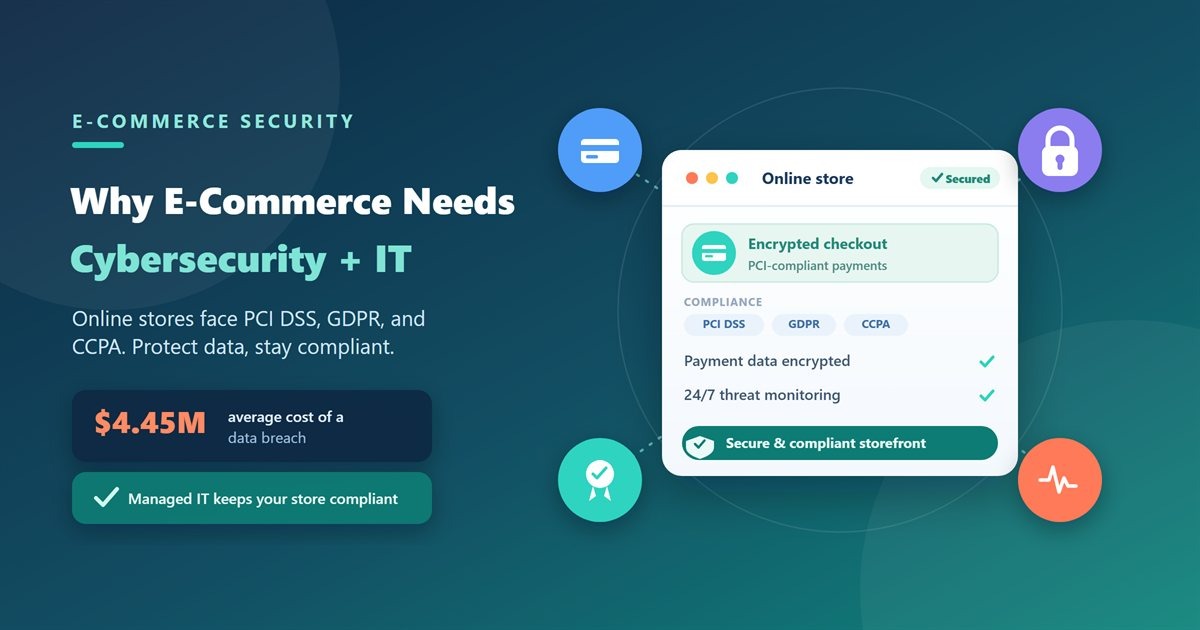
Data security is an essential component of audit readiness for e-commerce. With the number of cyber-attacks on online shops growing, proper security is necessary. Proactive IT support teams deploy firewalls, encryption, multi-factor authentication and constant network monitoring to protect client and payment data.
Research shows that in 2023, 43% of e-commerce companies experienced at least one data leak. The average breach costs $3.9 million. Such breaches resulted in regulatory penalties and loss of customer confidence. Businesses using Gamma Tech for IT support get security solutions tailored to their individual needs, based on industry norms and regulations, thus lowering the possibility of breaches or audit concerns.
The variety of platforms and payment systems complicates the nature of e-commerce cybersecurity. Proactive IT support means that all the elements of the ecosystem are up to security requirements and updates are applied quickly to address vulnerabilities. Attackers may use unpatched or antiquated software or systems to obtain unwanted access.
Proactive IT help can include things like routine worker training, and phishing exercises that can lessen the risk of social engineering. Teaching staff security best practices is crucial because human error remains a leading cause of breaches. This multi-pronged approach provides a strong defense that auditors consider the hallmark of a mature compliance program.
Simplified Reporting of Finances and Operations
E-commerce enterprises need accurate financial reporting especially when there is an audit. Pro-active IT help will ensure that accounting systems, inventory management and sales systems are synced and provide reliable data. Automated backups, real-time validation and cross-system data integration minimizes errors and discrepancies.
IT assistance can also aid organizations employing compliance software that generates audit-ready reports, saving time and eliminating human error across audit cycles. Companies utilizing automated compliance systems saved 35 percent of the time spent preparing for audits, according to Deloitte. The efficiency means faster audit resolution and less operational risk.
Inventory difficulties and sales fluctuation are two of the most common red flags for e-commerce auditing. With proactive IT help, these problems are resolved through technology to handle orders, manage inventories and account for finances. This combination enables the data to move seamlessly between systems, reduces the possibility of errors from human data entry and increases accuracy.
IT staff also construct dashboards and reporting systems that provide real-time visibility into key performance indicators, or KPIs. Management can utilize these tools to identify abnormalities or trends that indicate compliance issues before the auditors do. Accurate and timely data delivered to business management helps build a culture of transparency and responsibility.
Enhance Business Continuity & Disaster Recovery
The audit risk also involves the ability to recover from a system failure or natural occurrence. Proactive IT aid also includes developing and testing business continuity and disaster recovery plans. These plans promote the ability to maintain or rapidly resume important e-commerce processes and achieve data integrity and business continuity.
Gartner says tested DR policies cut downtime by 60% in disasters. By employing these strategies within your IT frameworks, auditors see that you are prepared and this has a positive impact on audit outcomes.
In addition to decreasing downtime, disaster recovery strategies can also help ensure compliance with regulatory requirements for data availability and integrity. For example, PCI DSS requires incident response and recovery protocols. Proactive IT support means regularly testing and updating recovery techniques to make sure these criteria are met.
Cloud backup solutions are now an indispensable aspect of business continuity strategy. IT pros are proactive in the management of these solutions so that data is backed up safely and can be accessed quickly. This feature helps to avoid financial loss and offers auditors confidence that the firm will be able to withstand disruptions without compromising data security.
IT cooperation to establish a compliance culture
Compliance culture in e-commerce enterprises is not simply an issue of technology, but a matter of proactive IT assistance. IT departments interact with compliance officers, finance departments, and management to ensure that technology activities are compliant with rules. This coordination helps ensuring legislation, training and system settings are in sync with regulatory changes, avoiding compliance gaps.
IT support also includes ongoing education and awareness campaigns to educate staff about the need of data protection and safe usage of technology. The human element is a key factor in reducing audit risk from internal error or negligence.
Proactive IT support teams also help to promote a culture of compliance by helping to establish frequent internal audits and risk assessments. These assessments can assist in identifying risks so that organizations can rectify them before the external auditors arrive. “Being proactive shows you’re paying attention to compliance and can help you get a better audit result.”
IT support providers are regularly called upon to help firms keep pace with the evolving trends and best practices in regulation. We are trusted advisors, assisting firms in staying ahead of the regulatory curve and avoiding costly surprises. Embedding compliance in the DNA of the organization makes it more resilient to audit risks and also helps to build confidence over the long-term with customers and regulators.
Conclusion:
This is why proactive IT support is a strategic investment for e-commerce companies to reduce the risk of audits and to increase operational resilience. IT support businesses can also assist organizations in maintaining a safe, regulatory and audit-ready IT infrastructure. Through proactive IT practices like regular monitoring, strong safety procedures and disaster recovery planning, the e-commerce business can ace audits while safeguarding customer confidence and business continuity.
The cost of disregarding audit concerns is much more than the expense of investing in proactive IT help in a regulated, competitive firm. Statistics are the rate of cyber attacks and audits. You need a proactive approach to be successful in sustainable development and compliance.
Proactive IT assistance enables e-commerce enterprises to confidently pass audits, improve operational efficiency and build stronger relationships with their consumers. With the digital marketplace continuing to grow, the ability to blend technology and compliance will be a key differentiator for success.
In an increasingly complex regulatory environment, E-Commerce companies are employing IT solutions to proactively confront audit threats and take steps to protect their future, consumers and compliance. Now is the time. Investing in proactive IT support is an investment in the lifespan and reputation of your e-commerce business.
Was this news helpful?
 Yes, great stuff!
 I’m not sure
 No, doesn’t relate