



HOW TO TRACK PHONE CALL ORDERS IN ECOMMERCE (AND WHY IT MATTERS)

Phone Call Order Tracking for eCommerce Projects
Rising customer expectations are prompting businesses worldwide to adopt call tracking software to improve customer experiences through analytics-driven personalization. With modern customers constantly switching between devices and platforms, it’s critical to understand what drives those moves and how to control them.
From AI call agents to predictive analytics, companies employ all existing tech to understand their customers better, including tracking ecommerce orders, which are usually the pinnacle of the customer journey. That’s what’s called omnichannel marketing.
What is Omnichannel Marketing?
Under this marketing strategy, a business connects all its presence across multiple channels to guarantee a cohesive, seamless customer experience.
From the merchants’ standpoint, a centralized data point enables marketers to manage customer data, inventory, and sales by exchanging and analyzing data across all platforms used for business operations, including, but not limited to:
- Customer relationship management solutions (CRM systems);
- affiliate marketing platforms;
- payment systems; stock and warehouse management tools;
- online shops and marketplaces;
- customer support tools;
- other tracking tools (e.g., analytics, call tracking, and delivery tracking solutions)
However, to make full use of all business platforms, companies need to keep customer and sales data connected across the entire buying journey, something the most advanced call management solutions allow.
Without proper call tracking, it becomes unclear which channels or campaigns actually generate revenue. This is especially true for phone orders, which often fall outside standard analytics and require dedicated call tracking systems to link calls to sales.
Order tracking is a key component of an omnichannel marketing campaign’s success, as it enables effective customer journey mapping by linking phone interactions to digital marketing data. Regardless of the channel used, phone call tracking gives businesses a complete view of how customers move from first contact to final purchase.
Phone Call Tracking: Role and Flow
While online sales make up the bulk of e-commerce, they offer the lowest conversion rate. The Bayrad Institute’s 2026 research on cart abandonment rates reveals that 70.22% of online shopping carts are left behind.
When it comes to inbound calls, they really shine – converting about 10 to 15 times more than your typical web leads. Plus, the average order value for those who call in tends to be much higher than for online customers.
The problem is that once the call happens, it is often not clear which specific marketing action influenced that decision, so the connection between marketing and sales becomes unclear. And that’s why e-commerce requires reliable inbound call tracking software to achieve more e-commerce conversions.
What is Phone Call Tracking?
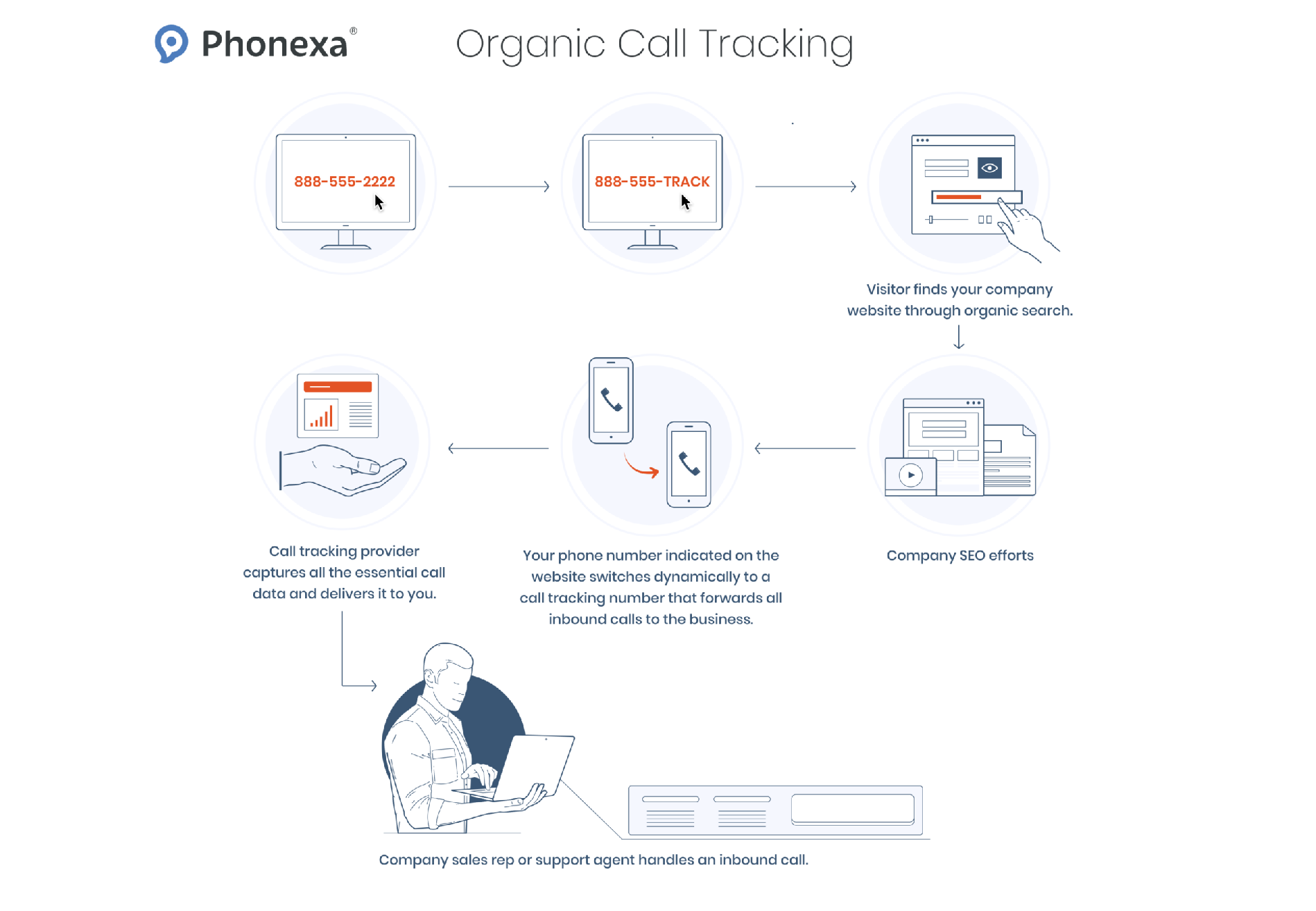
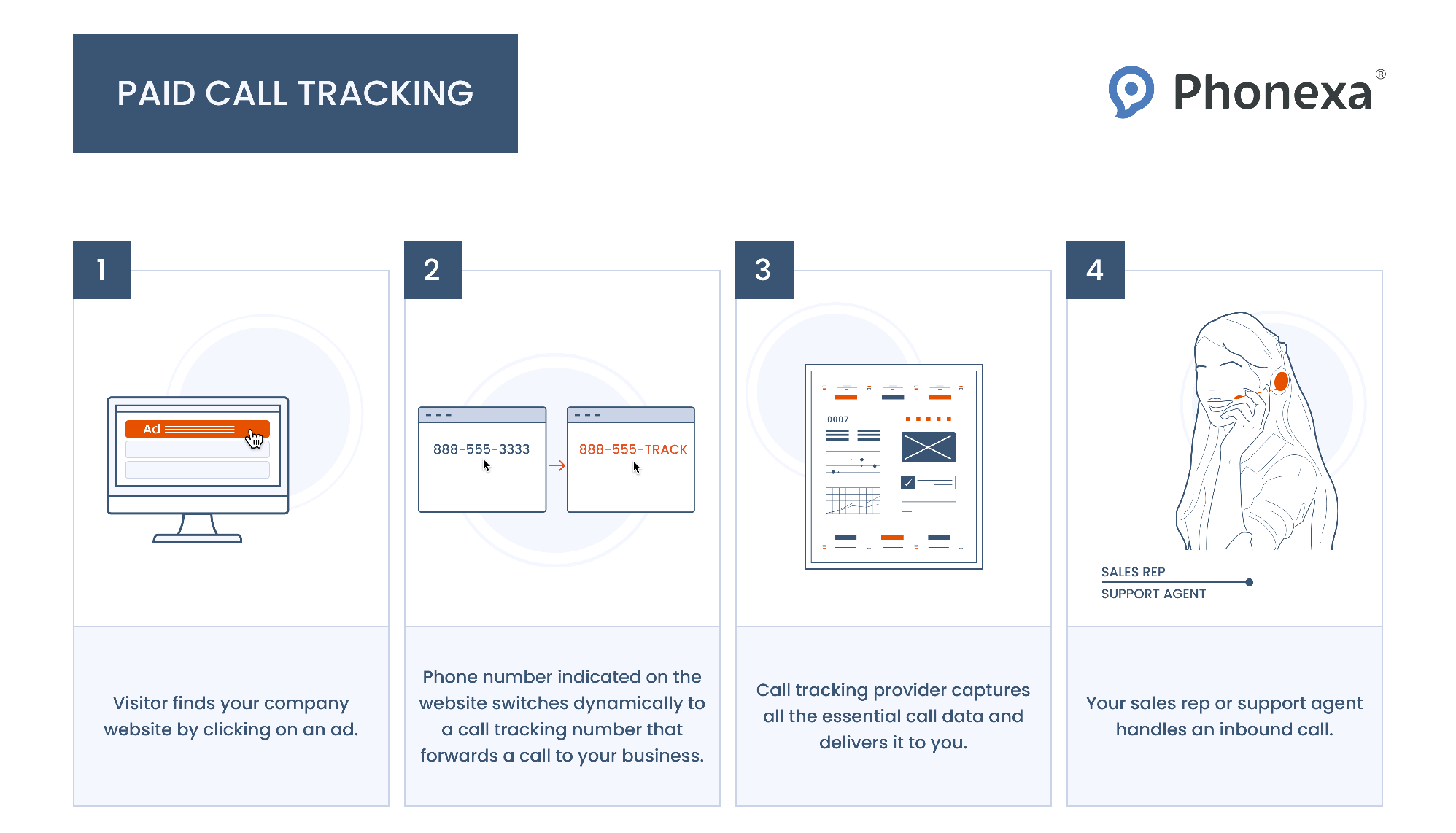
Phone call tracking involves collecting and analyzing data from customer calls generated across different marketing channels. Businesses assign unique phone numbers to specific campaigns, ads, or traffic sources to identify which marketing activities lead customers to call the company.
When a customer places a call, a phone call tracking system can capture various call tracking metrics and attributes, including:
- call duration;
- geographic location;
- caller information;
- call recordings;
- conversion data;
- traffic source and campaign attribution.
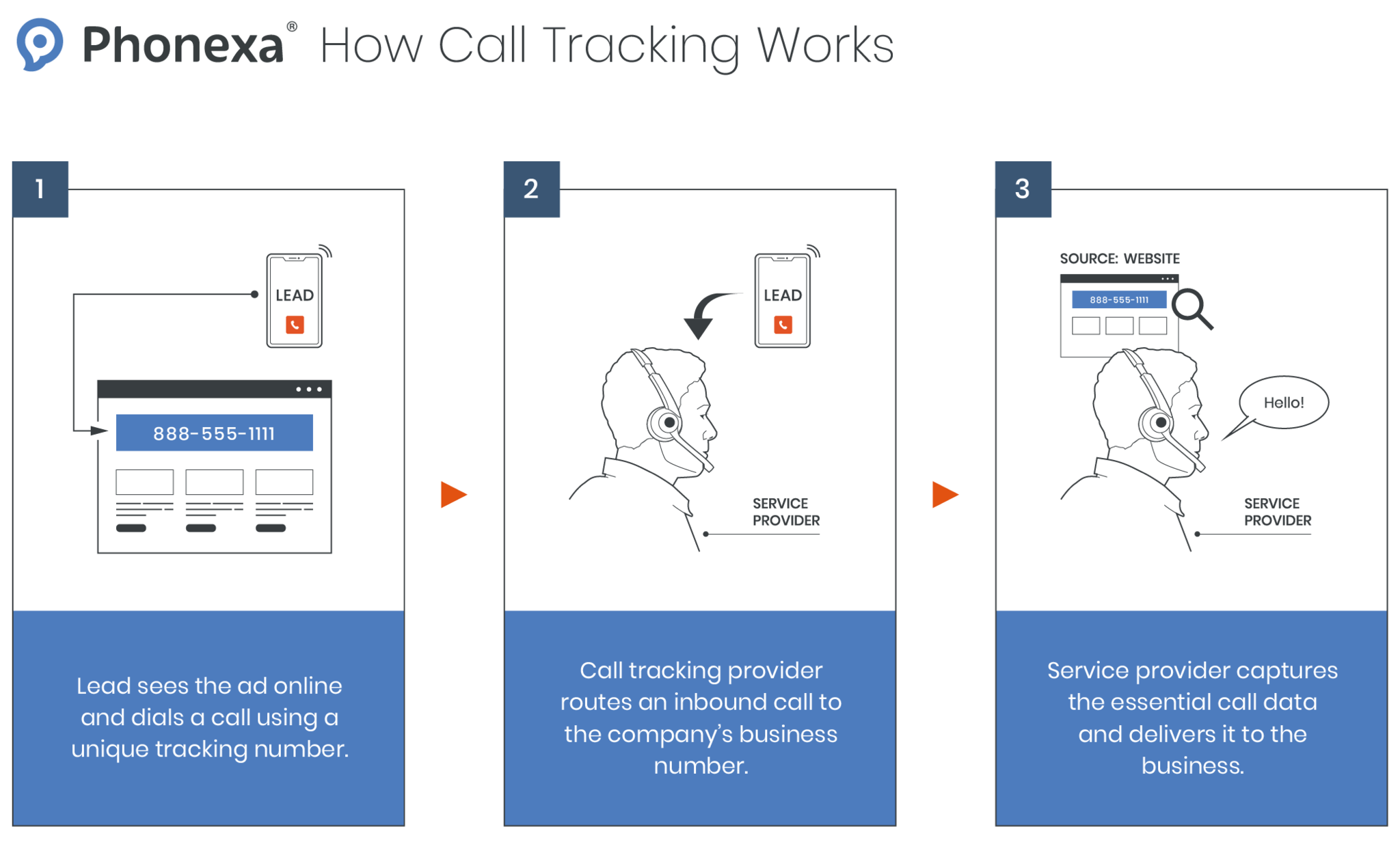
Once this data is collected, it is processed to show the performance of each marketing source in real-world scenarios, allowing businesses to move beyond assumptions based on clicks or visits to determine if campaigns are generating valuable outcomes such as completed purchases and qualified inquiries.
Now, it’s possible to distinguish between high-intent calls (from customers who are ready to buy) and low-intent calls (those who are making calls for research or comparison purposes), so campaign performance is based on actual quality and results of customer contacts rather than volume alone.
Moreover, by tracking which calls result in sales, businesses get a clearer picture of their return on investment (ROI) by weighing marketing expenses against the income those campaigns bring in. This makes it easier to see which channels drive calls that lead to purchases, helping companies spend more on effective campaigns and less on those that perform poorly.
Top 3 Reasons to Begin Phone Orders Tracking in 2026
More granular data enables in-depth insights into the success of a marketing campaign, which is crucial for effective conversion rate optimization (CRO) and further minimization of campaign spending risks. Given that phone calls have the highest probability of generating sales, it is necessary to identify which attributes and acquisition sources drive interactions that lead to orders.
ROI-First Budget Optimization
One of the most important goals of phone call tracking is to provide insights that will help improve the outcomes of budget allocation decisions and boost ROI.
Here are the top features to look for in the best call tracking software:
- Call Qualification: systems that allow tracking phone calls by specific parameters (e.g., phone number, location, product interest, email address, form info) in real-time, connecting a potential purchaser with the most relevant sales rep and detecting fraudulent/low-quality calls before wasting company time on them.
- Cross-network data exchange: call tracking solutions that include functionality for sending data to affiliate networks, CRM systems, or third-party analytical platforms eliminate the need for manual export of conversion-tracking data, reducing the risk of human error and enabling faster, more accurate data exchange.
- Certification and compliance: using call tracking services that comply with data protection standards and regulatory requirements (e.g., HIPAA, ISO, CDSA, etc.) reduces the risk of data breaches and legal consequences for neglecting data protection regulations.
These capabilities help ensure more effective use of resources by basing budget allocation decisions on accurate data from call tracking systems.
The Best Sales Sources Identification
Each lead is linked back to its original acquisition source, with call-attribution data that includes campaign identifiers, referral sources, and tracking parameters to enable efficient customer journey mapping. However, tracking phone calls across each sales pipeline will provide data on the volume of leads rather than their quality.
An outcome-first approach to sales analytics will help avoid unnecessary steps and instead gather data on the highest-value lead sources. Phone call tracking helps identify hidden gems in e-commerce campaigns, so you can optimize investments based on performance.
Personalization
According to McKinsey’s research on personalized marketing, over 70% of customers expect personalized interactions from businesses, and phone calls enable them to receive personalized treatment.
Call orders provide customers with the convenience of real-time communication and tailored recommendations, ensuring the level of personalization that surpasses other digital experiences. At the same time, a business can leverage data on which channel resulted in this call order only with phone call tracking software.
Overcoming Challenges of Call Tracking Software Implementation
Data Governance
When call tracking systems connect with tools like CRM systems and third-party analytics platforms, the challenge extends beyond just establishing technical connections.
Each system can interpret the same customer interaction in its own way – for example, one platform might tag a lead as “qualified,” another as “contacted,” and a CRM might only recognize it as a “conversion” once a deal is sealed. How data is defined, managed, and kept consistent across environments is key to gaining actionable insights and adjusting marketing strategies.
Solution
When selecting call tracking software, look for features like CRM integration and server-to-server postbacks. These elements help ensure your data stays consistent and prevents any fragmentation. Effective call tracking services tested in real-world scenarios might include tools for call verification, fraud filtering, and call qualification. This way, you can be sure that your reporting pipelines are built on genuine interactions.
Data Privacy
Despite the advantages of call verification and fraud detection, all systems that process personal information must ensure that their data management is lawful. In the U.S., certain industries (such as healthcare and insurance) must adhere to strict regulations to ensure the safe and ethical use of AI tools, such as AI call agents, and to avoid legal issues.
Solution
To ensure data is handled securely and in line with global privacy laws, e-commerce businesses should opt for certified platforms that offer built-in compliance with data storage, processing, and exchange standards such as SOC 2, ISO, HIPAA, CPAA, TRUSTe, and others.
Using solutions with these certifications not only helps minimize legal risks associated with handling customer data – like fines or even jail time – but also shows that a business is serious about adhering to strict data protection rules.
Legacy Systems
Legacy systems don’t just refer to those stuck with outdated technologies and methods; they can also include systems that use unconventional data formats and technologies for the industry.
This can make it tough for businesses to leverage the advantage of modern AI-first call management solutions for marketing automation. A company might need to tweak its CRM or analytics platform, especially if it wasn’t originally designed to process AI-generated data. Additionally, using AI on customer data raises important privacy concerns.
Solution
There are AI-powered solutions on the market that not only meet all required data protection and security certifications but also enable seamless interactions between systems without requiring changes to existing infrastructure.
An AI call agent tool can serve as a processing layer between the customer and e-commerce systems, support integrations with CRMs and analytics platforms such as HubSpot, Google Analytics, and Salesforce, and act as a mediator between a legacy system and powerful analytics tools.
Final Thoughts
Call tracking is all about making those conversations measurable and useful for broader marketing strategies. Although a business may face obstacles when implementing call tracking software, a fuller picture of how customers respond to its marketing strategy is worth the effort.
When you have this kind of insight, decision-making shifts from guesswork to real outcomes, allowing businesses to optimize marketing strategies based on data with proven sales capacity.
Was this news helpful?
 Yes, great stuff!
 I’m not sure
 No, doesn’t relate