



How Healthcare LMS Systems Ensure Compliance and Skill Development

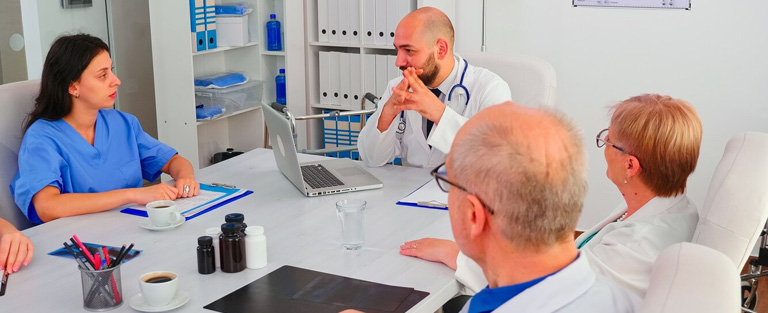
Explore how Healthcare LMS systems ensure compliance and enhance skills through tailored training and up-to-date resources for improved patient care.
In today’s changing healthcare environment, keeping up with regulations and enhancing staff expertise are concerns. Healthcare Learning Management Systems (LMS) are tools for tackling these issues. They provide organized platforms for training, tracking progress, and meeting industry regulations. Exploring the impact of LMS systems on compliance and skill development can help us understand their importance in the healthcare field.
Ensuring Adherence to Regulations
Ensuring regulatory compliance is critical in the healthcare sector as organizations need to follow regulations set by authorities to prevent penalties and uphold their accreditation status. Healthcare LMS or Learning Management Systems are vital in simplifying compliance procedures by offering a platform for resources. This enables healthcare practitioners to access up-to-date guidelines and protocols.
Additionally, Learning Management Systems (LMS) can automatically monitor training sessions. This function assists organizations in keeping crucial documentation for audits. Automated notifications notify employees of impending training deadlines to minimize the chance of violating regulations. Consequently, businesses can concentrate on providing services without having to deal with the hassle of record maintenance.
Boosting the Improvement of Skills
Continuous skill development is crucial for healthcare professionals beyond meeting requirements. Keeping up with advancements and innovative treatments necessitates education to ensure that staff stay knowledgeable and skilled. Technological tools like learning management systems provide resources, such as courses and webinars, to help improve skills through interactive methods.
These tools enable employees to learn at their speed and have the flexibility to engage in training based on their availability and commitments; this supports a mindset of learning and growth within the organization’s environment through the provision of diverse educational resources that accommodate different learning preferences for enhanced comprehension and memory retention.
Individualizing the Experience to Suit Different Preferences
Learning Management Systems offer an advantage with their capability to tailor and personalize learning experiences. In the healthcare sector specifically, organizations have the opportunity to create training initiatives that cater to needs and preferences. By customizing modules, institutions can concentrate on enhancing areas that need development, thus enhancing the overall learning journey.
Personalization also applies to each learner in particular. In addition, Learning Management System (LMS) platforms can evaluate a professional’s existing skill set and suggest courses for advancement. This strategy optimizes productivity by guiding staff members to the materials enriching their knowledge in an organized fashion.
Ease of Access
Integrating a healthcare Learning Management System provides solutions for healthcare organizations, compared to training approaches like workshops and seminars, which can be quite costly due to the expenses associated with physical materials and travel requirements.
One of the benefits of LMS platforms for healthcare professionals is digital accessibility. They can access training materials at any time and from anywhere, which offers great flexibility—a crucial factor in varied work environments with different schedules. This eliminates geographical limitations, ensuring that all staff members are provided with equal chances for enhancing their skills through Learning Management Systems.
Embracing the Progress of Technology
The field of healthcare is constantly changing, and technology is a driver of this evolution. The integration of tools and features in Learning Management Systems keeps pace with these advancements. Virtual reality simulations offer a hands-on learning experience that allows professionals to practice procedures without any risks involved.
By welcoming technologies into the fold of learning management systems (LMS), these platforms guarantee that healthcare workers stay skilled and ready for situations they may encounter in their work environment. This flexibility improves the journey by providing practitioners with the expertise to handle the intricacies of present-day healthcare systems.
In Closing
Healthcare education systems play a role in maintaining compliance and supporting skill growth within the healthcare sector. They simplify tasks and encourage ongoing learning while staying up to date with technology changes. Utilizing LMS platforms enables healthcare institutions to nurture a skilled and capable staff for better patient care and safety
In the changing field of healthcare today, it’s becoming increasingly clear how crucial it is to have quality training options available for everyone involved in the industry. Learning Management Systems are well equipped to address these needs by providing a platform that supports both healthcare professionals and the individuals in their care.
Was this news helpful?
 Yes, great stuff!
 I’m not sure
 No, doesn’t relate