


Home Fitness Shopping Guide: What to Buy When Starting a Serious Weight Loss Program


Home Fitness Shopping Guide: What to Buy When Starting a Serious Weight Loss Program
Starting a weight loss journey is exciting until you start shopping. The fitness equipment market is overwhelming. Every product promises transformation. Most collect dust within months.
The difference between equipment that gets used and equipment that gets ignored comes down to buying the right things at the right time. Random purchases based on enthusiasm waste money. Strategic purchases based on an actual plan deliver results.
That plan matters more than any equipment you buy. Following a structured weight loss program gives your equipment purchases purpose and direction. Without a program guiding your nutrition and exercise, even the best home gym becomes an expensive clothes rack.
This guide covers what to buy, when to buy it, and what to skip entirely. We focus on equipment that supports sustainable weight loss rather than impulse purchases that feel motivating but deliver nothing lasting.
Before You Buy Anything
Most people start shopping before they start planning. This sequence guarantees wasted money. Equipment should serve a program. The program comes first.
Assess your current fitness level honestly. Someone who has not exercised in years needs different equipment than someone returning after a break. Starting equipment should match your starting capability.
Define your available space realistically. Measure the actual area you can dedicate to exercise. Account for movement space around equipment. A garage gym allows different purchases than a spare bedroom corner.
Set a realistic budget with room for phased purchasing. You do not need everything immediately. Strategic buying over months spreads cost while ensuring each purchase proves its value before the next one arrives.
Consider your program requirements specifically. Different approaches demand different equipment. High-intensity interval training needs minimal equipment. Strength training requires progressive resistance options. Your program dictates your shopping list.
Think about noise and flooring before heavy equipment arrives. Impact exercises on upper floors create problems. Heavy weights need appropriate flooring protection. These practical considerations prevent expensive mistakes.
Phase One: The Essentials
Your first purchases should enable the widest range of exercises at the lowest cost. Versatility matters more than specialisation when starting out. Every item should serve multiple purposes.
Adjustable Dumbbells
A quality set of adjustable dumbbells is the single most versatile purchase you can make. One pair replaces an entire rack of fixed-weight dumbbells. Weight adjusts as you progress without buying additional equipment.
Select a range accommodating both current strength and near-term progression. Most beginners suit sets ranging from 2.5 to 24 kilograms per dumbbell. This range covers upper body, lower body, and core exercises comprehensively.
Adjustable dumbbells enable hundreds of exercises across every muscle group. Squats, lunges, presses, rows, curls, and deadlifts all work with dumbbells alone. This single purchase can sustain months of progressive training.
Resistance Bands
Bands provide variable resistance that complements free weights perfectly. They cost very little relative to their versatility. A set of different tensions covers beginner through advanced exercises.
Bands add resistance to bodyweight movements without heavy equipment. They enable stretching and mobility work supporting joint health. Travel-friendly size means your training continues anywhere.
Loop bands suit lower body work particularly well. Long bands with handles serve upper body exercises effectively. Both types together cost less than a single pair of fixed dumbbells.
Exercise Mat
A quality mat protects joints during floor exercises and provides stable footing. Thickness matters for comfort during core work and stretching. Density matters for stability during standing exercises.
Choose a mat long and wide enough for your body with movement room. Six millimetre thickness balances cushioning with stability for most people. Non-slip surfaces on both sides prevent dangerous shifting.
A Timer or App
Interval training drives efficient fat loss in minimal time. A reliable timer or interval app structures workouts properly. Many free options exist making this essentially a zero-cost purchase.
Structured intervals prevent the common mistake of resting too long between sets. Timed work periods ensure consistent intensity. This simple tool improves workout quality dramatically.
Phase Two: Building Capacity
Once your initial equipment proves its value through consistent use, expanding makes sense. These purchases increase exercise variety and enable progressive overload, essential for continued results.
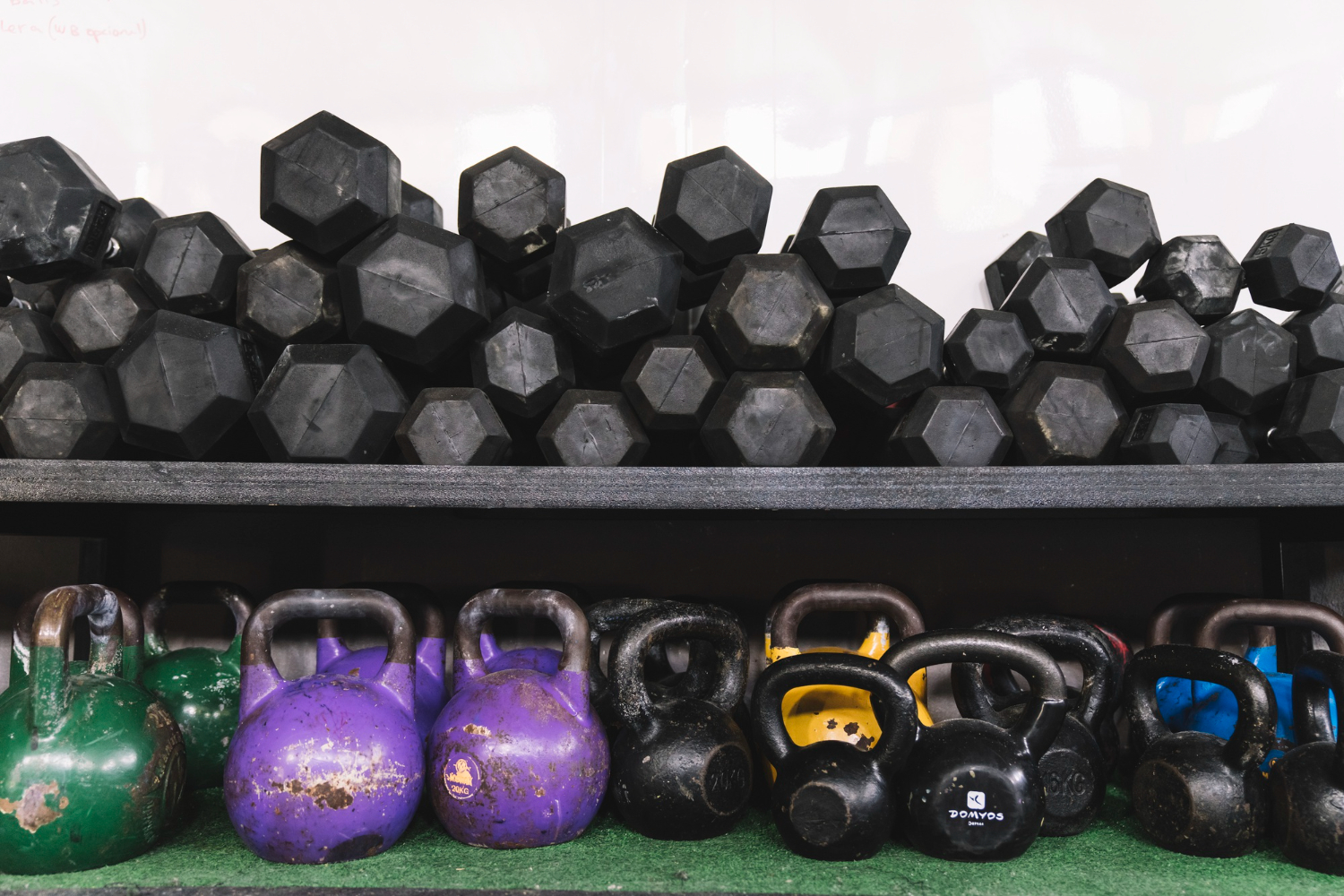
Barbell and Weight Plates
A barbell opens compound lifting movements that dumbbells cannot replicate as effectively. Squats, deadlifts, bench press, and overhead press all benefit from barbell loading. These compound movements burn more calories than isolation exercises.
An Olympic barbell with a starter set of plates provides years of progression potential. Begin with lighter plates and add weight as strength increases. The progressive loading drives continued adaptation and results.
Proper storage keeps your training space safe and organised as your plate collection grows. Sturdy weight racks prevent plates from cluttering floors and creating trip hazards. Organised equipment encourages use because the space feels intentional rather than chaotic.
Weight storage also protects your investment. Plates stacked on concrete floors develop rust and damage. Proper racking extends equipment lifespan significantly. The organisation’s cost saves replacement costs long term.
Pull-Up Bar
A doorframe pull-up bar adds vertical pulling movements your other equipment cannot provide. Pull-ups and chin-ups build back and arm strength using bodyweight. Hanging from the bar decompresses the spine after loaded exercises.
Doorframe models require no permanent installation. They remove in seconds when the doorway needs normal use. This convenience factor increases actual usage compared to wall-mounted alternatives.
Assisted variations using resistance bands make pull-ups accessible for beginners. Loop a band over the bar and under your knees for support. Reduce band assistance progressively as strength develops.
Kettlebell
A single kettlebell adds ballistic training options that dumbbells handle awkwardly. Swings, cleans, snatches, and Turkish get-ups all suit the kettlebell design specifically. These dynamic movements elevate heart rate while building strength simultaneously.
Select a weight challenging enough for swings but manageable for pressing. Most men start effectively with 12 to 16 kilograms. Most women suit 8 to 12 kilograms initially.
Kettlebell training burns significant calories in short sessions. Twenty minutes of swing intervals produces cardiovascular and strength benefits simultaneously. This efficiency suits busy schedules perfectly.
Phase Three: Recovery Equipment
Most home gym builders forget recovery entirely. They buy everything needed to break muscles down. They buy nothing to help muscles rebuild. This oversight limits results and increases injury risk.
Recovery is not an optional supplementation to training. It is where actual physical improvement occurs. Muscles grow during rest, not during exercise. Supporting recovery accelerates the results your training stimulates.
Foam Roller
A high-density foam roller addresses muscle tightness that accumulates through regular training. Self-myofascial release improves tissue quality and movement range. Five minutes of rolling before and after training reduces soreness significantly.
Rollers cost very little but deliver substantial recovery value. They last for years without degrading. The return on investment exceeds almost any other recovery purchase.
Massage Chair
As training intensity and frequency increase, recovery demands grow proportionally. Occasional foam rolling may not address the accumulated tension serious training creates. Your body needs more comprehensive recovery than basic tools provide.
A quality massage chair full body system transforms recovery from afterthought into daily practice. Full body programs address everything from neck tension to calf tightness in a single session. The convenience of home access means recovery actually happens consistently.
Daily massage sessions reduce delayed onset muscle soreness between training days. Improved circulation accelerates nutrient delivery to recovering tissues. The parasympathetic activation promotes deeper sleep where growth hormone release peaks.
For people following intensive weight loss programs combining caloric restriction with regular exercise, recovery support becomes even more important. Your body operates under dual stress from training load and energy deficit. Enhanced recovery helps maintain training consistency despite this additional physiological demand.
The investment pays returns beyond muscle recovery alone. Stress reduction supports the hormonal environment favouring fat loss. Improved sleep quality enhances appetite regulation and decision making. Recovery becomes a weight loss tool rather than just a comfort purchase.
What to Skip
Not every popular piece of fitness equipment deserves your money. Several common purchases underperform relative to their cost and space requirements.
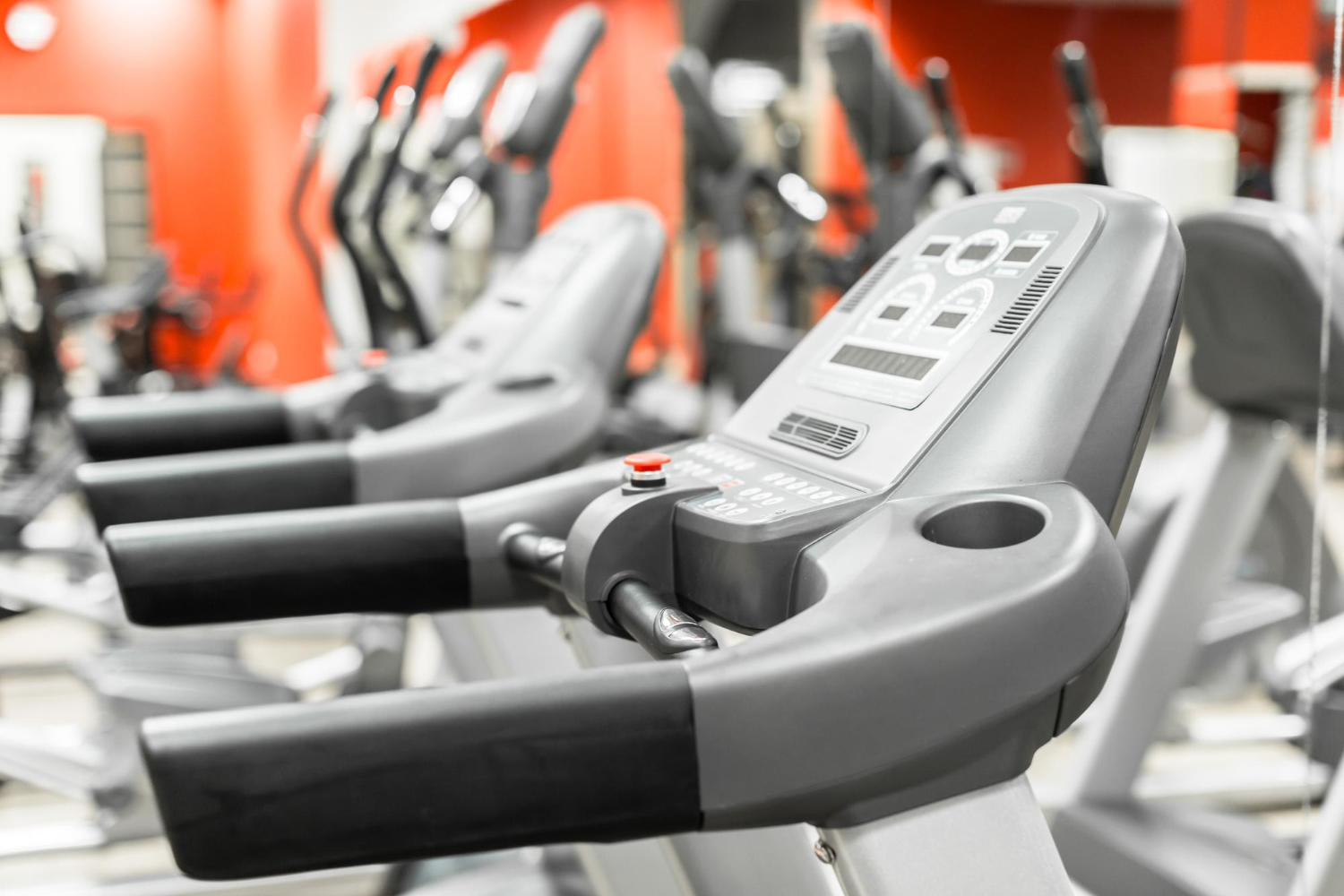
Treadmills occupy enormous space while replicating something you can do outside for free. Walking and running require no equipment. Unless weather or safety genuinely prevents outdoor cardio, treadmills waste space and money.
Cable machines suit commercial gyms with space and budgets to accommodate them. Home versions compromise on quality while consuming floor area disproportionate to their value. Resistance bands replicate most cable exercises adequately.
Ab-specific equipment preys on the myth that targeted exercises reduce specific body fat. Your core works during compound movements already. Dedicated ab machines add nothing your mat and bodyweight cannot provide.
Cheap multi-gyms tempt with apparent versatility at low prices. Build quality is usually poor. Movement paths feel unnatural. They occupy space better used for free weights that provide superior results.
Vibration platforms promise passive exercise benefits that evidence does not support for weight loss. Standing on a vibrating surface does not replace actual training. Save your money for equipment requiring genuine effort.
Timing Your Purchases
Buying everything at once wastes money on equipment you have not earned through consistent training. Phased purchasing protects your budget and proves commitment before escalation.
Month one: Essential equipment only. Prove you will actually train three to four times weekly before spending more. If motivation fades within the first month, your loss is minimal.
Month two to three: Add Phase Two items based on program requirements. By now your training habits are established. Equipment additions serve demonstrated needs rather than hopeful intentions.
Month four onward: Invest in recovery equipment once training intensity justifies it. Your body will tell you when basic recovery is insufficient. Listen to that feedback before spending.
Watch for seasonal sales around Boxing Day and end of financial year. Fitness equipment discounts during these periods are substantial. Patience saves hundreds on identical products.
Your Shopping Checklist
Building a home gym that supports serious weight loss requires strategy over impulse. Buy what your program demands. Skip what marketing promotes but results do not require.
Start with a structured program before purchasing a single item. Let your plan dictate your equipment list. Add items as your commitment and training demands increase.
Prioritise versatility in early purchases. Choose recovery as training intensity grows. Skip anything replicating free activities or promising effortless results.
Your home gym should grow alongside your fitness. Each piece should earn its space through regular use. Equipment that sits idle deserves replacement by something you will actually touch.
Build strategically. Train consistently. Recover properly. The equipment matters far less than what you do with it.
Was this news helpful?
 Yes, great stuff!
 I’m not sure
 No, doesn’t relate