



Evaluating Datacenter vs Residential Proxies: Performance, Legitimacy, and Regional Access Dynamics

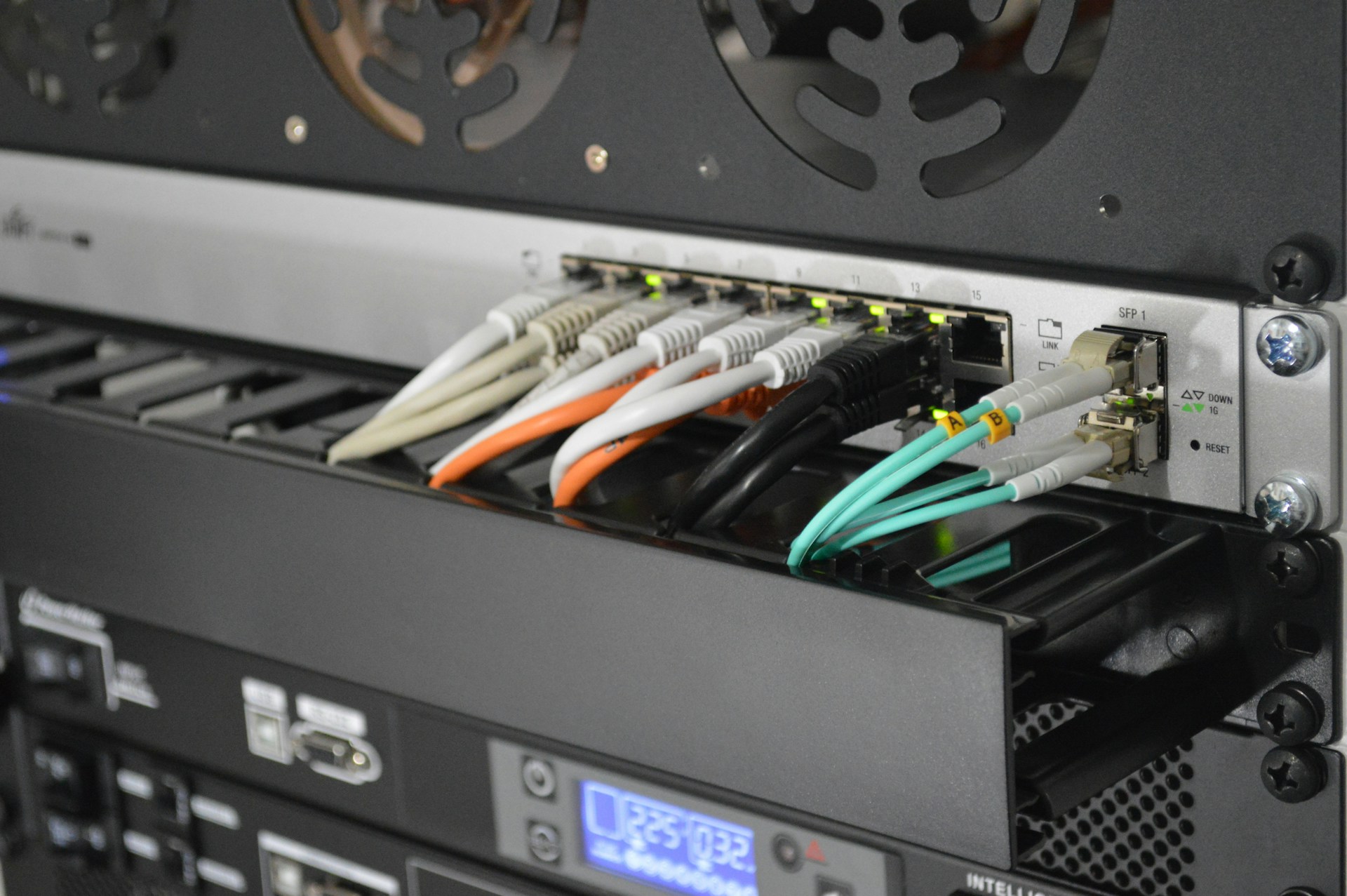
Evaluate datacenter vs. residential proxies for eCommerce: performance, legitimacy, and regional access dynamics to enhance proxy selection strategy.
This article presents a comprehensive analysis of datacenter vs. residential proxy architectural divergence, measuring performance tradeoffs, reputation profiles, and operational constraints imposed by both.
In terms of enterprise adoption—from scalable automation to site-level content access—the investigation weighs the balance-of-trade associated with either solution.
It catalogues where one type of proxy excels or falter, and which platform behavior, network attribution, and detection evasion trends are worth monitoring before deployment.
Central Architecture: Synthetics vs. Consumer-Originated IP Routing
Datacenter proxies operate on IP addresses leased to business hosting providers and are typically assigned within huge, globally-extending infrastructure-as-a-service (IaaS) networks.
Such IPs go through backbone-level datacenters with no relation to consumer-class ISPs, and their source can easily be identified using ASN mapping, reverse DNS, and latency profiling.
Datacenter proxy signatures are always the performance: with zero-latency close to the network speed, high availability, and elastic scalability, such proxies are built for throughput rather than for stealth.
In contrast, residential proxies, some that come in unmetered proxy form, take advantage of consumer ISP-assigned IP addresses on end-user equipment, typically crossing home broadband networks.
Regardless of whether deployed in peer-to-peer schemes or leased residential IP blocks, residential proxies carry the outside signature of genuine end-user activity.
Their routing behavior, connection patterns, and IP geolocation are typical of real-world consumer internet usage, rendering them far more challenging to identify by web infrastructure designed to filter non-human traffic.
This architectural distinction has profound implications for visibility and legitimacy. Datacenter proxies are likely to be classified into automated anti-bot categories due to their non-residential IP origin, even for benign traffic behavior.
Residential proxies, by mimicking typical consumer access patterns, can evade most of the IP-based and ASN-based filtering systems employed by modern content platforms, ad networks, and digital service providers.
Performance Benchmarking and Session Reliability
From a performance standpoint, datacenter proxies deliver unparalleled reliability and speed. Sitting close to network core interconnects and fabric hosting, they offer low packet loss, large request volume, and immediate reconnection.
That makes them highly suitable for bulk data retrieval demanding applications, execution of concurrent threads, or determinate latency demands—such as scraping product feeds, public API integration, or server-side queue systems handling.
It comes with a cost. Datacenter IPs are problematic inherently in an environment of actively looking-for-origin.
Even in the context of low-frequency or randomized scheduling, datacenter-proxy requests typically get blocked by CAPTCHA gates, JavaScript finger-printing scripts, or anomaly behavioral engines at least rate.
The risk of this find accumulates within sessioned settings where each non-standard IP property other than residential-expected ASN is recorded as anomalous typically at least through rate limits and oftentimes, a complete ban.
Residential proxies, being more latency-susceptible since they are distributed and typically bandwidth-constrained in their source, excel in session persistence.
Their ability to support long-term sessions without triggering anti-bot protection is precisely due to the IP synchronization with consumer traffic patterns. In processes that require session authentication—such as account management, stateful browsing, or user flow simulation—residential proxies offer longer stability without reputation loss.
Still, the dispersed nature of residential IPs introduces instability to response time and session length. Peer-to-peer residential proxies in particular depend on availability of consumer devices, which can go offline or change IP addresses arbitrarily.
Even in managed residential pools, the lack of access to node behavior introduces randomness to time-based or concurrency-dependent transactions.
Reputation Dynamics and Platform-Level Risk Profiling
Business platforms and content delivery providers continually upgrade their IP reputation systems to find non-human patterns of traffic.
These systems measure not only the speed of request and header purity, but even ASN origin, geolocation continuity, and the history of activities associated with an IP address. Datacenter proxies are inherently disadvantaged in this case.
Their IPs will have legacy use footprints associated with excessive scraping, automating, or testing use cases. This leads to preemptive classification as non-human actors, even in the absence of abuse.
Residential proxies, however, possess the organic user behavior history of actual users. Even under shared or rotated usage, the source IPs are typical consumer usage patterns—browsing, streaming, transactional traffic—that platforms can leverage as robust heuristics of legitimacy.
This allows residential proxies to pass reputation barriers that would instantly block datacenter proxies.
However, reputation alone won’t make anyone invisible. Residential IPs still recognize negative signals in abuse, especially when abused under high-traffic proxy pools.
Such systems, which have matured behavioral detection, will perceive differences between forecasted device or software signature for residential users versus the actual payload request, creating long-term IP poisoning.
Residential proxies are thus far more flexible to today’s risk profiling networks, especially under specialist or low-rotation setups.
Regional Authenticity and Geofencing Bypass
For companies that operate in multiple geographic markets, region-locked content access, user experience testing of local experiences, or price strategy evaluation requires proxy infrastructure with strong geolocation accuracy.
Datacenter proxies, despite their global distribution, tend to lack IP geolocation database accuracy. Their IPs are typically linked with hosting clusters or generic locations that are not close to consumer regions, causing mismatches between desired and actual access origin.
Residential proxies, which utilize ISP-allocated IPs linked to consumer endpoints, have significantly improved regional presence.
IPs of residential proxies resolve to real-world addresses with extremely high accuracy, enabling localized access to content and causing responses from the platform to be optimized for the correct geography.
Residential proxies are therefore an absolute requirement in such applications as retail intelligence, ad verification, and competitive benchmarking by geography.
Geofencing platforms, which are meant to limit access by sensed user location, tend to whitelist residential IP blocks and blacklisted datacenter sources.
Residential proxies are therefore the only option for reliably accessing content in regions or cities where content providers deny uncontrolled access.
The geopolitical nature of such access—especially in controlled digital markets—only serves to heighten the strategic value of residential IP pools.
Cost Structure and Infrastructure Control
The financial structure of datacenter proxies is a low-cost high-performance endeavor. IPs are provisioned through IaaS platforms and housed in elastic infrastructure, meaning that the marginal cost per-IP is significantly lower than from residential networks.
This is cost-saving because it offers large-scale deployment through thousands of threads or concurrent connections without prohibitive cost. For data-intensive activities where capacity is more important than stealth, datacenter proxies are the infrastructure of choice.
Residential proxies, however, have high prices that depend on their complexity of acquisition and infrastructural ambiguity.
Whichever they are procured from–consent-based peer networks, ISP leasing, or residential IP reselling agreements–such IPs need to have a greater provisioning expense and usage limits placed upon them to ensure legitimacy.
Companies that adopt residential proxies must weigh their superior camouflage against their cost volatility and infrastructural limitations, particularly in scaling up for multi-regional operations.
Also, datacenter proxies offer infrastructure control. Organizations can self-host endpoint proxies, build custom routing rules, or integrate monitoring solutions without resistance.
Residential proxies, especially third-party managed residential proxies, offer limited observability of node behavior, request routing, or IP rotation cycles, introducing foreign dependency potentially at odds with enterprise risk posture or compliance regulations.
Conclusion: Enterprise Proxy Selection Framework
The distinction between residential and datacenter proxies is a fundamental tradeoff in architectural design between perception and performance and between stealth and scale.
The unparalleled throughput at low cost of operation of the datacenter proxy is still mandatory for high-throughput, low-consequence workloads where discovery is not hugely significant.
The legitimacy and survival under network analysis of the residential proxy are imperative to workflows demanding realistic user modeling, local geolocation, or session persistence.
Was this news helpful?
 Yes, great stuff!
 I’m not sure
 No, doesn’t relate