



Cybersecurity and IT support: Addressing compliance gaps for retailers

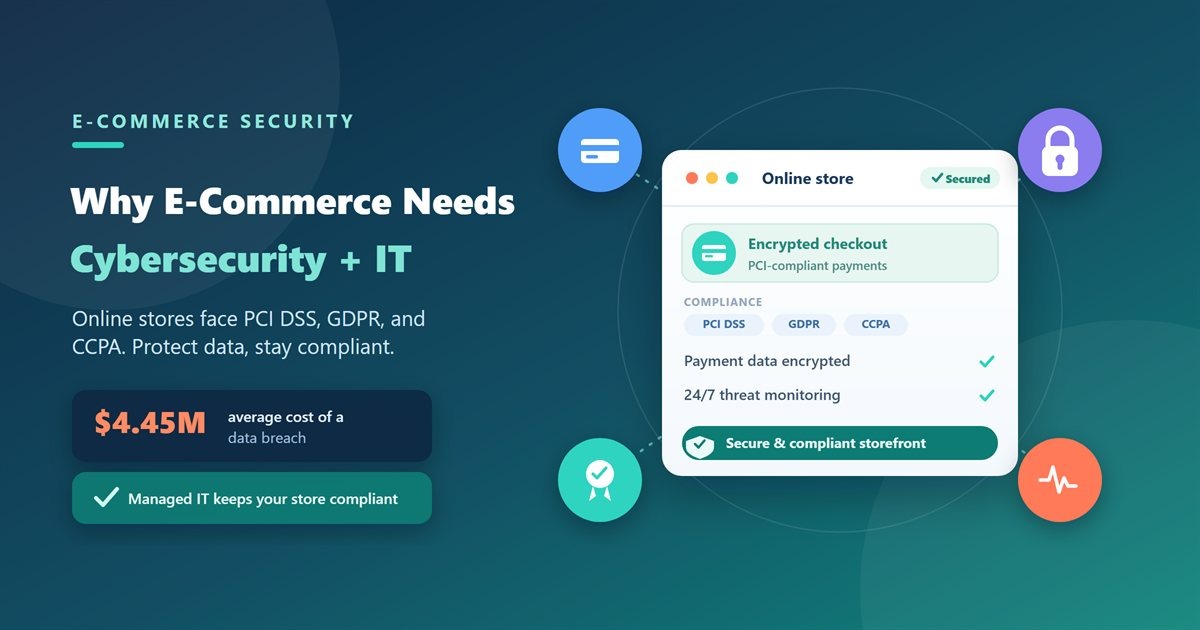
Closing Retail Compliance Gaps With Cybersecurity
The Increasing Importance of Cybersecurity in Retail
Today’s digital marketplace presents merchants with new and unanticipated difficulties in the areas of cybersecurity and IT compliance. With more merchants going digital, adopting digital payment methods, and relying on cloud-based services, the risk of data breaches, ransomware attacks, and violations of compliance increases. Cybercriminals regularly adapt their assault tactics to find flaws in merchant systems to steal valuable consumer data, disrupt corporate operations, or demand ransom payments.
The average cost of a data breach for the retail sector is $3.27 million, the 2023 IBM survey showed. This shows the potential scale of cyber disasters on companies. The cost of data breaches doesn’t end in the present. Long-term damage to the merchant’s reputation and trust with customers can be catastrophic. Retailers can no longer afford to leave compliance vulnerabilities open. Key: maintain client trust and keep running.
The digital revolution in retail rolls on, and merchants face challenging regulatory responsibilities. Regulations such as the Payment Card Industry Data Security Standard (PCI DSS), the General Data Protection Regulation (GDPR) and several state-specific data privacy standards also include rigid rules about how to protect consumer data. If you don’t, you could face big fines, legal liabilities, and more regulatory attention.
Gaps in retail cybersecurity compliance knowledge
Most of the time, merchants are not complying with the rules and legislation of the sector completely, so compliance concerns occur. Such breaches could expose attackers to sensitive client data, such as personal data and payment card details. In fact, a 2023 poll found that 58% of small and medium-sized companies experienced at least one cybersecurity compliance-related problem in the past year. Such a high percentage indicates the common challenge of merchants to remain compliant over time in the constantly evolving threat landscape and complex IT environments.
But compliance gaps are often caused by outdated software, inadequate employee training, lack of security testing, and insufficient IT assistance. House expertise may be lacking in the merchant, or there may be a lack of understanding of the intricacy of the regulatory standards. This creates an opening for cyber thieves to take advantage of.
Companies need to balance their cybersecurity efforts against proactive IT assistance that fulfills needs to help head off these difficulties. Technology solutions, process improvements, and human aspects such as staff awareness and training need to be incorporated. Skilled suppliers can be the key to better defenses and continued assurance of compliance.
Partnerships Leverage Expertise for Cybersecurity
Belonging to professional organizations can give firms a strategic edge in working to strengthen their cybersecurity posture. SITUATE lets enterprises install security securely with a security architecture tailored for retail. Often, these partnerships provide network monitoring, vulnerability assessment, threat detection and response solutions all centered around compliance regulations.
These expert vendors know the latest cyberattacks, regulatory developments and best practices to keep shops ahead of the curve. They allow you to build unique rules and processes to meet your company objectives and regulatory compliance. This will enable retailers to utilize their professional skills to discover hidden hazards, build systems to safeguard sensitive data and maintain higher levels of compliance with legislation.
Cybersecurity agreements also generally include continuing assistance and incident response capabilities that enable the company to respond rapidly to new threats or breaches. Such pro active steps can minimize occurrence of the security issues and business continuity.
IT Support for Compliance: The Road to Success
Regulators need to support merchants in bridging the regulatory gaps. Proactive IT services are far more than merely reacting to technology concerns. They maintain systems that are up to date, safe and compliant with the law. That includes fighting firewalls, data encryption, access credentials and audit trails. T3 MSP members get customized IT assistance to meet today’s technical challenges and assist with their continuing compliance initiatives.
Industry analysis suggests enterprises with dedicated IT support teams enjoy 40% less security breaches than companies without, in 2023 alone. This number emphasizes the need of IT assistance in a broad approach to compliance and cybersecurity.
Effective IT support also includes proactive monitoring of systems and networks for any suspicious or unexpected activity as it occurs. Being able to spot risks early is crucial to preventing breaches before they happen or mitigating the damage when an attack does occur. They also ensure that security updates and software patches are applied quickly to address any vulnerabilities that are discovered.
IT support specialists also help a lot with the compliance documentation and audit readiness. Good record-keeping and reporting is usually needed for regulatory audits, and can be an indicator that a merchant takes security best practices seriously.
Bridging the Compliance Gaps What You Can Do
There are some practical efforts shops may take to strengthen their cyber security and close compliance gaps such as:
- Conduct regular security audits: regular audits assist identify security holes and regulatory requirements. Audits should look at network security, data storage policies, access control and problems with third-party providers. External auditors offer an impartial opinion and advice.
- Enable Multi-Factor Authentication (MFA): MFA is an additional layer of security to assist prevent unwanted access to systems and consumer data. This is especially true for administrator accounts and the use of remote access.
- Best Practices for Training Security Personnel: Human Error is a Major Cause of Security Breaches Regularly educating personnel on how to identify phishing attacks, securely use sensitive data and respond to security problems. Simulated phishing activities are a terrific method to really drive home the point.
- Data Encryption Encrypt data at rest and in transit to prevent unauthorized access to sensitive information. Merchants need to ensure their encryption is at least to the regulatory minimum.
- Patch and update software and systems regularly: Known vulnerabilities that hackers can exploit are fixed by regular patching and updating of software and systems. There are automated patch management systems available that will do this for you.
- Develop Incident Response Plans A clear plan for responding swiftly and efficiently to breaches will help to reduce losses and regulatory penalties. The strategy should include communication, roles and responsibilities, and recuperation.
- Utilize Experienced Cybersecurity and IT Support Teams: Outsourcing expertise can provide specific knowledge and resources to help your internal capacity grow. These partnerships allow firms to quickly scale their security operations to respond to new threats and legislation.
These tactics have costs and commitments, but the returns are far greater than the costs. A comprehensive strategy will reduce risk exposure and improve a company’s security posture.
Closing compliance gaps: Financial and reputational advantages
Not to mention the fines and penalties, the business value of investing in security and IT to close compliance vulnerabilities is huge. “Merchants with strong security procedures will have increased client confidence, loyalty and repeat business. 2024 survey: 70% of customers would stop shopping with retailers who have suffered data breaches in the last year.
those with weak cybersecurity saw 50% more customer attrition after security events than those with strong cybersecurity. For instance, in the case of cyber assaults efforts, pre-emptive security investments may be advantageous to retain clients.
In general, the cost of compliance is less than the cost of data breaches, which include remediation costs, legal expenditures, regulatory fines and damage to a company’s image. Take retail, for example, which has an average time to detection and containment of 287 days, increasing risk and cost. Proactive cybersecurity and IT support reduces risk, promotes operational agility and instills customer confidence, positioning merchants ahead of the competition.
Data privacy legislation compliance could also open up new opportunities within the industry. Many enterprise clients and payment processors need to be compliant before they may onboard merchants. Meeting these criteria, therefore, can allow the business to grow and also increase confidence among merchants.
Conclusion:
Keep Up With Security and Compliance “Retailers are working to close the cybersecurity and compliance gaps as the retail landscape evolves to protect their businesses and customers.“Cybersecurity and dedicated IT support working in conjunction is a one-two punch to reduce risk and meet regulatory compliance. By leveraging best practices and trusted resources, organizations can keep sensitive data safe, avoid costly breaches, and earn the trust of consumers for life.
“These technologies will help merchants not only meet today’s regulatory standards, but also plan for future regulatory changes and emerging security threats.” As cyber attacks get more sophisticated and regulations tighter, a proactive, integrated plan for cybersecurity and IT support is critical for continuing retail success.
They make merchants respectable custodians of client data, robust operators, and competitive rivals in the digital market. Bridging the compliance gaps. Don’t let weaknesses become costly breaches.
Was this news helpful?
 Yes, great stuff!
 I’m not sure
 No, doesn’t relate