


Beyond Productivity: Building an Organization That People Actually Want to Work For
6 minutes read
Beyond Productivity: Building an Organization That People Actually Want to Work For
The productivity conversation in organizational management has been almost entirely one-sided. Every investment in operational tools, every process improvement, every efficiency initiative has been evaluated through the lens of what the organization gets from the investment: more output, faster decisions, lower coordination costs. The question of what the people inside the organization get from the working environment, beyond compensation, has been addressed through separate initiatives, engagement programs, culture programs, and wellbeing benefits, that sit alongside the operational infrastructure rather than being designed into it. The organizations that have genuinely solved the talent challenge, that retain excellent people, that attract candidates who have choices, and that produce the discretionary effort that no compensation package can buy, have done something that most talent programs miss: they have made the daily working experience of being part of the organization genuinely good. Not just rewarding, not just purposeful, but actually pleasant to navigate, logistically supportive, informationally rich, and designed to make people feel capable rather than constrained. That design is built on project management tools that treat the quality of the daily working experience as a design requirement with the same priority as the efficiency outcomes the organization is trying to achieve.
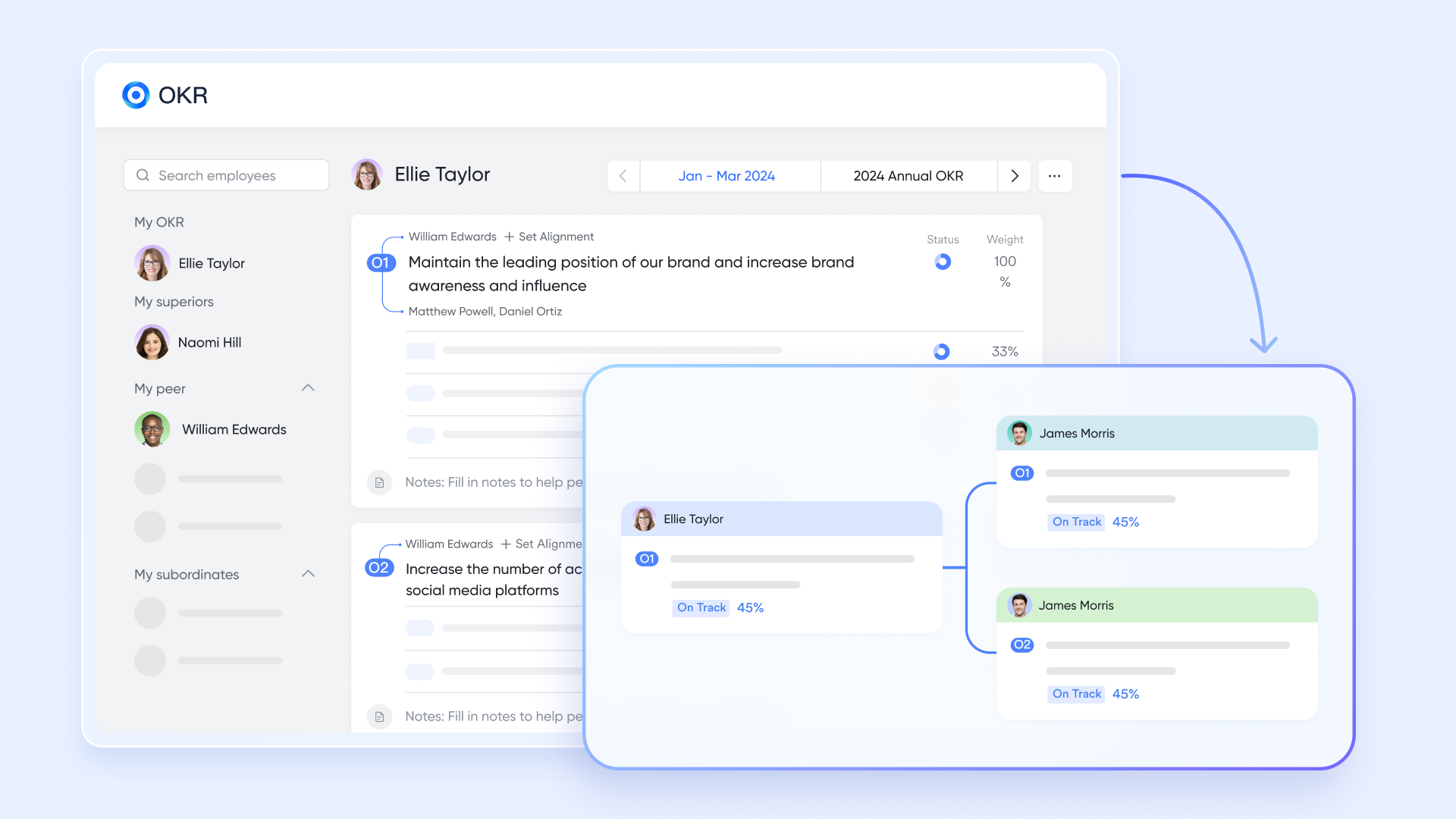
Goals that make work feel meaningful with Lark OKR
The most fundamental quality that makes a working environment genuinely good is the experience of doing work that matters. That experience is not produced by a values statement or a mission presentation. It is produced by a daily working environment where the connection between what a person is doing and why it matters is visible without requiring a conversation to establish it.
-
Company-wide objective visibility gives every team member the continuous experience of knowing that their work is connected to something larger than the immediate task, so the sense of purpose that makes work meaningful is maintained by the system rather than requiring periodic manager-delivered inspiration.
-
Individual key results connected to team objectives create the personal ownership of meaningful goals that transforms work from a set of tasks into a contribution to something the team member can care about independently of their manager’s enthusiasm for the organizational mission.
-
Real-time key result progress gives every team member the concrete experience of moving toward something, which is one of the most reliable sources of daily workplace satisfaction that organizational psychology has identified.
-
OKR transparency across the organization creates the fairness of shared information that makes people feel respected rather than managed, so the experience of belonging to the organization includes the experience of being trusted with its strategic reality rather than receiving a filtered version of it.
Communication that treats people as people with Lark Messenger
The quality of daily communication is one of the most direct determinants of whether a working environment feels good to be in. The communication environment that is purely functional, that carries only task information and organizational updates, produces a working experience that feels transactional rather than human, and the people who work within it feel like participants in a production system rather than members of an organization.
-
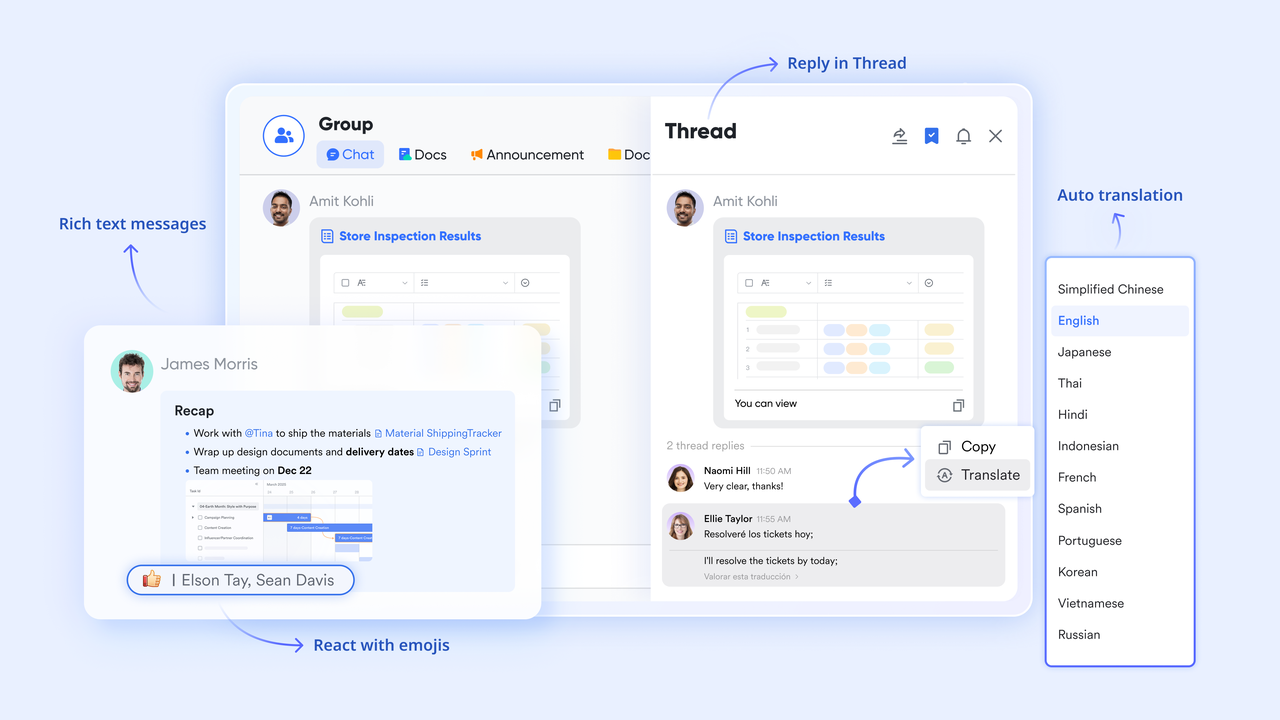
“Rich Formatting” with emoji reactions, annotated screenshots, and expressive text gives team members the communication tools to bring genuine warmth and personality to their daily exchanges rather than flattening every interaction into plain-text task coordination.
-
“Scheduled Messages” allow managers to maintain consistent, personal communication that makes team members feel seen and valued without requiring the manager to be available at every moment that a team member might benefit from a personal touchpoint.
-
“Real-time Auto Translation” across 24 languages ensures that every team member participates in the organization’s communication culture in their own language rather than in a linguistic accommodation that makes the experience feel slightly foreign regardless of how welcoming the content is.
-
Group folder organization with independent notification rules gives every team member control over their communication environment rather than making them passive recipients of whatever volume and urgency the organization generates, which is a fundamental expression of respect for the individual within the organizational context.
Documentation that respects people’s time with Lark Docs
The working environment that asks people to do the same administrative work repeatedly, that makes them hunt for information that should be findable, and that requires them to rebuild context that should have been documented produces a daily experience of friction that accumulates into a sense of organizational incompetence that is corrosive to pride in membership. Documentation that respects people’s time is documentation that is current, findable, and complete without requiring anyone to track it down or reconstruct it.
-
Document templates that provide the correct structure for every recurring document type eliminate the cognitive overhead of starting from a blank page, returning the mental energy that blank pages consume to the substantive work that the document is supposed to contain.
-
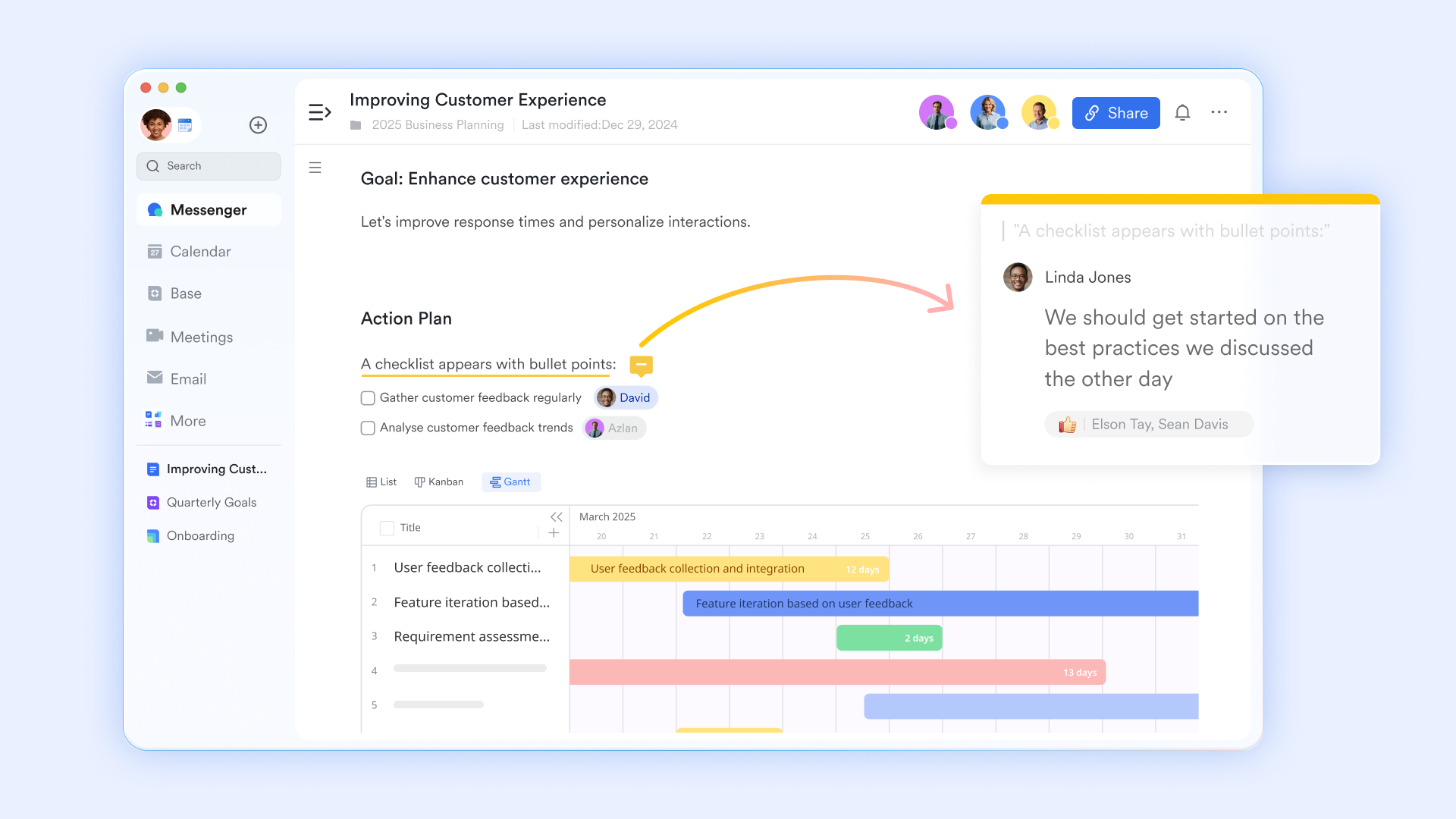
Real-time co-editing that makes documentation a collaborative, simultaneous activity rather than a sequential administrative task changes the documentation experience from a chore into a form of collaboration that happens as a natural byproduct of the work.
-
“Version History” that makes every document’s evolution transparent, removes the anxiety of working from an unknown version and the frustration of discovering that the document that was being relied upon had been changed without notification.
An operational system that makes people feel capable with Lark Base
The operational environment that makes people feel capable is one where they can find what they need, understand their own workload, see how their work fits into the larger picture, and make independent decisions without requiring constant managerial direction. The operational environment that makes people feel dependent is one where information is inaccessible, workload is opaque, and every decision requires escalation because the context for making it independently is unavailable.
-
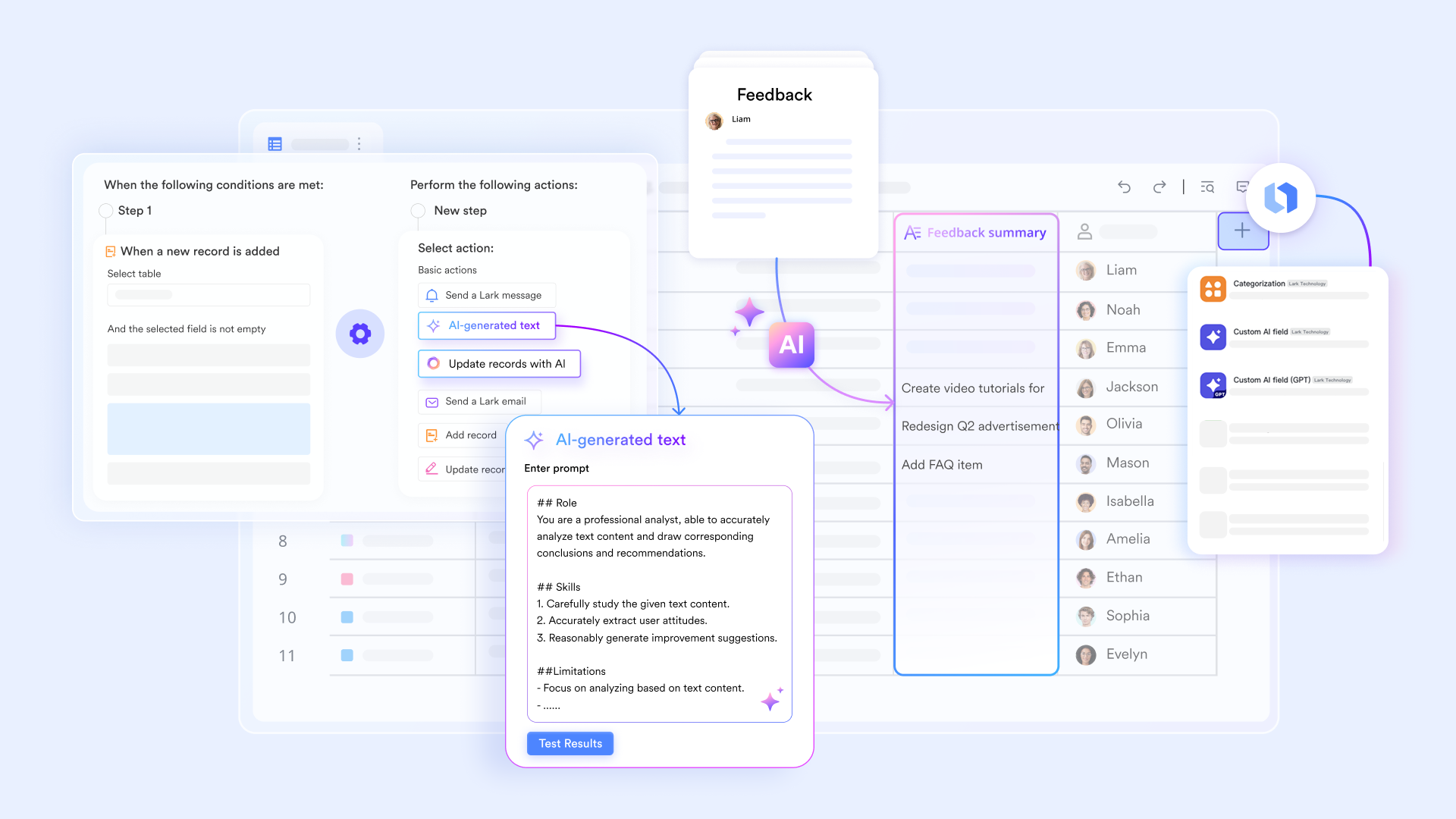
Personal task views that give every team member a self-managed, current view of their own priorities create the daily experience of being in control of their own work rather than receiving direction for every task from a manager who is the only one with the necessary visibility.
-
Shared dashboards that make the team’s operational picture visible to every team member create the experience of belonging to an organization whose workings are transparent and accessible rather than opaque and hierarchical.
-
Automation workflows that handle routine data management remove the experience of administrative burden that makes operational work feel less than the skills it is being performed by, freeing the team members to bring their best capability to the work rather than to the overhead that surrounds it.
Knowledge that is always there when people need it with Lark Wiki
The working environment that makes people feel valued is partly created by the experience of having the information they need available when they need it. The environment where every information needs requires asking a colleague, where knowledge is hoarded because the system provides no better storage for it, and where finding anything requires knowing who to ask rather than where to look, produces a daily experience of informational poverty that makes people feel under-resourced rather than supported.
-
“Advanced Search” with powerful filters gives every team member the experience of instant access to organizational knowledge, which is one of the most direct operational expressions of organizational investment in each individual team member’s capability.
-
“Permission Settings” that give every team member access to the knowledge appropriate to their role, rather than either the full organizational archive or an unnecessarily restricted subset of it, create the experience of being appropriately trusted with the information needed to do the job well.
-
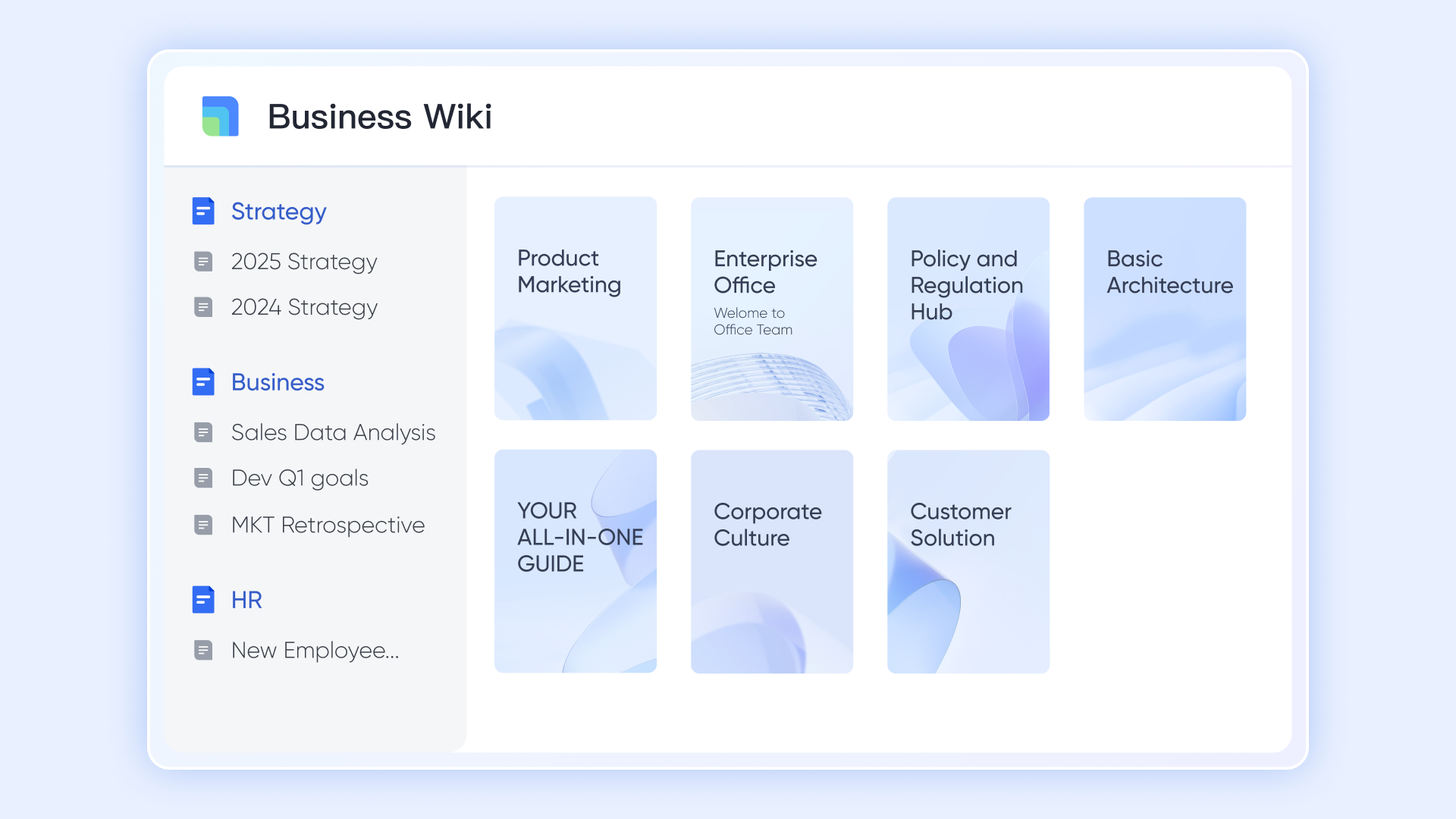
“Rich Content” pages that carry the full reference layer for any topic in a single organized location give every team member the experience of organizational support at the point of need, so the working environment feels designed for their success rather than indifferent to their information needs.
Bonus: Why the best places to work invest in operational infrastructure
The best places to work, as measured by retention, engagement, and the quality of the talent they attract, are consistently the organizations that have made the daily working experience genuinely good. That experience is not created by perks or policies. It is created by operational infrastructure that makes people feel capable, informed, valued, and connected to meaningful work in their daily interactions with the tools and systems they use to do their jobs.
Platforms like Lattice and Glassdoor measure whether the working experience is good. Tools like Slack and Microsoft Teams create the communication layer of that experience. But neither creates the full operational environment, goal transparency, communication quality, documentation accessibility, operational self-direction, and knowledge availability, that defines genuinely good working experience at the infrastructure level. Teams evaluating Google Workspace pricing often discover that collaboration tools alone do not shape employee experience. Many add separate engagement platforms to measure satisfaction, while the day-to-day operational environment that influences that experience remains spread across other tools. Lark brings communication, coordination, and workflow management into one environment, helping create better day-to-day working conditions rather than measuring engagement in isolation.
Conclusion
Organizations that people actually want to work for have built working environments where the daily operational experience of being there is genuinely good: where purpose is visible, communication is human, documentation respects time, operational systems create capability rather than dependence, and knowledge is always available when it is needed. A connected set of productivity tools that treats the quality of daily working experience as a design requirement with the same priority as the efficiency outcomes the organization is pursuing is how organizations build the environment that retains excellent people, attracts capable candidates, and produces the discretionary effort that makes the difference between good organizational performance and genuinely excellent organizational performance.
Was this news helpful?
 Yes, great stuff!
 I’m not sure
 No, doesn’t relate