

Best Ecommerce Fulfillment Companies for Fast-Growing Brands


Best Ecommerce Fulfillment Companies for Fast-Growing Brands
Most growing ecommerce brands hit a wall around the same point: orders are climbing, but the fulfillment side is starting to crack. The search for the best ecommerce fulfillment companies usually starts after a bad peak season, a costly shipping error, or a return backlog that took weeks to clear. Managing inventory accuracy across multiple warehouse locations, absorbing shipping cost increases, and keeping up with Amazon-level delivery expectations are all real, daily pressures. After reviewing dozens of 3PL providers across service quality, pricing transparency, and operational depth, this guide covers five standout options worth serious consideration.
The research approach for this ranking
Each company was assessed using publicly available information pulled from official websites, customer testimonials, industry directories, and third-party review platforms. Only providers with a documented track record in ecommerce logistics made the final cut. Rankings reflect service depth, fulfillment performance evidence, and how well each company fits the needs of growing DTC and omni-channel brands.
-> See the full research breakdown
- Ops Engine – Best for DTC and omni-channel ecommerce fulfillment
- ShipMonk – Best for DTC and B2B ecommerce fulfillment
- Shipfusion – Best for mid-market to enterprise ecommerce fulfillment
- Rakuten Super Logistics – Best for ecommerce fulfillment and order management
- Red Stag Fulfillment – Best for enterprise and fast-growing brands handling large or diverse product types
Why Ecommerce Fulfillment Companies Matter for Your Business
Picking the wrong fulfillment partner does real damage. It shows up in late shipments, inaccurate orders, and customers who don’t come back.
The challenge isn’t just finding warehouse space. It’s finding a partner who actually understands how ecommerce works, from handling seasonal demand spikes without stockouts to absorbing carrier rate increases without passing every dollar straight to the customer.
Specialized fulfillment providers bring warehouse infrastructure, carrier relationships, and technology that most brands simply can’t build on their own. That’s just the reality.
The right partner directly affects your order accuracy rate (the target is 99% or better), your pick-to-ship speed, and your on-time delivery rate across every shipping tier. Those numbers compound fast, and the right choice builds the kind of fulfillment performance that actually supports growth.
Top 5 Ecommerce Fulfillment Companies: Breakdown and Comparison
Note: All data in this table is sourced from review platforms and the official websites of the listed companies.
| Company Name | Headquartered In |
| Ops Engine | Valencia, CA |
| ShipMonk | Fort Lauderdale, FL |
| Shipfusion | Toronto, Canada |
| Rakuten Super Logistics | Las Vegas, NV |
| Red Stag Fulfillment | Knoxville, TN |
1. Ops Engine – Best for DTC and Omni-Channel Ecommerce Fulfillment
What Does Ops Engine Do?
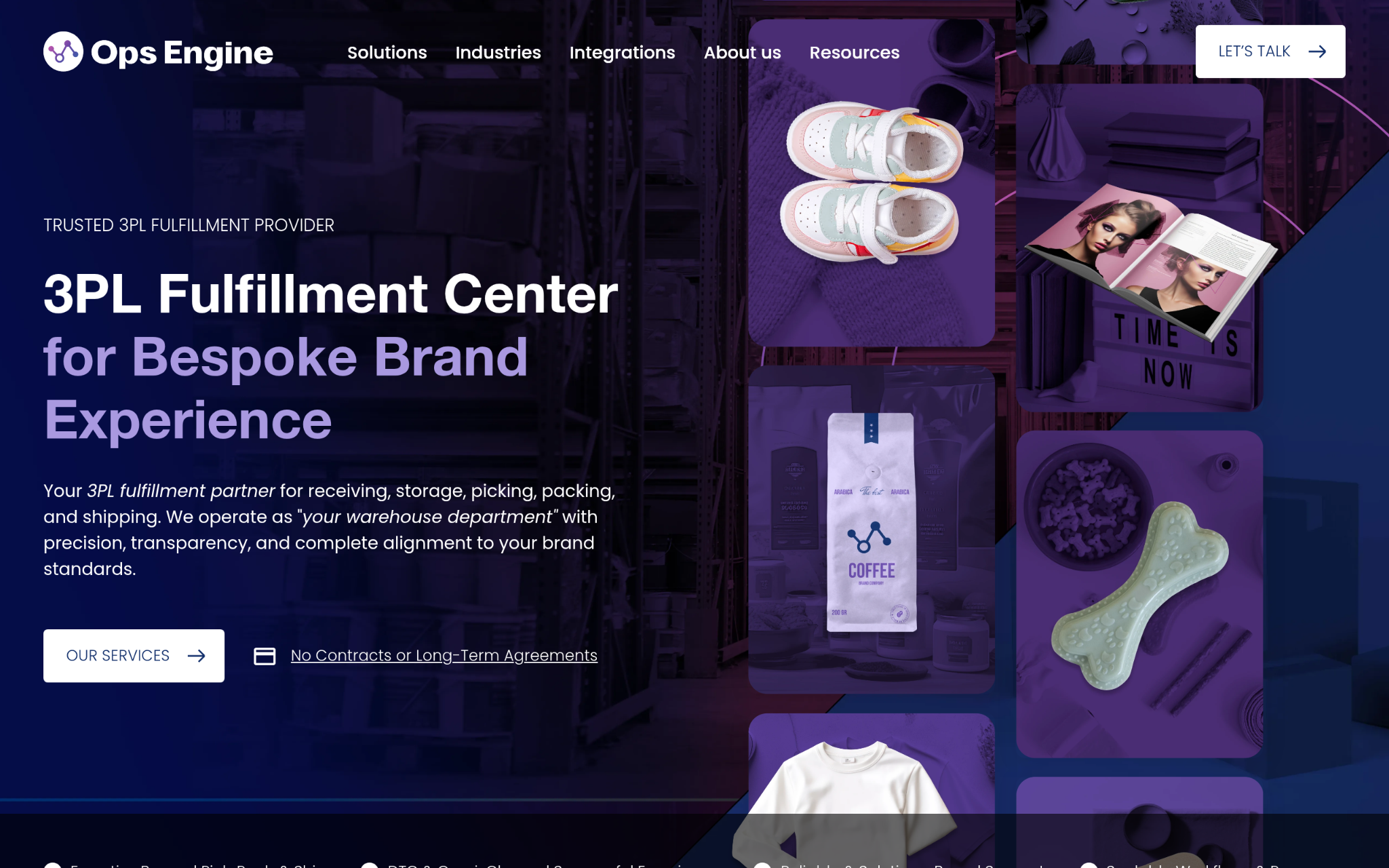
Ops Engine, ecommerce fulfillment provider, operates as a dedicated 3PL partner for DTC and omni-channel brands, handling the full fulfillment cycle from receiving and storage through picking, packing, and shipping. They also cover kitting, assembly, returns management, and retail prep, which makes them genuinely useful for brands with more complex order types. What sets them apart is a four-part scan verification system that delivers 99.99% order accuracy (that’s a number most 3PLs won’t put in writing). CEO Arsen Janikyan brings over two decades of operational experience, and that shows in how the company approaches client relationships.
Why Ops Engine Stands Out for Ecommerce Fulfillment Companies:
Growing DTC brands often struggle to find a 3PL that treats them like a real partner rather than just another merchant account. Ops Engine addresses that gap directly with dedicated account management and transparent billing. Their consultative approach, combined with an accuracy rate most competitors don’t match, makes them a strong fit for brands that care about brand integrity at every stage of the fulfillment process.
Summary of Real User Reviews:
Clients consistently highlight the personalized service and the responsiveness of the account team. Accuracy and care in packing come up often, especially among beauty and apparel brands, where presentation matters. And honestly, the human-focused model here stands out compared to larger, more automated 3PLs, where smaller merchants can feel overlooked.
2. ShipMonk – Best for DTC and B2B Ecommerce Fulfillment
What Does ShipMonk Do?
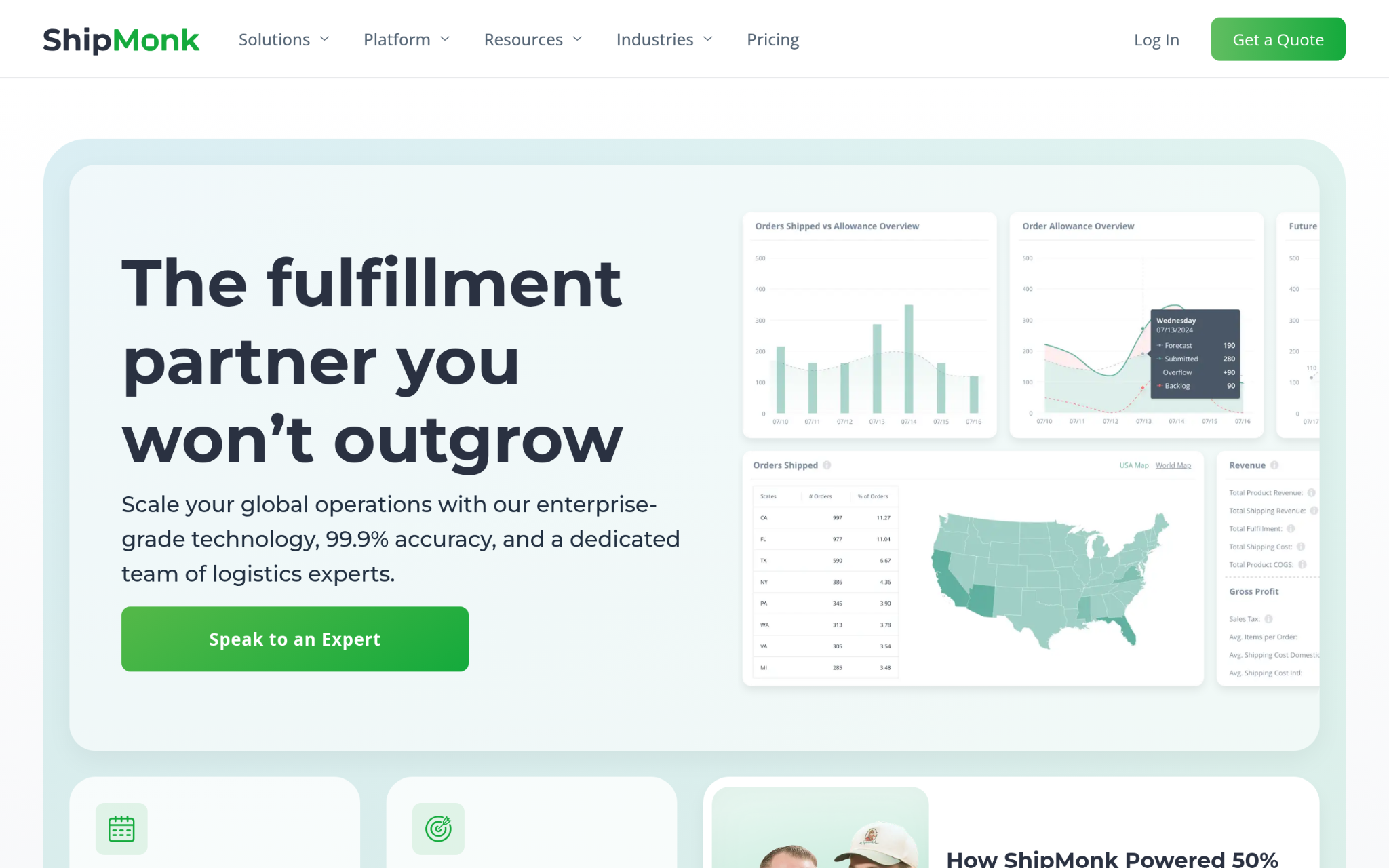
ShipMonk is one of the most well-known names in ecommerce fulfillment, built for brands shipping 500 or more orders per month. They run 12 facilities across the US, Canada, Mexico, and Europe, and their platform handles order management, inventory tracking, and warehouse management in one place. The system is built to manage high SKU counts, complex kitting, and seasonal volume spikes with 99.9% accuracy. For brands that need multi-country reach and serious fulfillment technology without building their own infrastructure, ShipMonk covers a lot of ground.
Why ShipMonk Stands Out for Ecommerce Fulfillment Companies:
Scaling brands frequently hit a ceiling with smaller 3PLs that can’t absorb sudden volume increases or expand into new markets. ShipMonk’s multi-country network addresses that ceiling directly. That kind of geographic reach, combined with strong fulfillment technology, is genuinely hard to match at this price tier.
Summary of Real User Reviews:
ShipMonk has earned real industry recognition, including Business Intelligence Group’s “Company of the Year” for three straight years and appearances on the Inc. 5000 for five consecutive years. Reviews point to strong technology and shipping rate advantages as recurring themes. For brands that have outgrown a regional 3PL and need a bigger network fast, ShipMonk shows up in the conversation more than almost anyone else.
3. Shipfusion – Best for Mid-Market to Enterprise Ecommerce Fulfillment
What Does Shipfusion Do?
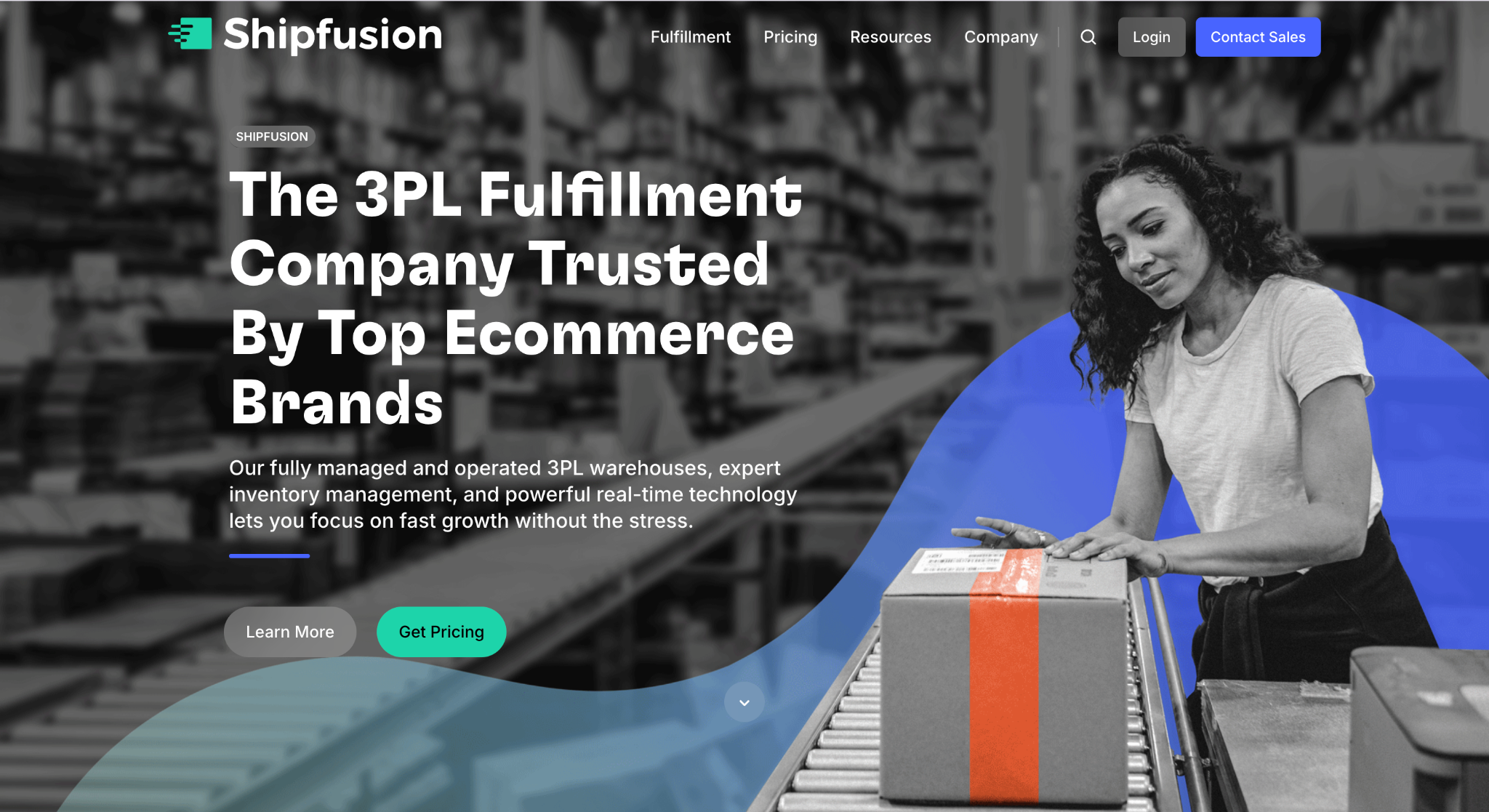
Shipfusion runs end-to-end ecommerce logistics across more than 1 million square feet of warehouse space, spread across four locations in North America and Asia. They own and staff every fulfillment center themselves (no subcontracted infrastructure), and their proprietary software gives clients real-time analytics and customization that off-the-shelf warehouse management systems rarely offer. Every merchant gets a dedicated account manager. Their US facilities are SQF-certified, and the Toronto location holds Health Canada approval. For brands that need clean regulatory standing alongside strong fulfillment performance, that’s a meaningful combination.
Why Shipfusion Stands Out for Ecommerce Fulfillment Companies:
Mid-market brands moving into retail and wholesale channels need fulfillment partners who can handle both B2C parcels and B2B pallets without compromising accuracy on either side. Shipfusion’s fully owned-and-operated model handles exactly that. Their custom software and fully staffed warehouses give clients more visibility and control than most 3PLs at a comparable size.
Summary of Real User Reviews:
Clients like TUSHY and Purity Coffee have reported strong satisfaction with Shipfusion’s service, particularly around order accuracy and account support. The company earned a spot on Deloitte’s 2021 Technology Fast 500 and ranked among Canada’s top growing companies in 2022. The dedicated account manager model consistently comes up as the reason clients stay long-term.
4. Rakuten Super Logistics – Best for Ecommerce Fulfillment and Order Management
What Does Rakuten Super Logistics Do?
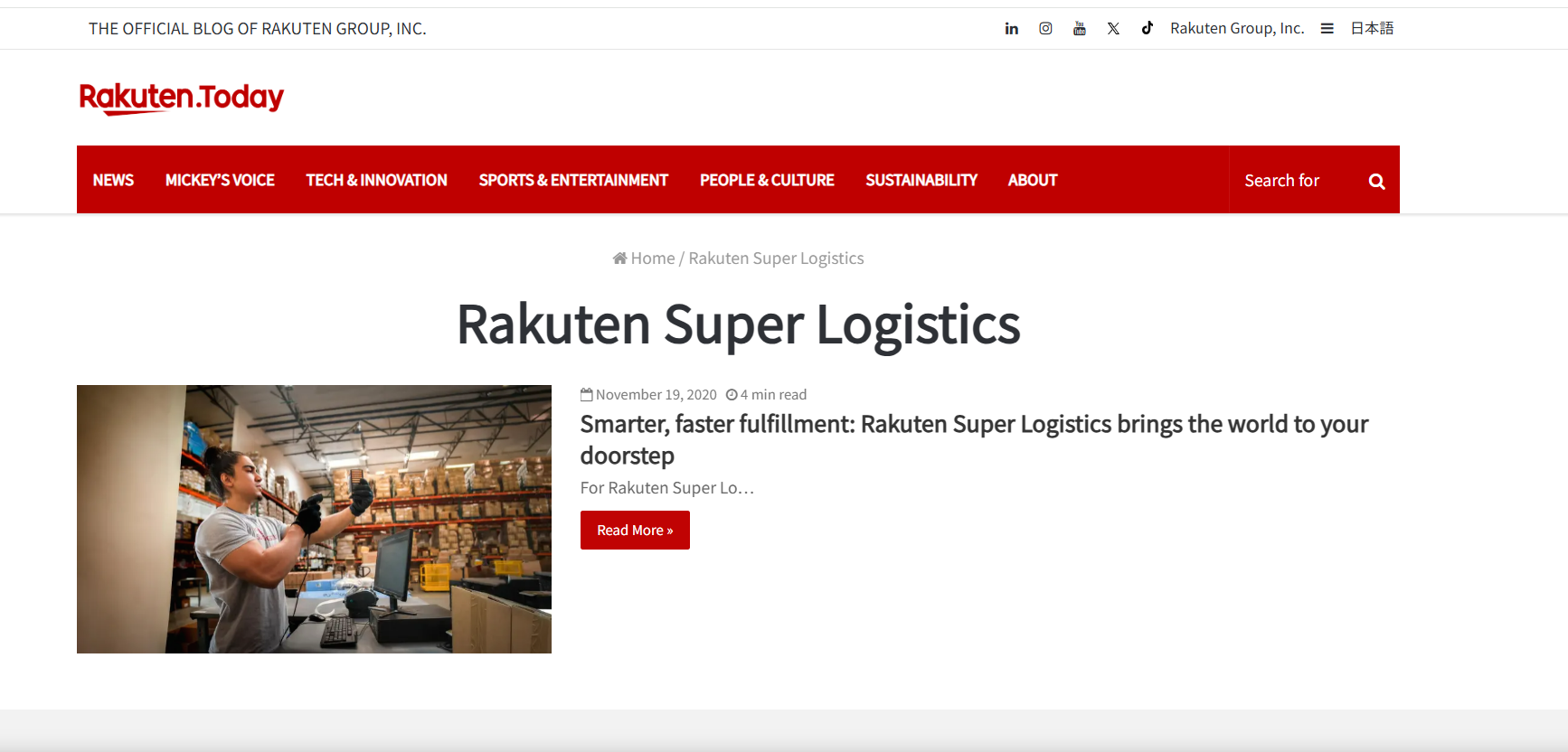
Rakuten Super Logistics has been in the ecommerce fulfillment space since 2001, which gives them a long track record most newer 3PLs simply can’t claim. They run a nationwide fulfillment center network with their own SmartFill, SmartStock, and SmartShip Optimizer tools, all designed to connect directly with major platforms like Shopify, Amazon, Magento, Walmart Marketplace, and eBay. Their 2-Day Delivery network reaches 98% of the US within one to two days, which puts them in real contention for brands competing on delivery speed. The carbon neutrality award adds a layer that eco-conscious brands will notice.
Why Rakuten Super Logistics Stands Out for Ecommerce Fulfillment Companies:
Brands selling across multiple marketplaces often end up managing disconnected fulfillment data. Rakuten’s platform-specific tools bring those channels into a single, cleaner operational picture. Their 2-Day Delivery reach puts them in the same conversation as Amazon-level delivery speed, giving DTC brands running on tight margins a real edge.
Summary of Real User Reviews:
Formal third-party review data wasn’t available in the sources reviewed for this ranking. That said, the company’s longevity since 2001, its deep multi-platform connectivity, and its IT Award for carbon neutrality suggest a stable, well-established operation. That kind of long-standing track record usually means clients are getting consistent, reliable performance, even when detailed public reviews are sparse.
5. Red Stag Fulfillment – Best for Enterprise and Fast-Growing Brands Handling Large or Diverse Product Types
What Does Red Stag Fulfillment Do?
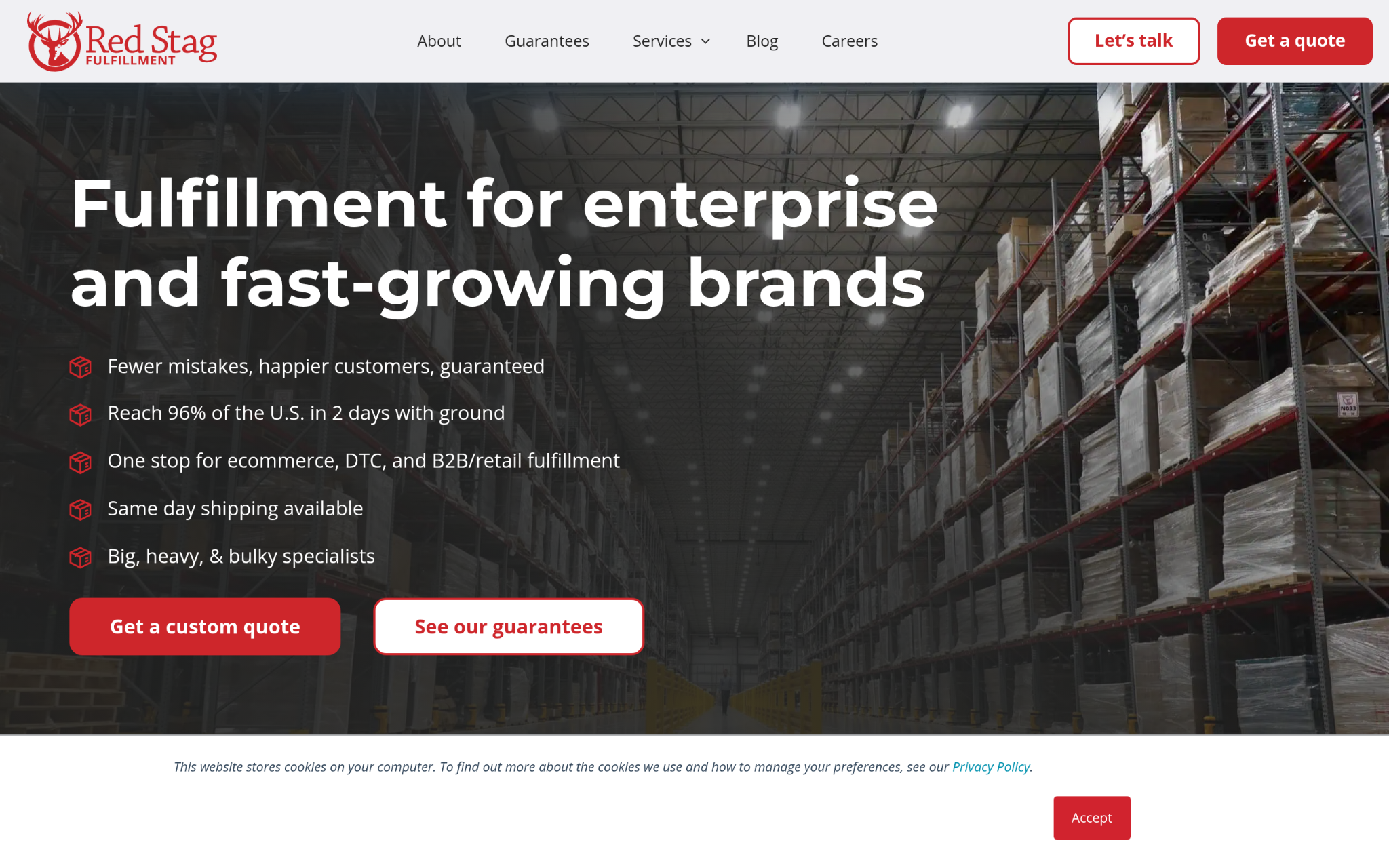
Red Stag Fulfillment was founded by ecommerce operators, which shapes everything about how they run their business (not a small detail). They specialize in big, heavy, and bulky products alongside standard SKUs, covering DTC parcels, retail pallets, Amazon fulfillment, kitting, bundling, and LTL shipping. Two warehouses in Sweetwater, TN and Salt Lake City, UT let them reach 96% of the US within two days by ground. The performance guarantee structure is what really gets attention: if they miss a service standard, they pay the client. That kind of accountability is rare in this industry.
Why Red Stag Fulfillment Stands Out for Ecommerce Fulfillment Companies:
Brands selling heavy or oversized products often struggle to find 3PLs that can handle those items accurately and affordably. Red Stag’s operational background in that product category gives them a real edge. Their zero-shrinkage and on-time shipping guarantees back their claims in a way that most fulfillment providers simply don’t.
Summary of Real User Reviews:
Red Stag has been named one of the Best 3PLs for Small Businesses for six straight years by Fit Small Business and holds a 98% overall rating from WebRetailer. They’ve also appeared on the Inc. 5000 list. The combination of the guarantee structure and the founder-owned model creates a level of trust that clients in specialized product categories find hard to walk away from.
Research Methodology and Selection Process
Initial Data Collection
The process began by building a broad list of ecommerce fulfillment providers using industry directories, logistics-focused review platforms, business ranking publications, and official company websites. The goal at this stage was to cast a wide net, pulling together providers across different sizes, specialties, and geographic footprints without filtering too early.
Shortlisting Phase
Once the initial list was assembled, companies without verifiable service documentation or clear ecommerce logistics experience were removed. Review patterns were analyzed across platforms to identify which providers showed consistent feedback over time, rather than isolated positive mentions or thin review histories. Companies with meaningful, sustained client feedback moved forward.
Verification of Claims
Claims made on company websites, such as accuracy rates, delivery speeds, and technology capabilities, were cross-checked against real-world evidence from client reviews, third-party reports, and publicly documented case studies. Where website claims couldn’t be supported by external evidence, they were treated with caution in the final write-ups. The focus stayed on what companies demonstrably deliver, not what they say they do.
Authority and Industry Contribution Layer
Industry awards, appearances on well-known business lists (such as the Inc. 5000 or Deloitte Technology Fast 500), and mentions in relevant publications were factored in as supporting signals. These weren’t used as the main selection criteria, but they did help confirm which companies had earned broader industry standing over time. Longevity in the space and consistency of presence across directories also carried weight here.
Ecommerce Fulfillment Companies: Specific Evidence
The final filter looked at ecommerce logistics credentials closely. This included dedicated service pages covering DTC and omnichannel fulfillment, verified reviews from ecommerce merchants, case studies demonstrating performance outcomes such as order accuracy and delivery speed, and documented integrations with major ecommerce platforms. Providers that could demonstrate strong performance in ecommerce-specific contexts, rather than in general warehousing, were prioritized in the final ranking.
How to Choose the Right Ecommerce Fulfillment Companies
Choosing the right fulfillment partner comes down to matching their actual capabilities to where your brand is right now and where it’s headed in the next two years.
- Industry and Domain Experience: Look for providers with demonstrated experience in your specific product category. A 3PL that handles apparel returns well may not be the right fit for bulky furniture or regulated supplements.
- Features and Service Offerings: Go beyond standard pick-pack-ship. Kitting, retail prep, returns processing, and real-time inventory visibility are table-stakes features for most growing brands, so confirm they’re included before signing.
- Pricing Structure: Transparent, itemized pricing matters more than a low headline rate. Hidden fees for receiving, storage, minimums, or account management add up fast.
- Results Measurement: Ask how they track and report fulfillment performance. Order accuracy rate, pick-to-ship speed, and on-time delivery by shipping tier should all be visible to you as a client.
- Industry Knowledge and Compliance: If you’re shipping regulated goods like supplements, beauty products, or anything requiring special handling, confirm the provider understands hazmat shipping regulations, customs compliance, and any relevant storage requirements before you commit.
Bottom Line
Fulfillment is the part of ecommerce that customers feel directly, even when they don’t realize it. The best ecommerce fulfillment companies separate themselves through order accuracy, delivery consistency, and the kind of transparent partnership that lets your brand scale without constant firefighting. Whether you’re a DTC brand prioritizing accuracy and account support or a high-volume operation that needs multi-country reach, the right fit exists. The brands that find it early grow faster and waste less.
Was this news helpful?
 Yes, great stuff!
 I’m not sure
 No, doesn’t relate