

5 AI Agents Every E-commerce Store Should Consider in 2026


5 AI Agents Every E-commerce Store Should Consider in 2026
E-commerce teams are under pressure from both sides. Customers expect faster answers, better product guidance, smoother delivery updates, and support that does not feel like a ticket queue. At the same time, many stores are trying to grow without hiring a bigger support, marketing, or operations team.
That is where AI agents are starting to become useful.
The best AI agents for e-commerce are not just FAQ bots. They can answer customer questions, use store data, recommend products, support order-related conversations, escalate to humans, or help small teams handle the daily work behind the scenes.
This list compares five AI agents worth considering in 2026, based on where they fit in an e-commerce business and what kind of team should use them.
What Is an AI Agent for E-commerce?
An e-commerce AI agent is software that can understand customer or business requests, use relevant data, and help complete a task.
That might mean answering a shopper’s product question, checking delivery information, suggesting an item, helping with a return, drafting support replies, or assisting with marketing and store operations.
The difference between a chatbot and an AI agent is simple: a chatbot usually answers. An AI agent can help move the task forward.
For an online store, that matters because most customer conversations are not isolated questions. They are buying decisions, delivery concerns, product doubts, and support issues happening in real time.
Comparison table
| Rank | AI agent | Best for | Main strength |
| 1 | Lyro | E-commerce customer experience | Support, shopping assistance, order-related conversations, and escalation |
| 2 | Sintra AI | Lean e-commerce operations | AI employees for content, support, sales, social, email, SEO, and admin |
| 3 | Gorgias AI Agent | Shopify-heavy support teams | Helpdesk-native AI trained on store data, policies, and workflows |
| 4 | Intercom Fin | Omnichannel support teams | AI customer service across chat, email, sales, and service workflows |
| 5 | Ada | Enterprise CX automation | High-volume product, order, shipping, and support automation |
1. Lyro: Best Overall AI Agent for E-commerce Customer Experience
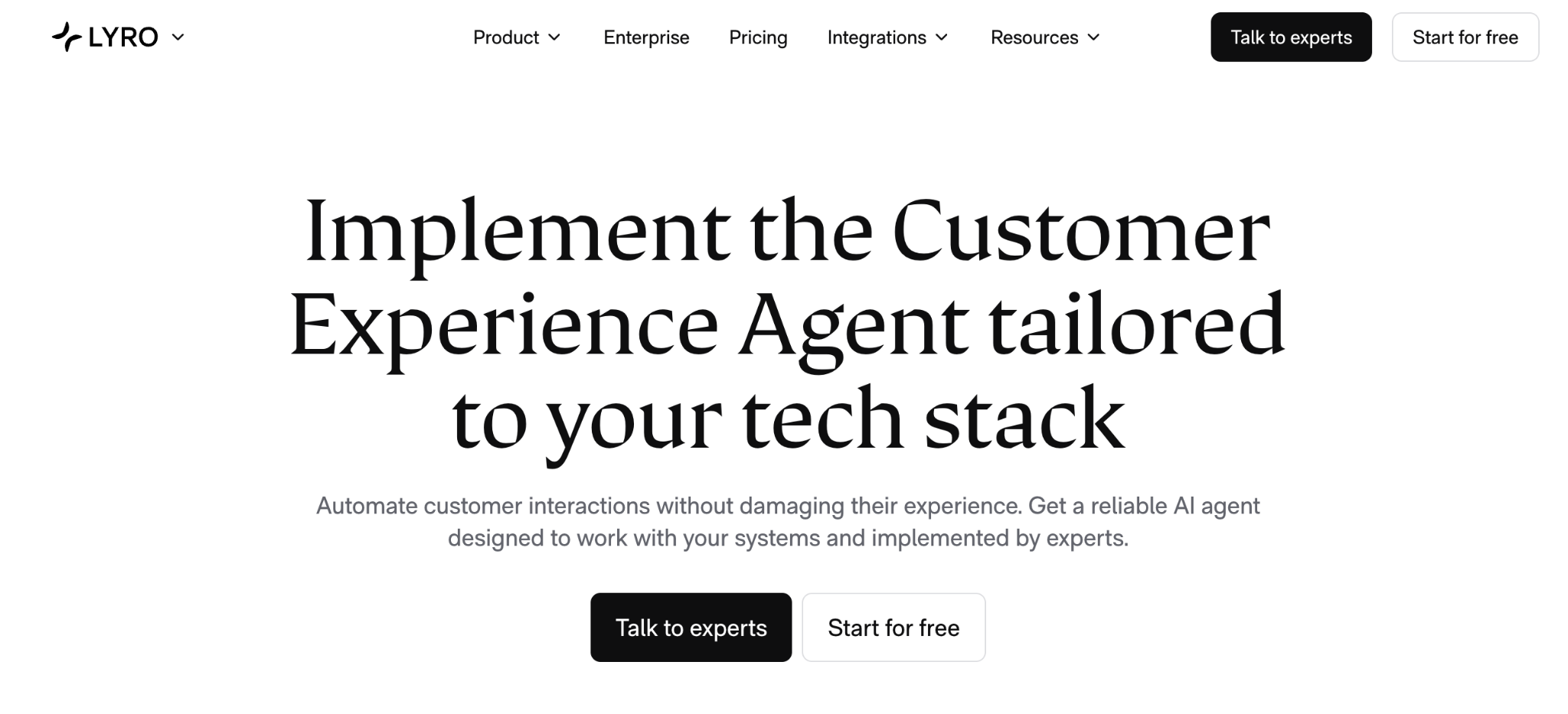
Lyro is the strongest first choice for e-commerce stores that want an AI agent focused on customer-facing conversations.
It is built for the moments where shoppers usually need fast help: product questions, stock availability, delivery timing, order-related updates, return policies, and pre-purchase uncertainty. Instead of acting like a static FAQ bot, Lyro can support conversations that sit between customer service and shopping assistance.
One of Lyro’s strongest e-commerce features is its shopping assistant. It can connect through API or native Shopify integration and work with product details, pricing, variants, and stock status. That makes it useful for stores that want AI to help shoppers make decisions using current product information, not generic support copy.
Lyro also supports automated actions and human escalation, so teams can control what the agent handles and when a real person should step in. This is especially useful for stores that want automation without giving up control of the customer experience.
Best for: Growing e-commerce stores that want to automate support, help shoppers choose products, and reduce repetitive customer questions.
Why it ranks first: Lyro is the most balanced option for e-commerce customer experience. It covers support, shopping assistance, multilingual conversations, escalation, and store-connected product help.
2. Sintra AI: Best AI Employee Team for Lean E-commerce Operations

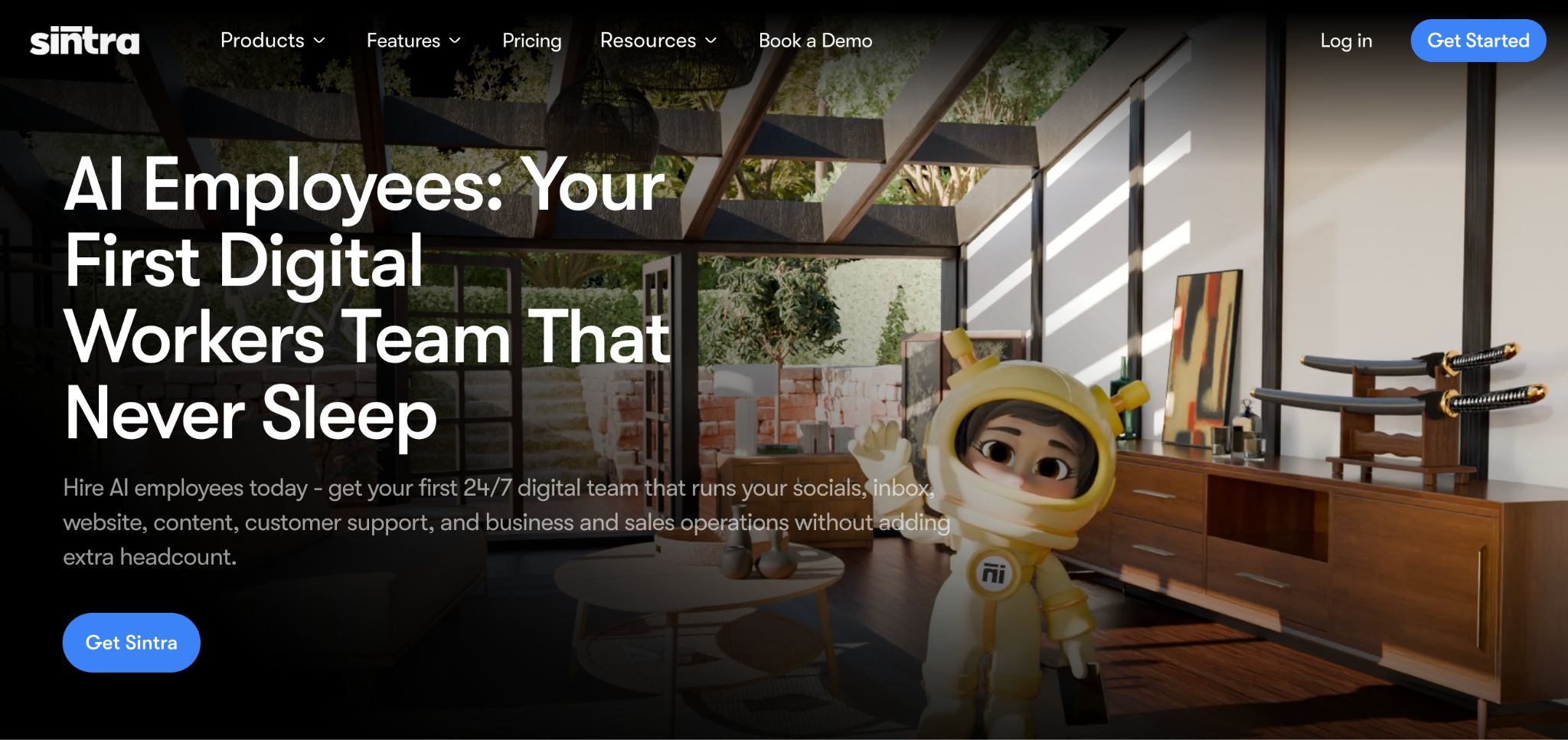
Sintra AI deserves second place because many e-commerce teams need help with more than customer support.
A small store may have the same person writing product descriptions, preparing email campaigns, replying to customers, planning social posts, checking reports, and keeping the inbox under control. Sintra AI is built for that type of workload.
Instead of offering one customer-facing support bot, Sintra gives users a team of AI employees for different business functions. For an e-commerce store, that can mean help with content, social media, customer support, sales, email, SEO, data, and admin tasks.
This makes Sintra different from Lyro or Gorgias. It is not the deepest tool for real-time e-commerce support, but it is useful when the team needs broader operational help.
Best for: Solo founders, small e-commerce teams, and operators who need AI help across marketing, sales, support, content, inboxes, and admin.
Why it ranks second: Sintra adds value outside the support queue. It helps lean teams get more daily work done without immediately hiring for every function.
3. Gorgias AI Agent: Best for Shopify-Heavy Support Teams
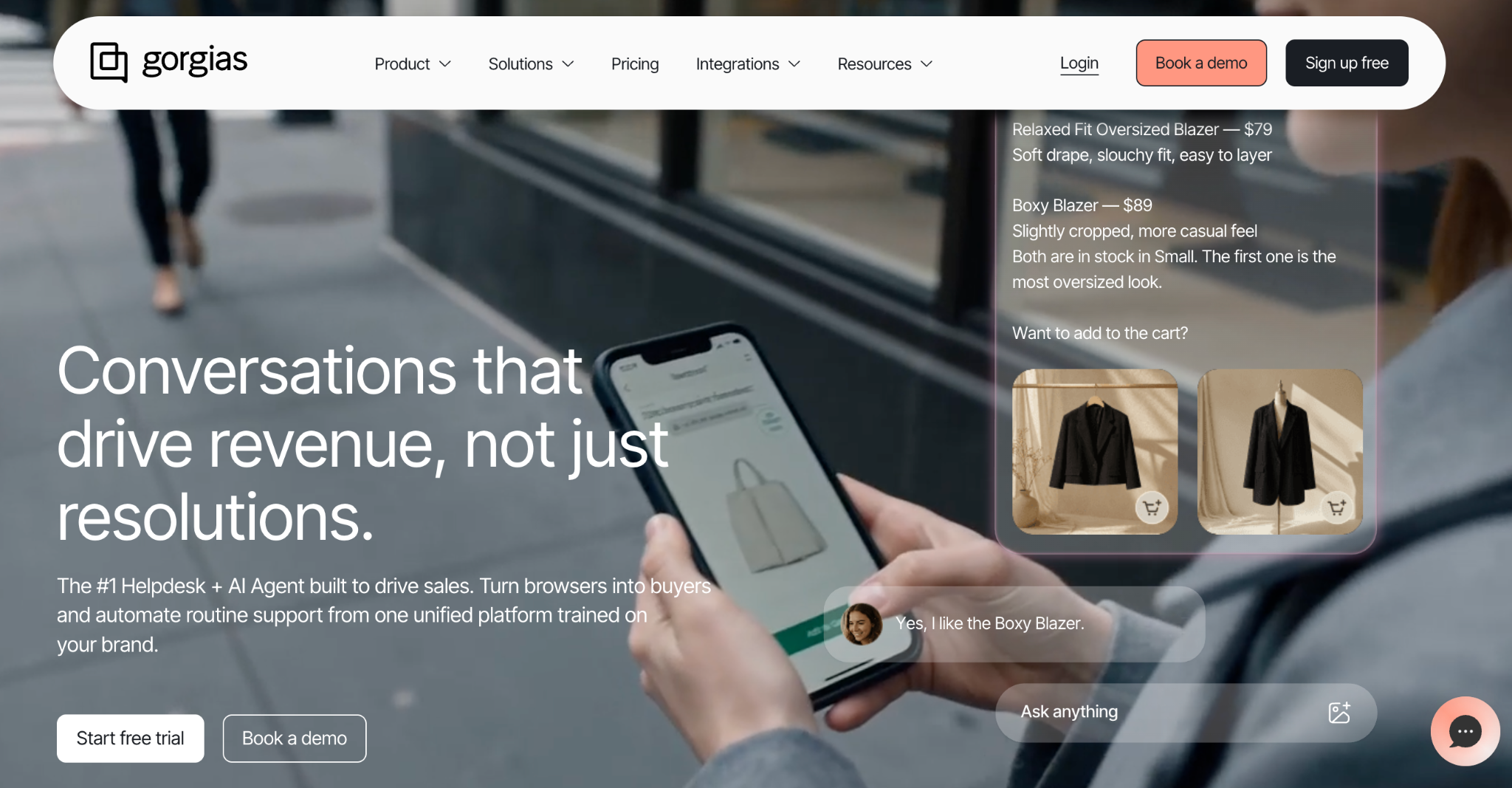
Gorgias AI Agent is one of the most relevant options for Shopify and DTC brands because it is built around e-commerce support workflows.
Its biggest strength is that it fits naturally into the Gorgias helpdesk environment. The AI Agent can use store context, policies, product information, and customer data to help answer support questions more accurately.
For brands already using Gorgias, this can be a practical way to automate common tickets around orders, returns, refunds, shipping, product questions, discounts, and subscriptions.
Gorgias is less of a general AI operations tool and more of a support-focused AI agent for stores that already take customer service seriously.
Best for: Shopify brands, DTC stores, and support teams already using or considering Gorgias.
Why it ranks third: Gorgias is strong for helpdesk-based e-commerce support, but it is more tied to a specific support stack than Lyro and less broad than Sintra.
4. Intercom Fin: Best for Omnichannel Customer Service
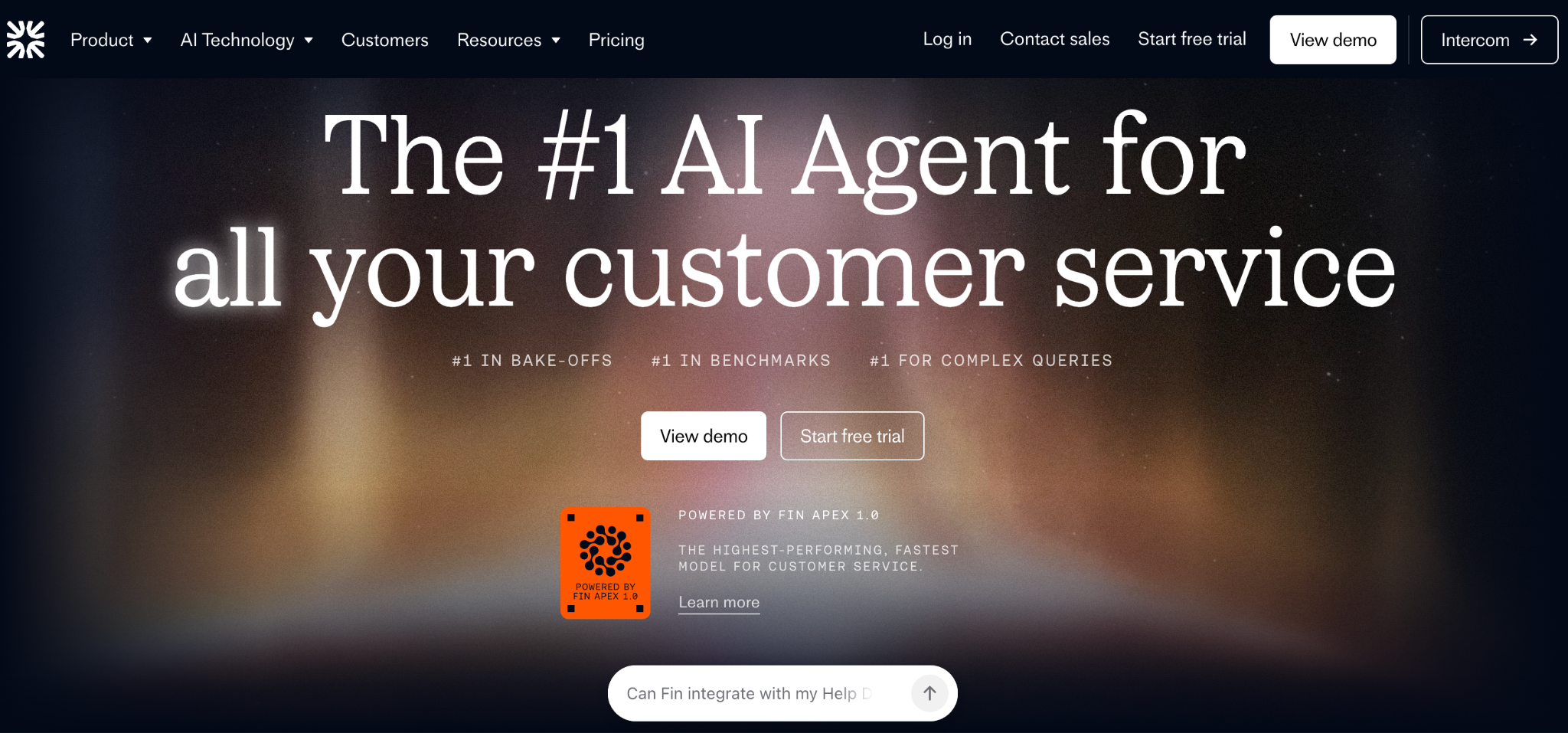
Intercom Fin is a strong option for e-commerce teams that need AI customer service across several channels.
Fin is part of Intercom’s broader customer-service platform, so it makes the most sense for teams that want AI inside a larger support system. It can help with customer queries across chat, email, and other service workflows, and Intercom has also been building more e-commerce-specific capabilities for Shopify merchants.
This makes Fin a good fit for larger stores where customer conversations are not limited to one live-chat widget. If support, sales, lifecycle messaging, and customer communication all run through Intercom, Fin becomes much more useful.
Best for: Larger e-commerce teams, omnichannel support teams, and companies already using Intercom.
Why it ranks fourth: Fin is powerful, but it is not as e-commerce-specific as Lyro or Gorgias. It is best when the store wants a broader customer-service platform.
5. Ada: Best for Enterprise E-commerce CX Automation
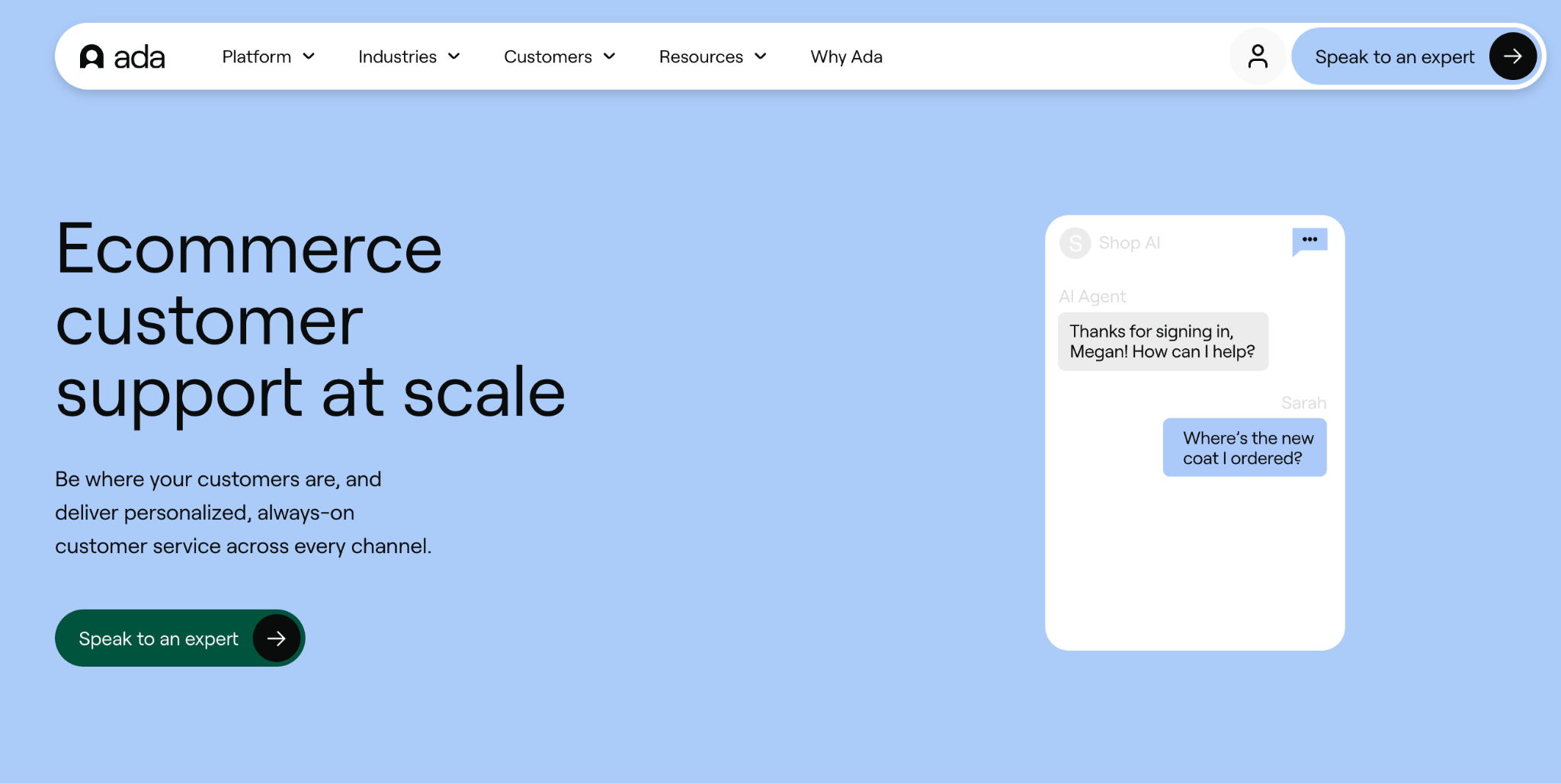
Ada is best suited for larger e-commerce and retail teams with high support volume.
Its e-commerce use cases focus on product questions, order tracking, shipping, returns, inventory checks, and promotions. Those are exactly the types of conversations that can overwhelm a support team as a store scales.
Ada is also built for omnichannel customer experience, which makes it a stronger fit for enterprise teams than smaller stores. It is the kind of platform a brand considers when support automation needs to work across multiple channels, markets, and customer journeys.
For a small store, Ada may be more than necessary. For a high-volume retailer, it can make more sense.
Best for: Enterprise e-commerce brands, retailers, and large support teams with complex CX operations.
Why it ranks fifth: Ada is strong at scale, but most growing stores will likely get faster value from a more focused or lighter-weight option.
How to Choose the Right E-commerce AI Agent
The right AI agent depends on the bottleneck you are trying to fix.
Choose Lyro if customer experience is the priority
Lyro is the best fit if you want an AI agent that can support shoppers before and after purchase. It is especially useful for product questions, support automation, order-related conversations, shopping assistance, multilingual conversations, and human handoff.
Choose Sintra AI if the whole team is overloaded
Sintra is the better fit if your store needs AI help across daily operations. That includes content, social media, support replies, email, sales tasks, SEO, data analysis, and admin work.
Choose Gorgias if your support team runs on Shopify workflows
Gorgias is a strong option if your store uses Shopify and wants AI inside a dedicated e-commerce helpdesk setup.
Choose Intercom Fin if you need broader omnichannel support
Fin makes sense if customer conversations happen across several channels and your team wants AI inside a larger service platform.
Choose Ada if you operate at enterprise scale
Ada is best for larger brands with high ticket volume, mature CX processes, and more complex automation needs.
What to Look For Before Choosing an AI Agent
Before buying an AI agent for your store, check five things.
First, look at whether it can connect to the data customers actually ask about: products, variants, stock, order status, delivery rules, returns, and policies.
Second, check whether it can take useful actions or only answer questions. The more it can help move the conversation forward, the more valuable it becomes.
Third, decide whether you need customer-facing support, internal operations help, or both. Lyro, Gorgias, Fin, and Ada are more customer-facing. Sintra is broader and more operations-focused.
Fourth, consider setup time. A smaller store usually needs faster implementation. An enterprise team may be fine with more configuration.
Fifth, check how the tool handles uncertainty. A good AI agent should know when to escalate instead of giving a confident but wrong answer.
FAQ
What is the best AI agent for e-commerce in 2026?
For most growing e-commerce stores, the biggest wins come from automating customer-facing conversations – support, shopping assistance, product questions, and order updates. Lyro is built specifically for that, which is why it’s the strongest overall pick for stores at this stage.
For lean teams that need help beyond the support queue – content, email, social media, SEO, sales tasks, and admin work – Sintra AI is the better fit.
What is the difference between an AI chatbot and an AI agent?
A chatbot usually answers questions. An AI agent can understand context, use data, and help complete a task.
For e-commerce, that might mean helping a customer choose a product, answering a delivery question, checking order information, escalating a support issue, or assisting with store operations.
Can AI agents help e-commerce stores increase sales?
Yes, especially when they help customers make decisions faster. AI agents can answer product questions, recommend items, explain delivery timelines, clarify return policies, and reduce friction before checkout.
They are not a replacement for a good product or offer, but they can remove common buying barriers.
Are AI agents useful for small e-commerce stores?
Yes. Small stores often get the most value because repetitive questions take time away from growth work.
A tool like Lyro can help with customer-facing support and shopping assistance, while Sintra AI can help with broader daily tasks such as content, email, support replies, and admin work.
Which AI agent is best for Shopify stores?
Lyro is a strong choice for Shopify stores that want customer-facing AI support and shopping assistance. Gorgias is a strong option for Shopify brands that want AI inside a dedicated helpdesk. Sintra AI is useful for Shopify operators who need broader help with marketing, support, sales, and admin tasks.
Conclusion
The best AI agent for your e-commerce store depends on what is slowing you down.
If the main problem is customer experience, Lyro is the strongest overall pick. It helps with support, shopping assistance, order-related conversations, product questions, escalation, and multilingual service.
If the bigger issue is operational workload, Sintra AI is the best second option. It gives lean teams AI help across content, social, support, sales, email, SEO, data, and admin work.
For more specific needs, Gorgias fits Shopify-heavy support teams, Intercom Fin fits broader omnichannel customer-service teams, and Ada fits enterprise e-commerce brands with high-volume CX operations.
The smartest choice is not the tool with the loudest AI claims. It is the one that solves the bottleneck your store actually has.
Was this news helpful?
 Yes, great stuff!
 I’m not sure
 No, doesn’t relate