

4 Common Obstacles Ecommerce Brands Face (And How to Overcome Them)


4 Common Obstacles Ecommerce Brands Face (And How to Overcome Them)
Online shopping has witnessed exponential growth over the past decade. Global insights suggest that ecommerce now accounts for over 23% of all sales worldwide, and experts predict that the number will continue growing (along with m-commerce and social commerce).
But here’s the deal. Ecommerce brands still face several common conversion obstacles – a fact highlighted by the average cart abandonment rate of 70.22%.
So, if you’re looking for tips on how to grow your ecommerce business, these are the common obstacles to look out for, as well as actionable tips you can implement to overcome them.
Let’s begin.
1. Insufficient Consumer Interest In (Niche) Solutions
Poor market and industry alignment are among the primary causes of low conversion rates. Yet most ecommerce brands still fail to understand the negative impact of insufficient consumer interest in their products, particularly when selling niche solutions.
However, this conversion obstacle is relatively easy to overcome. All you need to do is cover your bases in terms of generating product and brand awareness in a way that elevates engagement rates and inspires conversions.
Identify Your Target Audience and Ideal Customer Personas
The first step toward elevating your ecommerce brand’s success rates is to identify and target the right audience.
Ultimately, consumers don’t care about products that don’t relate to their wants and needs. In fact, new research suggests that people actively ignore irrelevant marketing messages, explaining why some brands have such a difficult time generating interest in their products.
Position Your Products as Solutions Your Ideal Customers Actually Need
When shopping, the majority of buyers don’t consider technical product specifications. Instead, they’re completely focused on how a specific solution helps them resolve a pain point they want gone.
In other words, if your solutions aren’t attracting consumer interest, the culprit may be that you’re approaching product positioning in the wrong way.
Shift your focus to your prospects’ experience, and highlight the outcomes your solutions can deliver instead of solely focusing on the how.
Optimize Marketing Strategies for Maximum Consumer Alignment
Once you’ve identified your ideal customers and defined how your solutions help resolve their needs, it’s time to base your marketing activities around the benefits you offer.
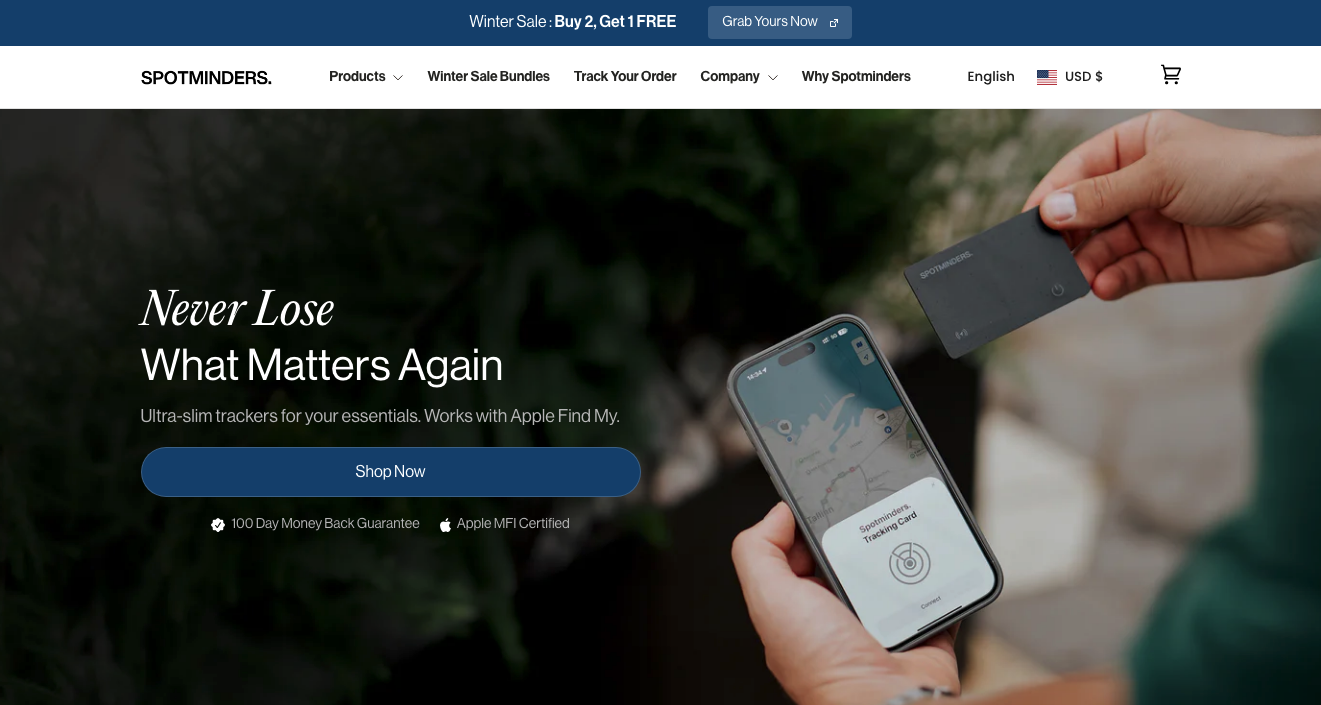
This can be as easy as addressing a common customer frustration that your product resolves. It’s what Spotminders does with the “never lose what matters again” message for their ultra-slim trackers. Alternatively, you could do it in a slightly more subtle way, namely by investing in high-quality content that targets your ideal customers’ interests/frustrations, then gently introducing blog readers to the fact that your offer includes a solution that might just be what they need to resolve a specific pain point.
2. Trust-Related Conversion Killers
In some cases, the reason your ecommerce brand isn’t converting customers could boil down to a lack of brand trust.
Ultimately, today’s shoppers don’t just consider brand credibility a crucial factor influencing their purchase decisions. The majority of people now evaluate brand trustworthiness by reading online reviews. Approximately 45% refuse to invest in a product that doesn’t have enough ratings or reviews to prove its effectiveness.
So, if you’re looking to remove common ecommerce obstacles and improve your brand’s sales performance, consider acting on opportunities to build brand trust.
Incorporate Social Proof Into Your Online Presence
One of the easiest ways to elevate brand credibility is to show off social proof.
Whether you choose to go with simple star ratings or a more elaborate format is entirely up to you. What matters is that type of content features heavily in your online presence, including your website and your social media profiles equally.
For example, if you check out Coconut Cult, you’ll quickly discover that this business takes pride in the quality of its product. That’s why it is so active in terms of reposting customer feedback on social media — an approach that works marvelously to build trust and generate awareness.

Establish Brand Authority and Competence
If you look at what makes consumers trust a business, you’ll discover that competence and expertise play a major role in convincing shoppers to choose a particular brand.
So, when aiming to remove common conversion obstacles from your sales funnel, explore opportunities to convince your target audience that they can rely on your business (and team) to receive high-quality solutions.
The best way to do so is to invest in content that demonstrates your experience and expertise. Alternatively, you could showcase trust-building content such as industry awards and certifications throughout your online presence.
Minimize Customer Risk
Finally, if you’re exploring methods to build brand trust to boost sales, remember to avoid losing customers due to a potential perception of shopping with your brand being risky.
Ultimately, most consumers don’t want to expose themselves to uncertainty — even in small ways. In fact, research from 2025 suggests that 81% of consumers have concerns about how businesses use their data, while 71% of people share the same sentiment about their governments.
So, to prevent your prospects from failing to become customers, explore methods to minimize and manage customer risk.
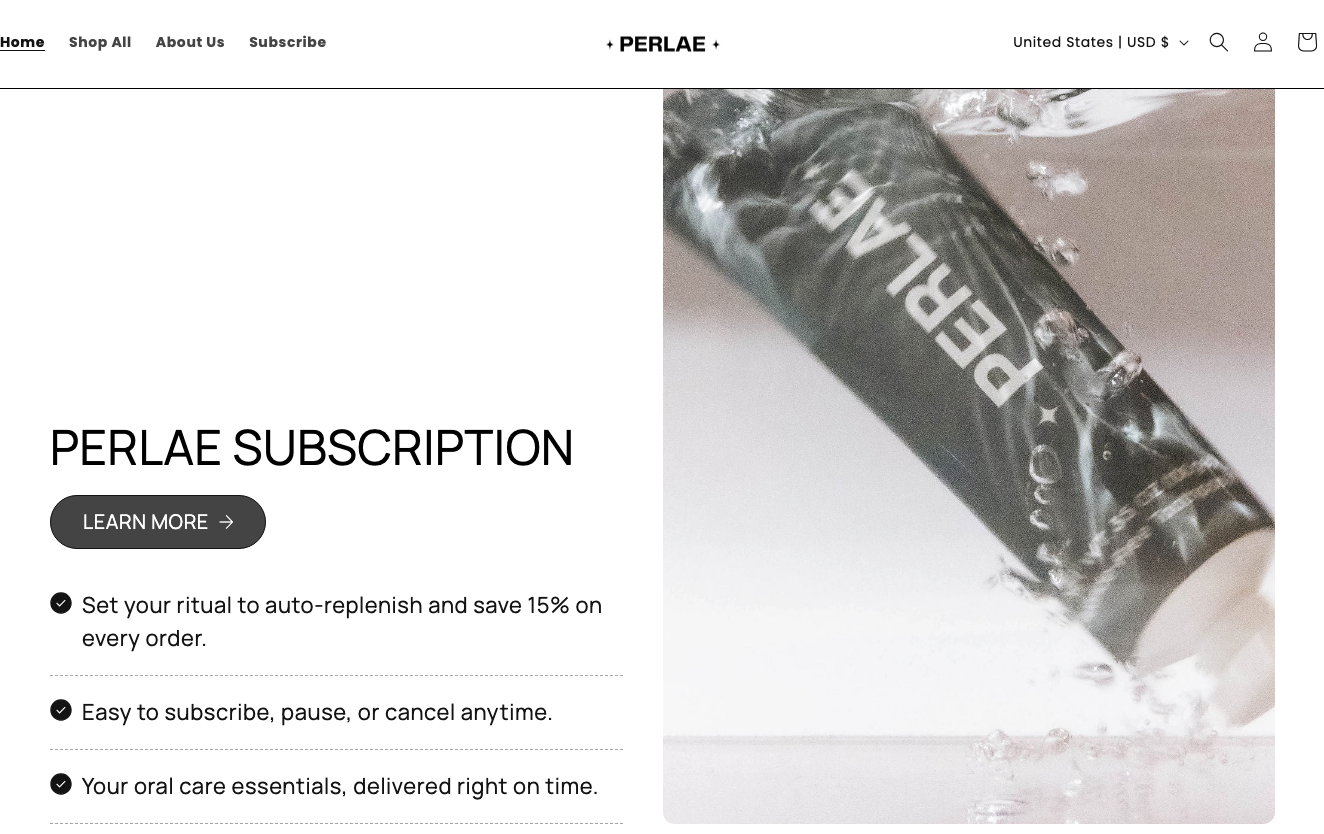
For example, Perlae addresses common consumer concerns about how its subscription works. It points out that subscribers receive 15% off on every order, can pause or cancel at any time, and that the packages are always delivered on time.
3. Insufficient Conversion Motivation
One of the most commonly overlooked aspects of ecommerce conversion success is that consumers don’t (usually) go straight from awareness to the purchase stage of the buyer’s journey. Instead, they move through several phases of the sales funnel in the hopes of making rational choices they won’t regret post-purchase.
For ecommerce brands looking to prevent sales funnel leaks, this indicates a strong need for a proactive sales approach that guides buyers through the shopping journey — ideally one that avoids the likelihood of audiences not feeling sufficiently motivated to make a purchase.
Fortunately, there are several effective methods to overcome insufficient conversion motivation within the sales funnel.
Fix Weak CTAs
One of the common conversion obstacles ecommerce brands face is not managing to convince web visitors to take action (even after sufficient interest and engagement).
There are several potential causes for this type of consumer behavior, but the fix can be really simple.
Something as elementary as replacing weak calls to action with compelling conversion elements could be more than sufficient to facilitate movement through the sales funnel.
Describe Attractive Conversion Outcomes
An alternative method for overcoming ecommerce obstacles related to insufficient conversion motivation would be to help your target audience imagine the outcomes they could reach by purchasing one of your solutions.
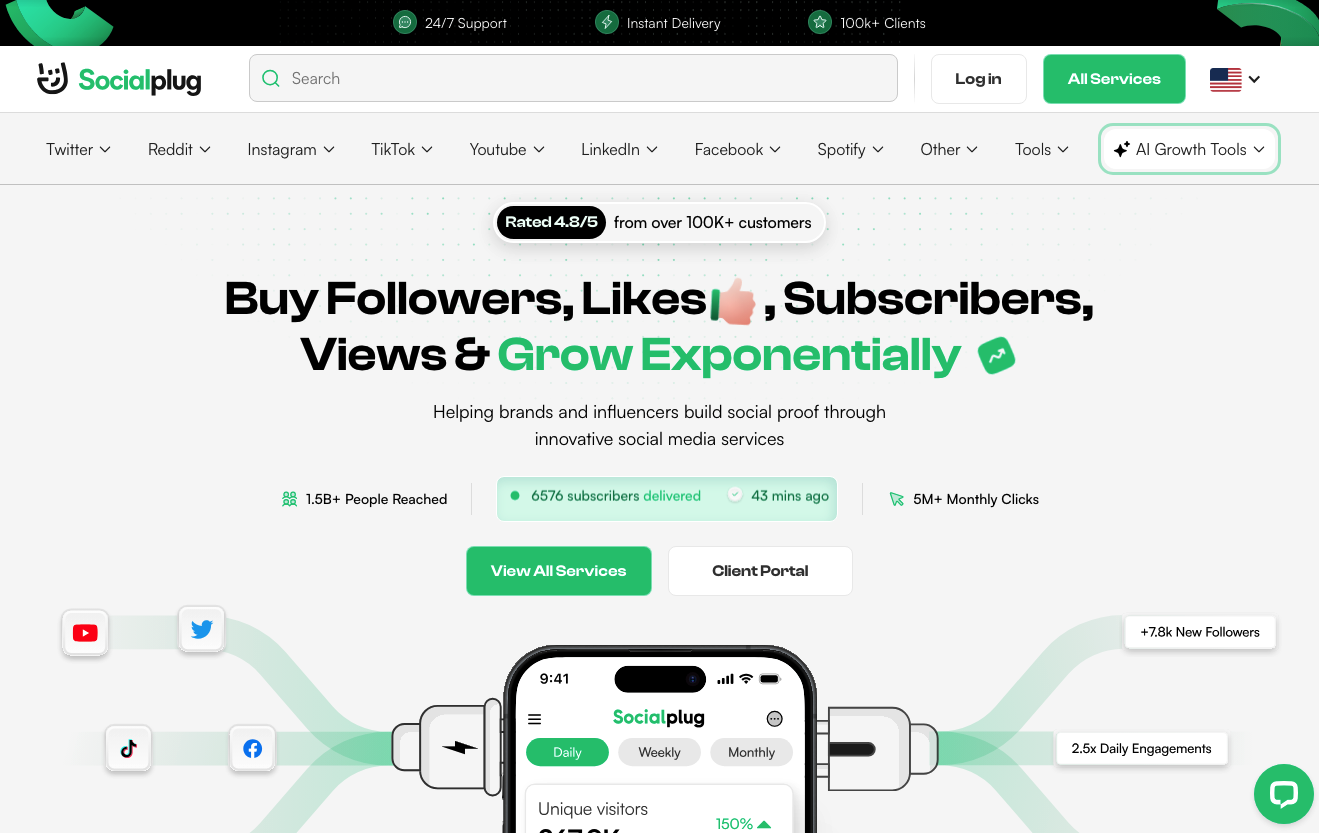
For instance, take a look at Socialplug, a marketplace for social media engagement. This business uses specific conversion outcomes to inspire potential customers to imagine the results they could accomplish by converting. Seeing that most of the brand’s target audience would benefit from thousands of likes, followers, and engagements, this strategy works marvelously in moving them closer to the purchase stage of the sales funnel and inspiring them to click the ‘Buy’ button.
4. Poor Brand and Product Differentiation in Competitive Markets
Finally, let’s address one of the most common conversion obstacles ecommerce brands face: competition.
Ultimately, ecommerce is growing rapidly. We simply have to acknowledge the increase in the number of brands selling online and serving a global customer base. In some markets and niches, this isn’t necessarily problematic. However, in others — particularly in competitive and low-trust verticals — it can make the difference between brand success and premature failure.
That’s why ecommerce brands have to know how to differentiate their products, ideally by aligning their reputation with what their ideal customers seek in the first place.
Brand and Product Positioning
By focusing on reputation-building activities (that emphasize the superiority of your solutions compared to other products in the market), you can effectively encourage your target audience to choose your brand and products.
One way to do this is by creating direct product comparisons to show off on key web pages. However, it’s not the only way to accomplish this goal.
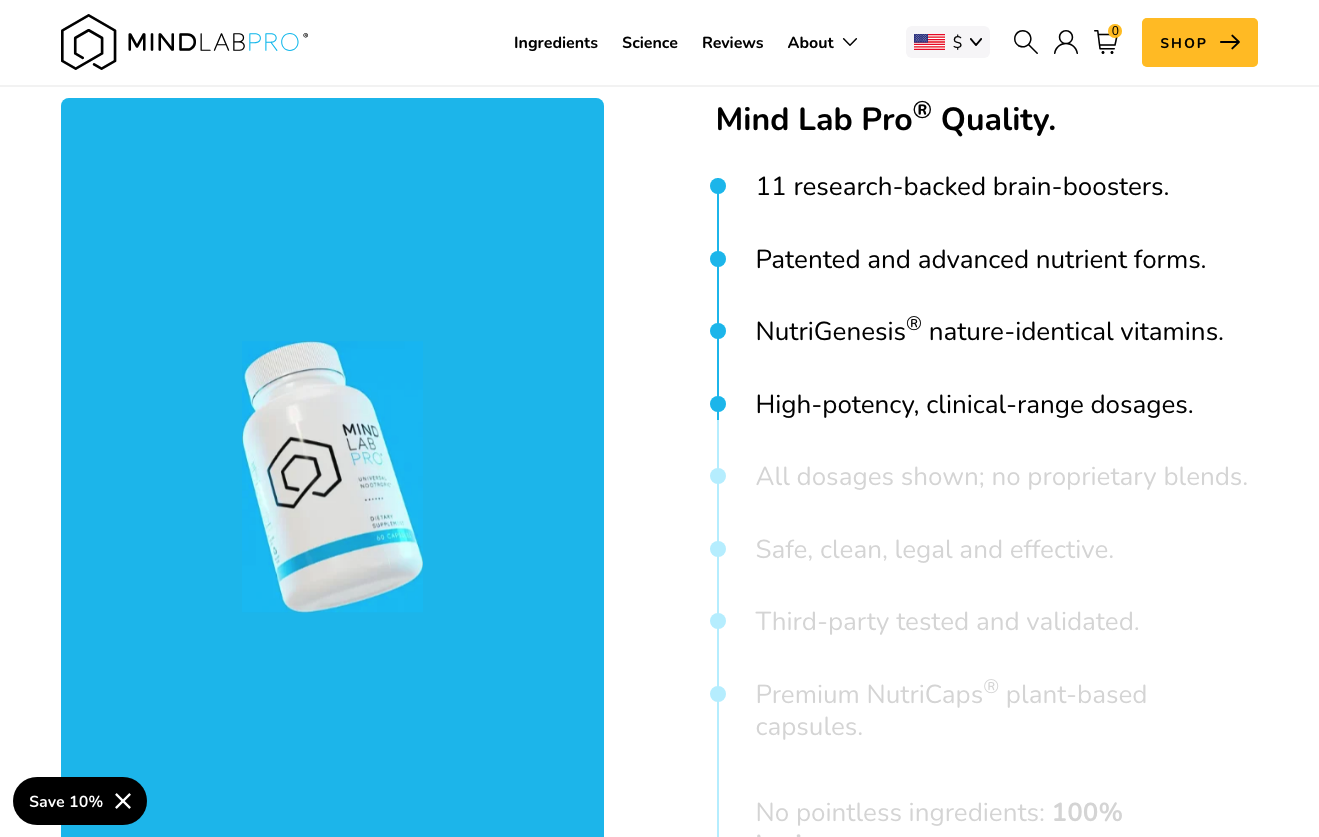
For example, if you check out Mind Lab Pro, you’ll see that this brand makes indirect comparisons. By emphasizing that it lists all ingredients on product labels, uses clinically researched dosages, and uses safe, clean, and legal ingredients, this brand subtly communicates that its competitors don’t do the same, highlighting the superiority of its own nootropic supplement.
Customer Experience Focus
In many cases, the main reason consumers fail to convert with a brand doesn’t boil down to product quality or price. More often than not, consumers choose alternative solutions because of the superior CX they offer.
The elements of customer experience that come into play include a wide variety of factors. From convenience benefits to payment options to website UX, shoppers consider multiple factors, ultimately making decisions that best align with their specific needs and preferences.
So, if you want to encourage your target audience to invest in your products over alternative options, make it clear that shopping with your brand pays off.
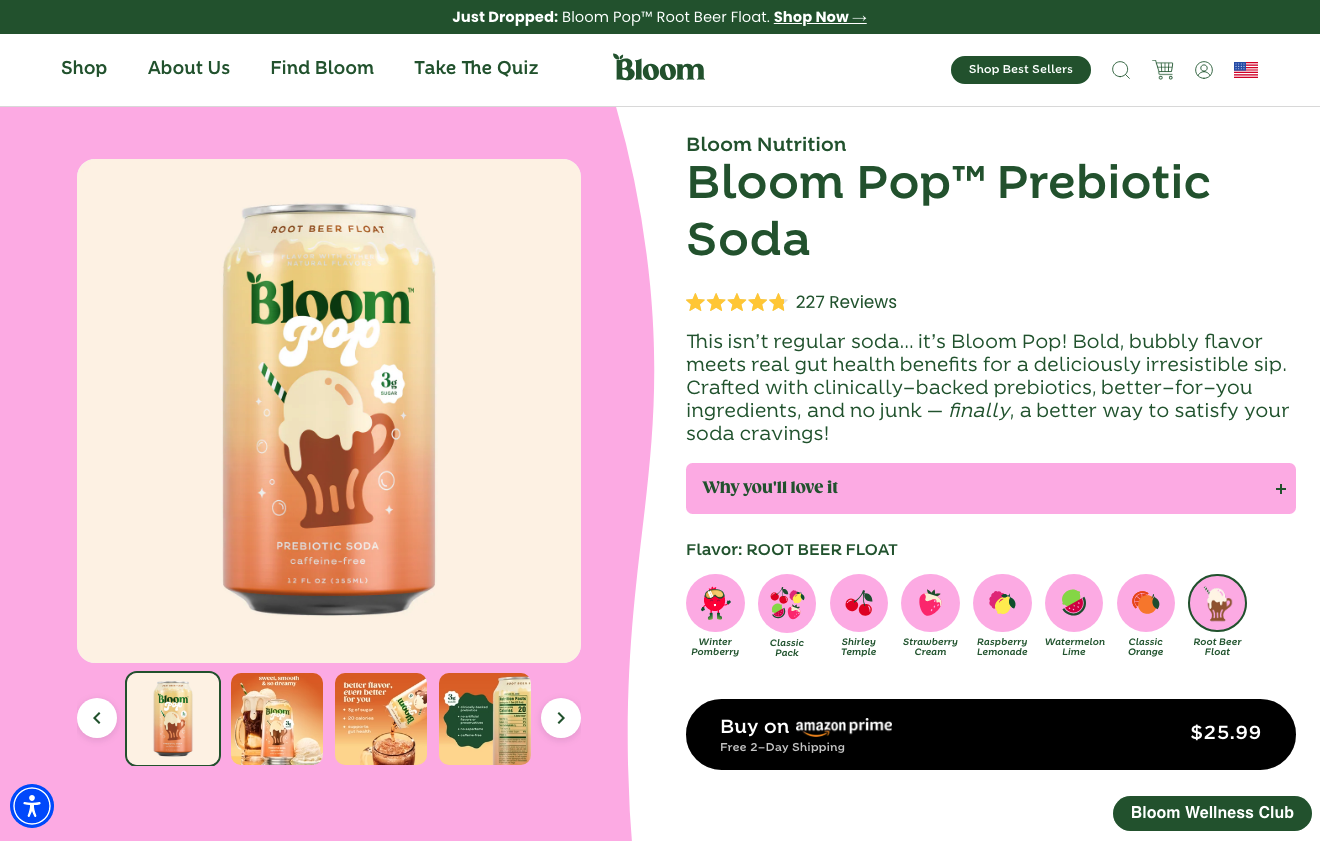
For example, if you check out Bloom Nutrition, you’ll find it directs buyers to purchase products on Amazon Prime, knowing that this option offers the highest level of trustworthiness, convenience, and cost-effectiveness.
Final Thoughts
Ecommerce growth obstacles can seem daunting when you don’t know how to overcome them. But the simple fact is that they’re an expected aspect of running an online business. Moreover, preventing them from harming your company’s sales performance doesn’t have to be difficult.
The conversion-boosting strategies outlined in this article are all relatively simple fixes. Yet they work — particularly if your ecommerce brand currently struggles with low conversion rates. So, give them a go and evaluate how they slot into your existing marketing and sales strategies. You might need to make a few tweaks. Nevertheless, you can rest assured that you’re going to see much improved sales performance.
Was this news helpful?
 Yes, great stuff!
 I’m not sure
 No, doesn’t relate