

10 Best Influencer Marketing Platforms for eCommerce Brands

10 Best Influencer Marketing Platforms for eCommerce Brands
Influencer marketing has become one of the fastest ways for eCommerce brands to reach new buyers and build trust at scale. But running creator campaigns manually is time-consuming and hard to measure. The right platform takes the guesswork out of finding creators, managing content and tracking results.
Below are ten influencer marketing platforms worth considering. Each one is broken down by what it does best, where it shines and where it falls short.
1. Insense
Best for: End-to-end UGC production and paid creator ads
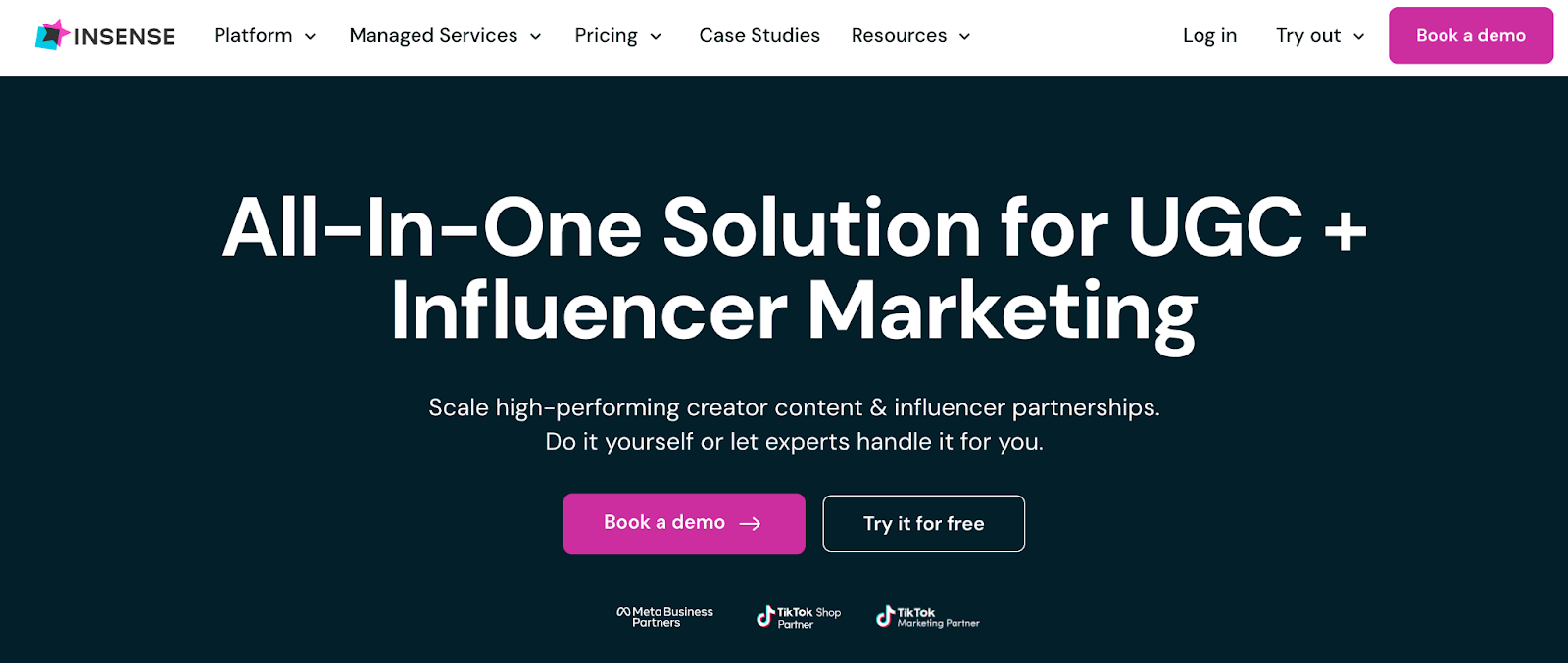
If you sell products online and need creator content that actually converts, Insense is the strongest all-in-one option available right now. It was built specifically around eCommerce workflows, combining influencer discovery with UGC production and paid social ad distribution in a single dashboard.
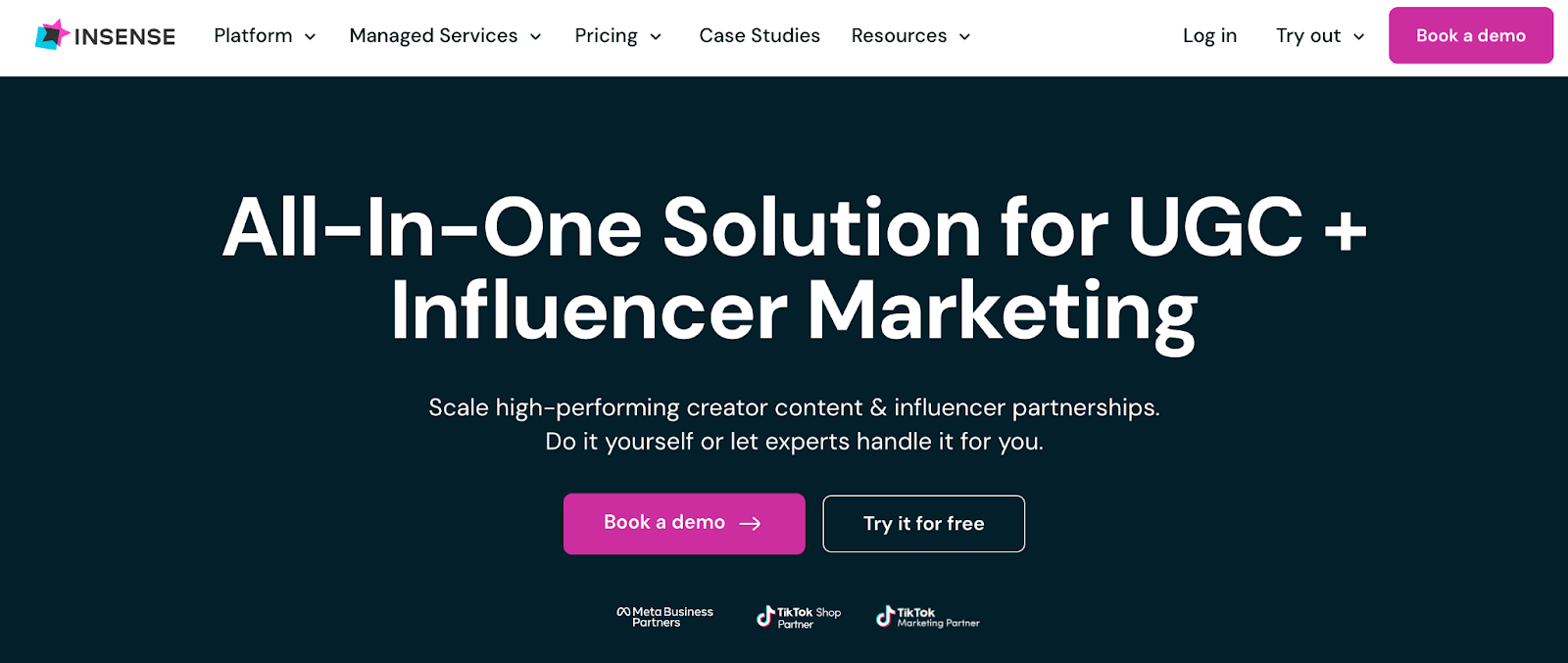
The platform gives you access to over 70,000 vetted creators across the US, UK, Canada, Germany and other major markets. You can filter by niche, follower count, engagement rate, language and location to find the right fit for your brand. Once you pick your creators, the built-in creative brief tool guides you through setting up campaigns with clear instructions so there is less back-and-forth and fewer revisions.
What really sets Insense apart is how tightly it connects to paid advertising. You can run Meta Partnership Ads and TikTok Spark Ads directly through the platform, turning creator content into high-performing paid assets without leaving the dashboard. Product seeding is streamlined through a native Shopify integration, and the platform handles payments and digital copyright transfers automatically.
Most brands start receiving creator applications within 48 hours of launching a campaign. Content typically lands within two weeks. Plans start at $500 per month billed quarterly, with unlimited campaigns and dedicated support on the Brand plan and above. A month-to-month Trial is also available at $650 for teams that want to test the platform first.
The one consideration is that Insense is built primarily for brands that want to pair UGC with paid social. If you are only looking for a basic influencer database with no ad integration, you may not use the platform to its full potential.
2. CreatorIQ
Best for: Enterprise brands managing large-scale influencer programs
CreatorIQ is designed for big organizations that need advanced reporting, compliance tools and CRM-style creator management. Its database pulls from over 20 million profiles, and its AI-driven discovery engine helps surface creators based on audience quality rather than vanity metrics.
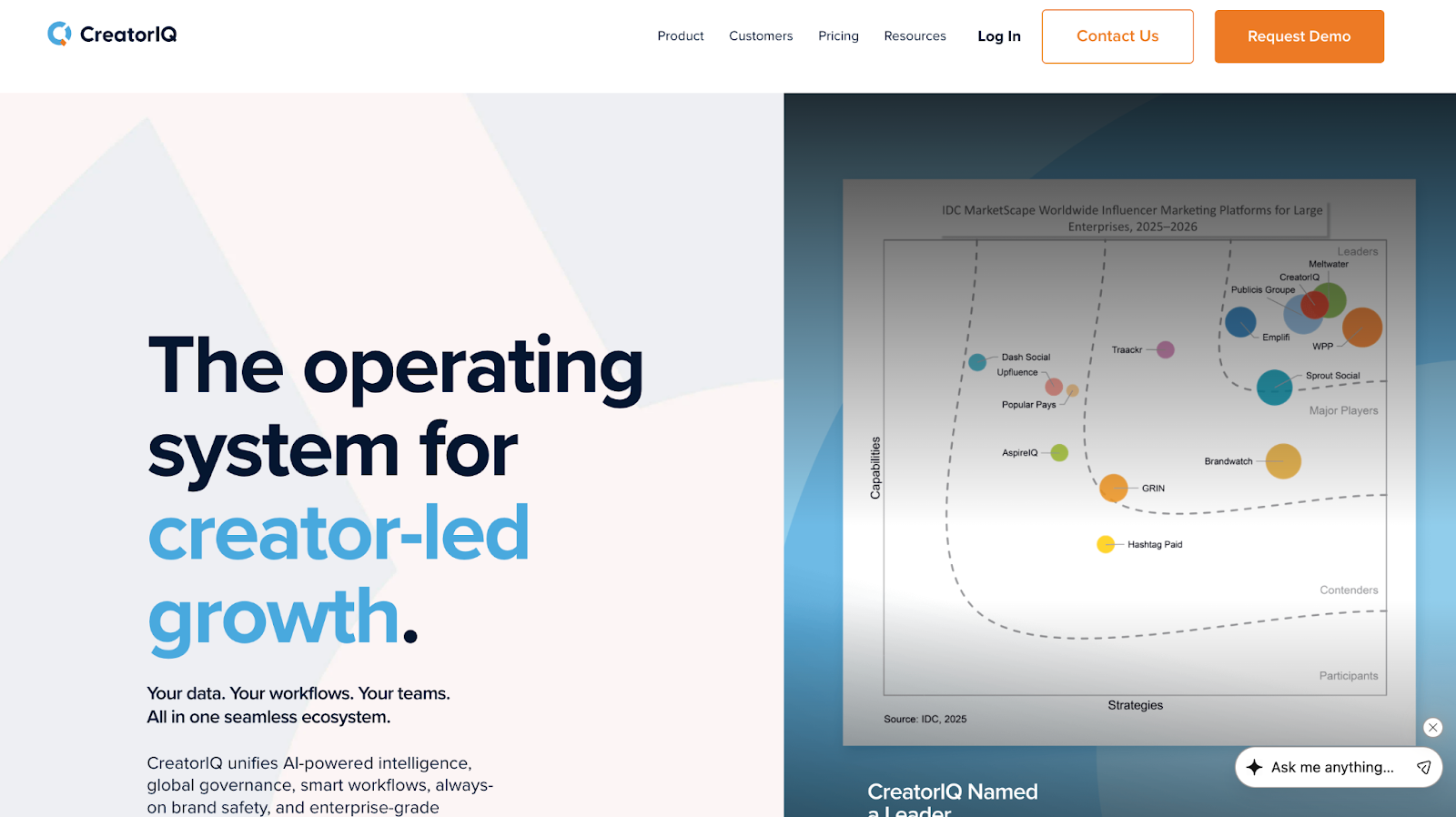
The platform integrates well with enterprise tools like Salesforce and offers white-label reporting for agencies. It is a strong choice for global campaigns that span multiple markets and teams.
On the downside, pricing is custom and typically starts at $30,000 or more per year. Smaller brands and solo marketers will likely find it out of reach.
3. Traackr
Best for: Data-driven influencer strategy and competitive benchmarking
Traackr gives marketing teams deep performance data and the ability to benchmark influencer spend against competitors. Its analytics go beyond surface-level metrics, helping you measure brand vitality, share of voice and cost efficiency across campaigns.
The platform is especially useful for beauty, fashion and CPG brands that run ongoing influencer programs and need to justify spending with hard numbers.
Pricing is available on request and tends to lean toward mid-market and enterprise budgets. It also has a steeper learning curve compared to simpler marketplace-style tools.
4. Klear
Best for: Brands that want influencer marketing tied into social listening
Klear is now part of the Meltwater suite, which means it combines influencer discovery with social listening and media monitoring. For PR teams and brand managers who track reputation alongside creator campaigns, this integration is a real advantage.
You can identify influencers based on audience demographics, monitor brand mentions in real time and measure campaign impact all within the same ecosystem.
The trade-off is that Klear is bundled into Meltwater’s broader pricing, which can make it expensive if you only need the influencer features.
5. Grin
Best for: DTC brands on Shopify that want deep eCommerce integration
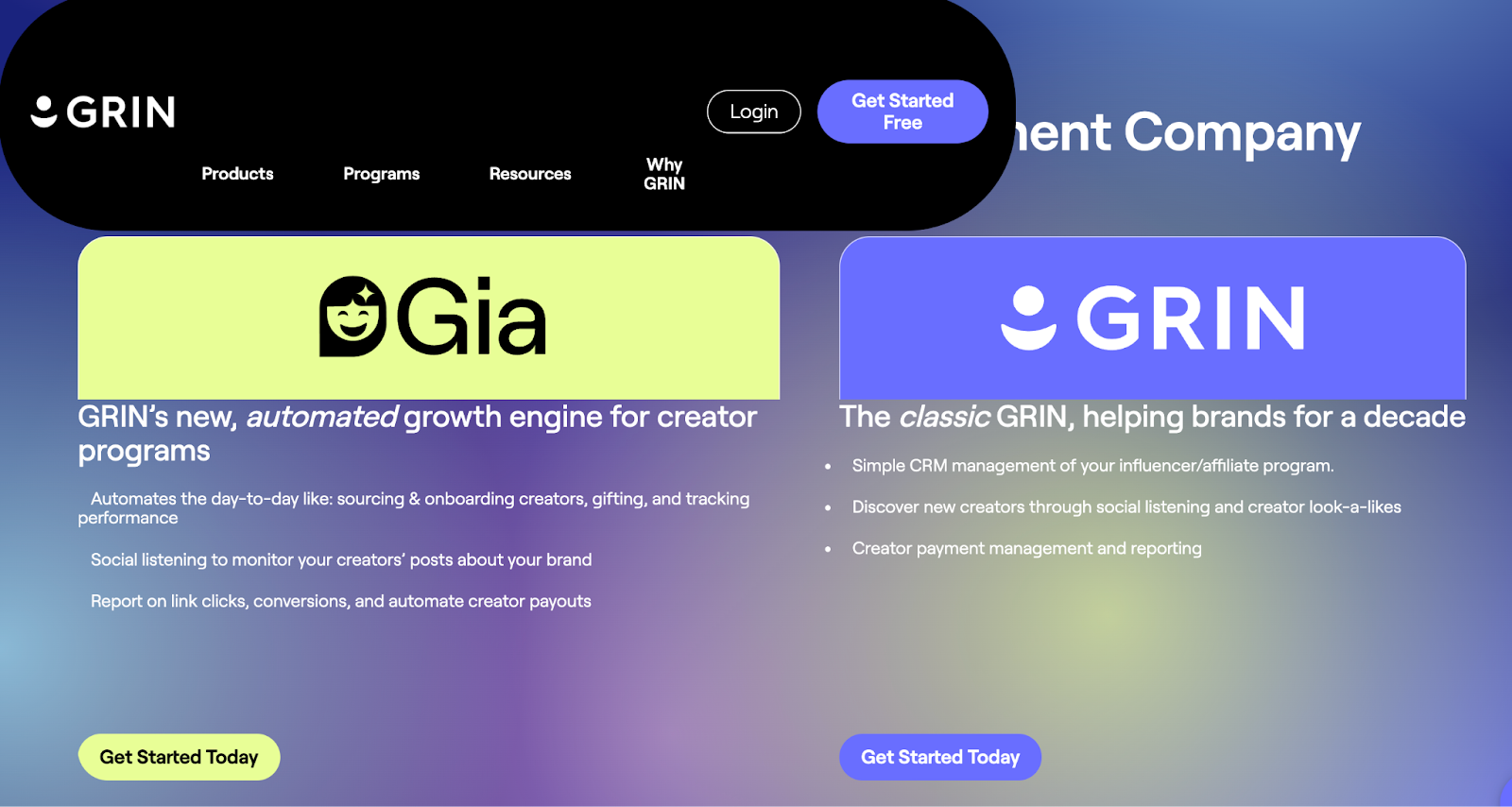
Grin connects directly to Shopify, WooCommerce and other eCommerce platforms to simplify product seeding, affiliate tracking and sales attribution. It focuses heavily on relationship management, making it a solid pick for brands that want to build long-term partnerships with creators rather than run one-off campaigns.
The platform handles content rights, payment processing and ROI reporting in one place. It also pulls in real-time sales data so you can see exactly which creators are driving revenue.
Grin’s pricing starts around $25,000 per year, which puts it out of reach for early-stage brands. The onboarding process can also take longer than lighter-weight tools.
6. Influencity
Best for: Granular audience analytics before committing to partnerships
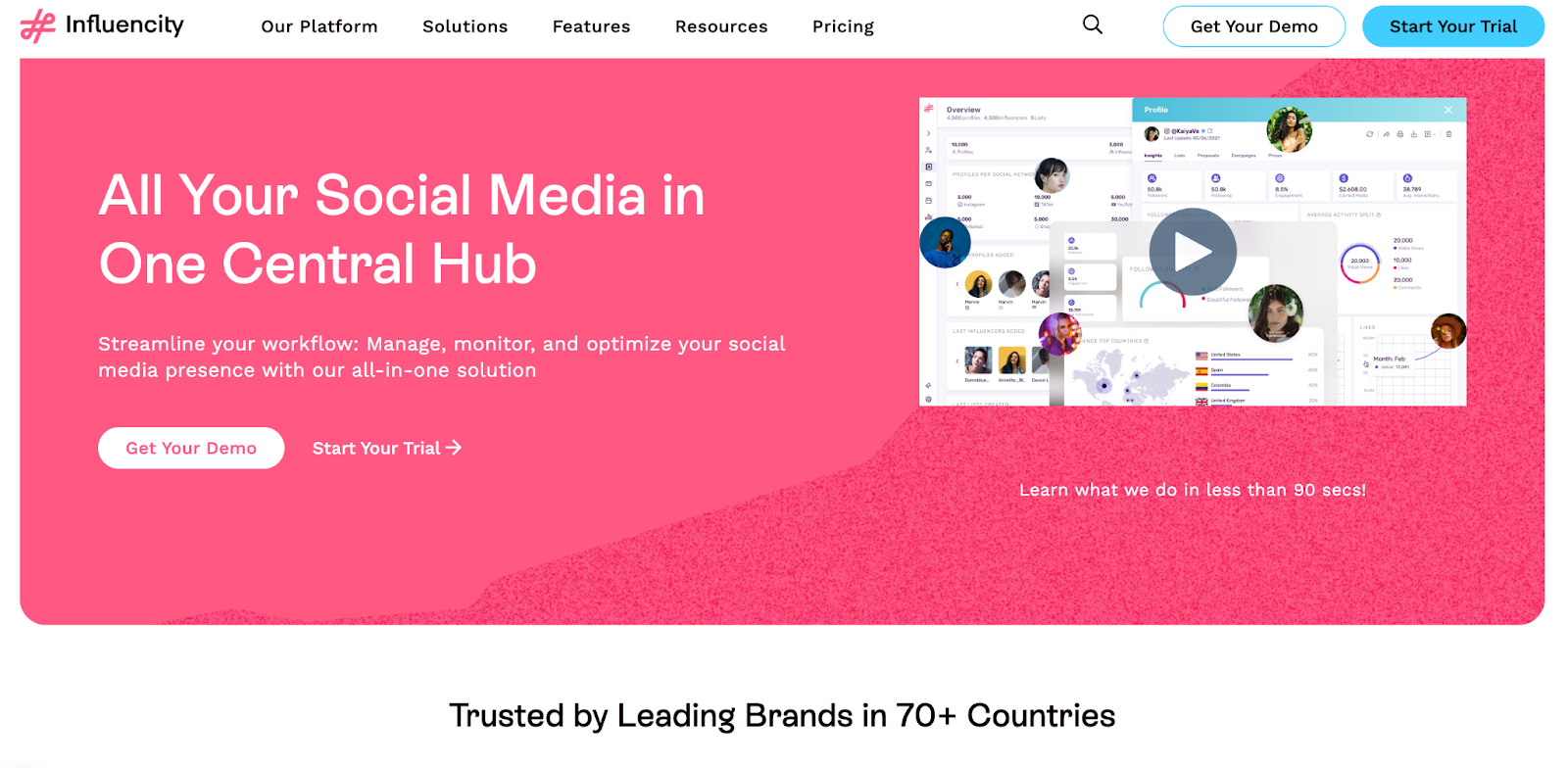
Influencity specializes in audience intelligence. Before you spend a dollar on a creator, you can assess audience overlap, predict campaign performance and review psychographic data that goes well beyond basic demographics.
This makes it a strong tool for agencies and brands that need to validate audience fit before investing in partnerships. Plans start at roughly $168 per month, making it more accessible than many competitors on this list.
The downside is that Influencity focuses more on analytics and discovery than campaign execution. You will likely need additional tools for content management and payments.
7. Aspire
Best for: Building long-term brand ambassador communities
Aspire positions itself as a community-first platform. It helps brands recruit and manage ambassadors, affiliates and creators through a single workflow. The content library feature lets you organize and repurpose creator assets across multiple channels.
It works especially well for lifestyle, beauty and wellness brands that want to cultivate ongoing relationships rather than run transactional campaigns.
Pricing is custom and not published, which makes it harder to evaluate upfront. Some users also report a learning curve during initial setup.
8. Upfluence
Best for: Activating existing customers as influencers
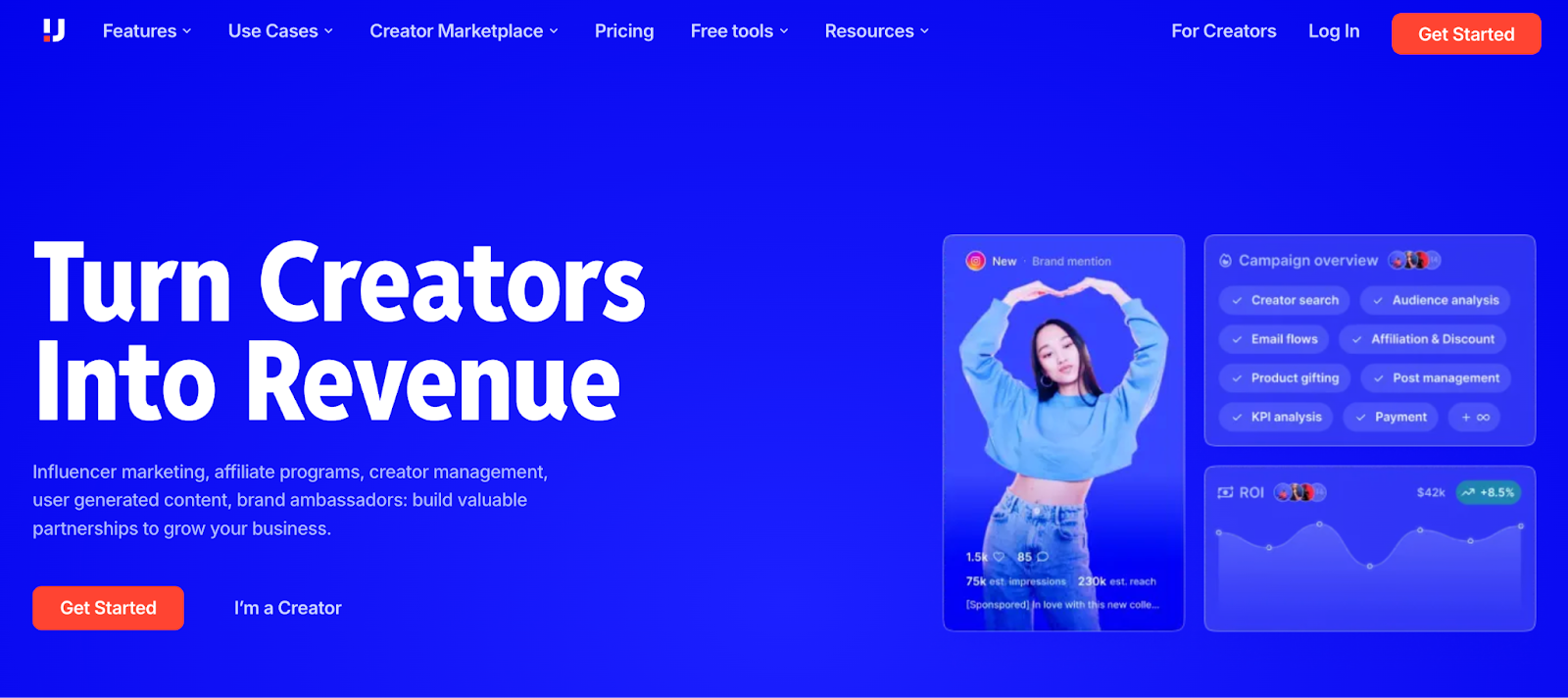
Upfluence takes a unique approach by scanning your CRM and eCommerce data to find influencers who are already buying from you. This makes outreach more authentic because these creators genuinely know and use your products.
The platform offers a database of around three million creators along with tools for affiliate management, product seeding and campaign payments. It integrates with Shopify, WooCommerce and several email marketing platforms.
Plans start at roughly $478 per month. The interface can feel cluttered for teams that only need basic discovery and outreach features.
9. Heepsy
Best for: Budget-friendly influencer discovery
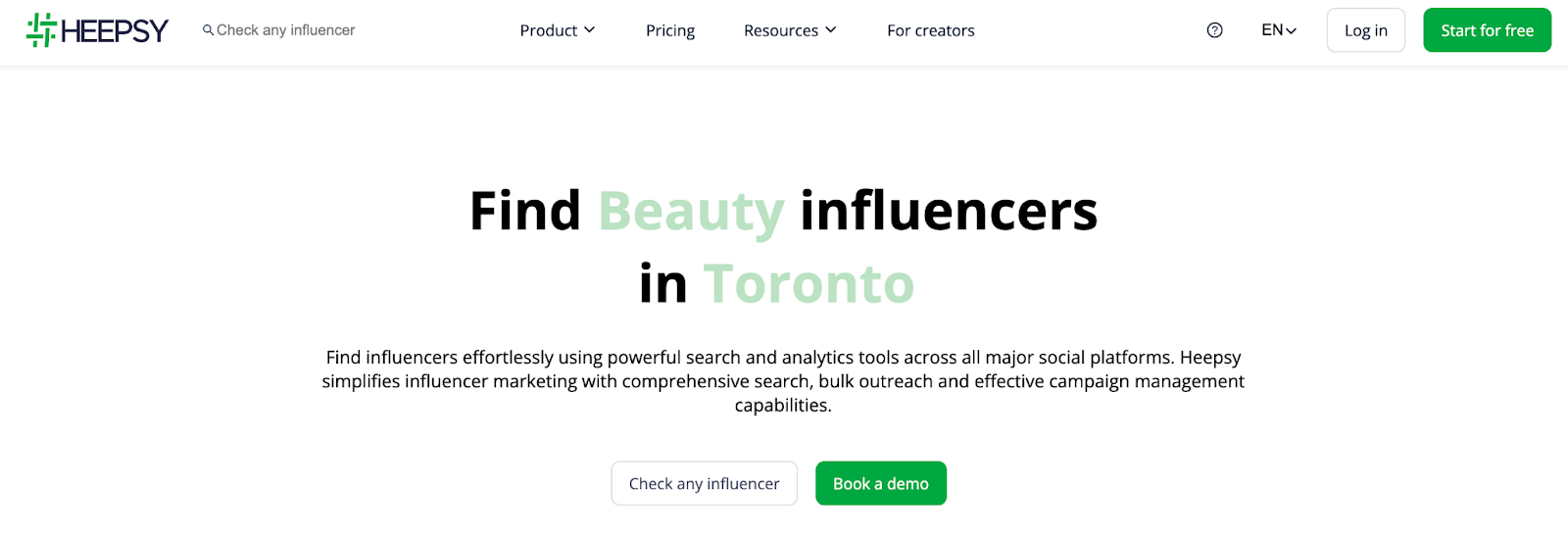
Heepsy keeps things simple. It is an influencer search engine that lets you filter millions of profiles by location, category, engagement rate and audience demographics. There is no campaign management layer, but for brands that just need to find the right creators quickly, it gets the job done at a fraction of the cost.
Plans start at $49 per month, making it one of the most affordable options available. It is a good starting point for small businesses and solo founders testing the waters with influencer marketing.
The limitation is clear: Heepsy handles discovery only. You will need separate tools for outreach, contracts, payments and performance tracking.
10. Later (formerly Mavrck)
Best for: Combining social scheduling with influencer campaign management
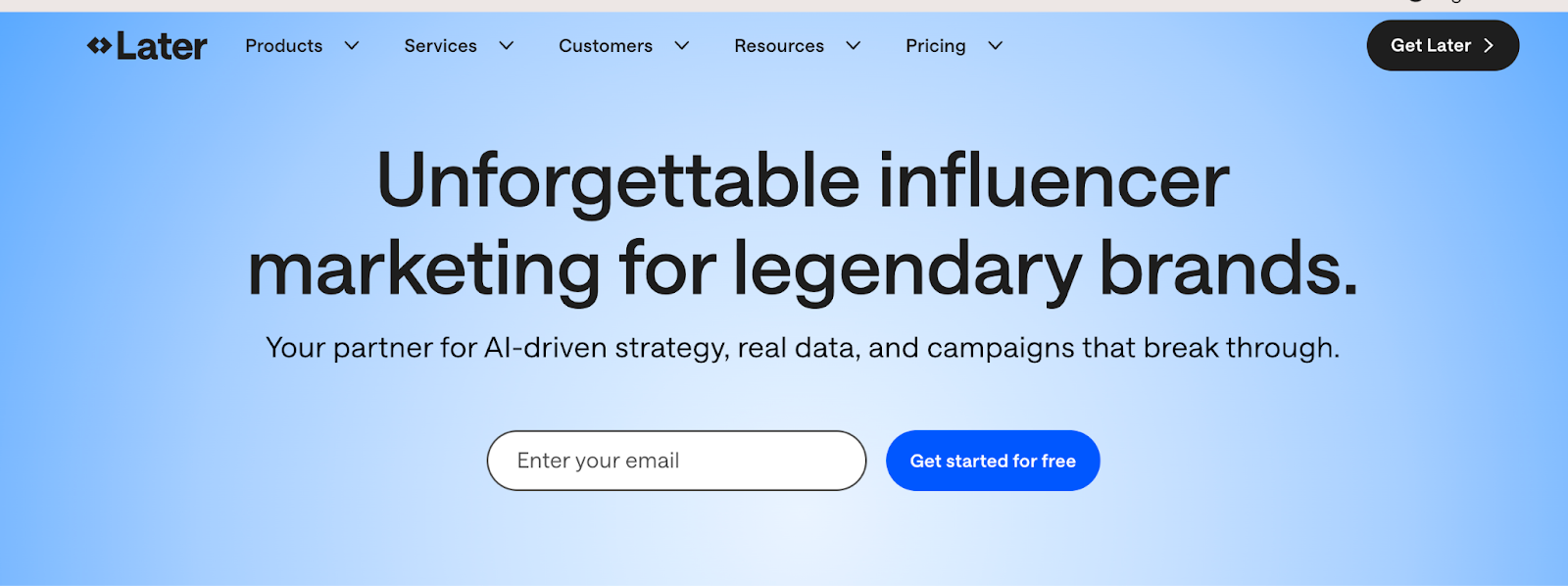
Later merged its social media scheduling product with Mavrck’s influencer tools, creating a two-in-one solution. If your team already uses Later for content planning and publishing, adding influencer campaigns into the same workspace can simplify your stack.
The platform supports Instagram, TikTok and Pinterest campaigns and includes basic creator discovery and performance reporting features.
The influencer features are still maturing compared to dedicated platforms. Brands running large-scale creator programs may find the capabilities limited.
Choosing the Right Platform
The best platform depends on your goals, your budget and where you are in your growth journey. If you are running a DTC brand and need creator content that feeds directly into paid ads, a platform like Insense gives you everything in one place. If you are an enterprise team managing global campaigns, CreatorIQ or Traackr may be a better fit. And if you are just getting started, Heepsy offers a low-cost entry point for finding the right creators.
Influencer marketing works best when it is part of a broader growth strategy. If you are looking for more ways to get your products in front of the right people, Sellbery’s guide on proven eCommerce strategies for maximizing product visibility covers additional tactics from SEO to social media to paid ads.
Whatever platform you choose, the key is to treat creator partnerships as a core channel rather than an experiment. The brands that build repeatable systems around influencer content are the ones seeing the strongest returns heading into the rest of the year.
Was this news helpful?
 Yes, great stuff!
 I’m not sure
 No, doesn’t relate